Five Systems · Commercial Roofs

Clarksville Roof Coating Services

Our roof coating services in Clarksville cover five systems for commercial roofs: metal, silicone, acrylic, spray foam, and shingle. Each one starts with the same roof inspection.

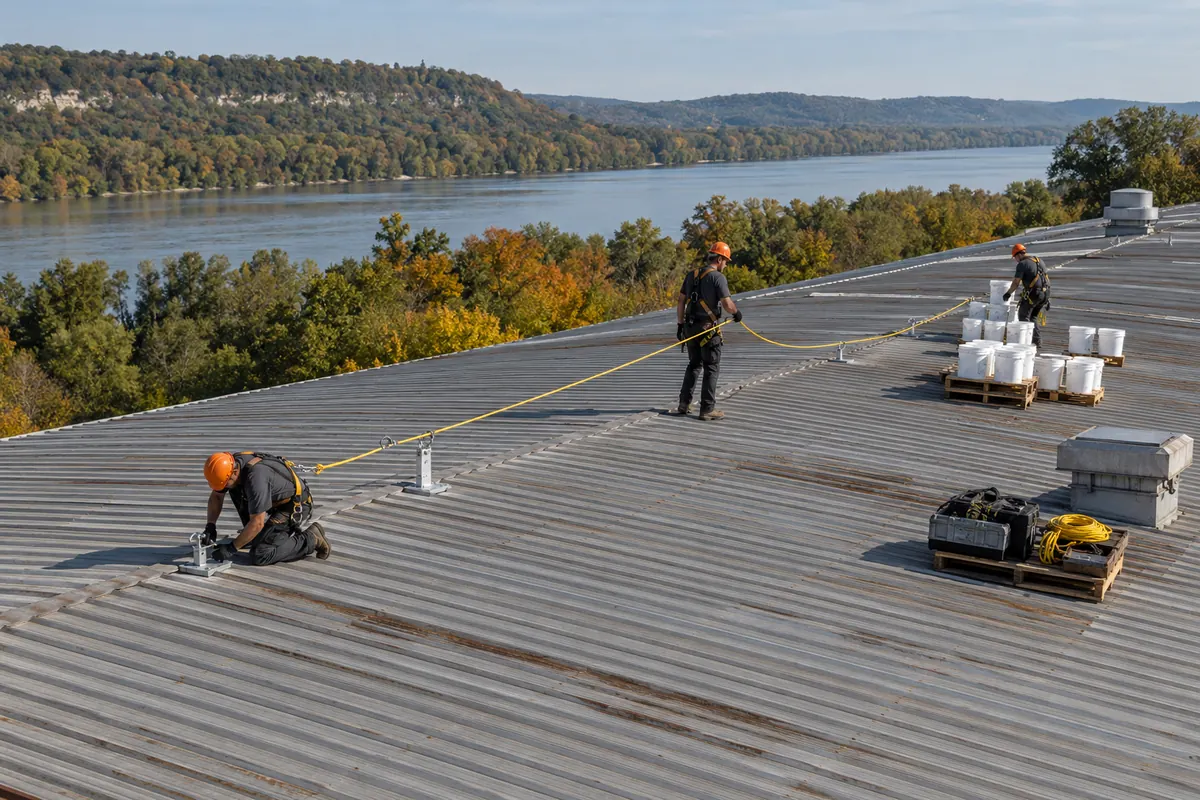
Crew staging coating pails and lines on a metal roof above the Ohio River valley
What We Coat

Roof Coating Services We Offer In Clarksville

Every system below goes on commercial roofs only. The plate on each card shows the roofs it suits and where prep time goes.

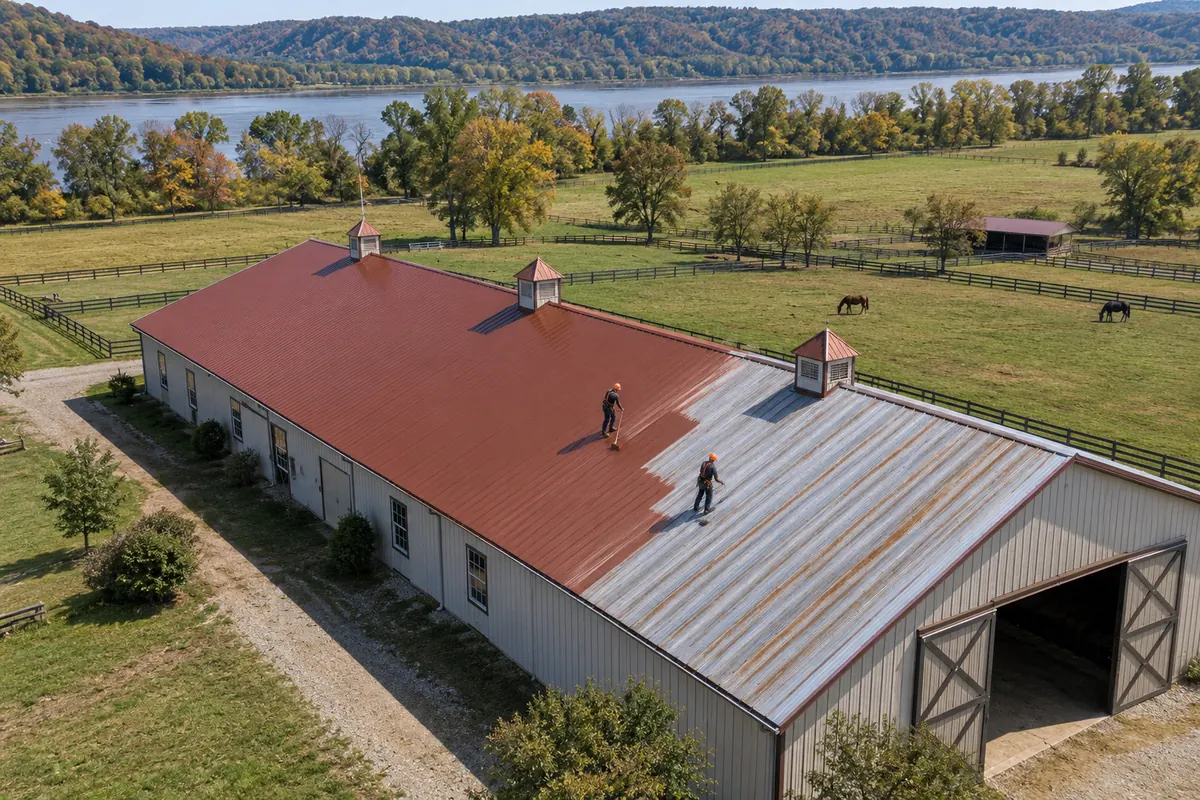
Aerial view of a metal barn roof halfway through a white coating

Metal Roof Coating

Common Roofs
Warehouses, shops, barns
Prep Focus
Screws, laps, rust

Our main service. Exposed-fastener and standing seam roofs get hand fastener work, fabric at laps, and rust treatment before the field coat goes on.

Commercial metal roof coating
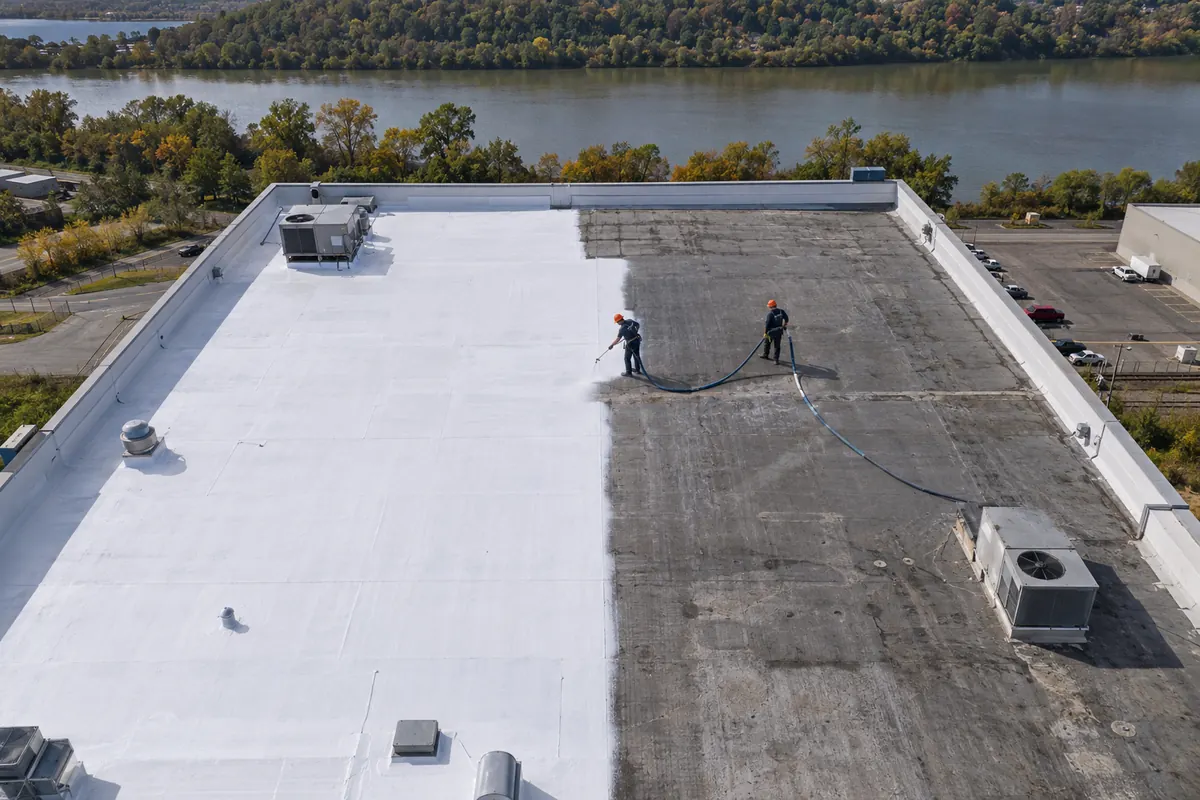
Flat commercial roof shown half coated in white silicone from above

Silicone Roof Coating

Common Roofs
Low-slope metal, flat sections
Prep Focus
Adhesion patch, ponding check

Built for water that stays on the roof after rain. Silicone goes on thick at eaves, gutters, and low spots, and later recoats stay silicone.

Silicone roof coating
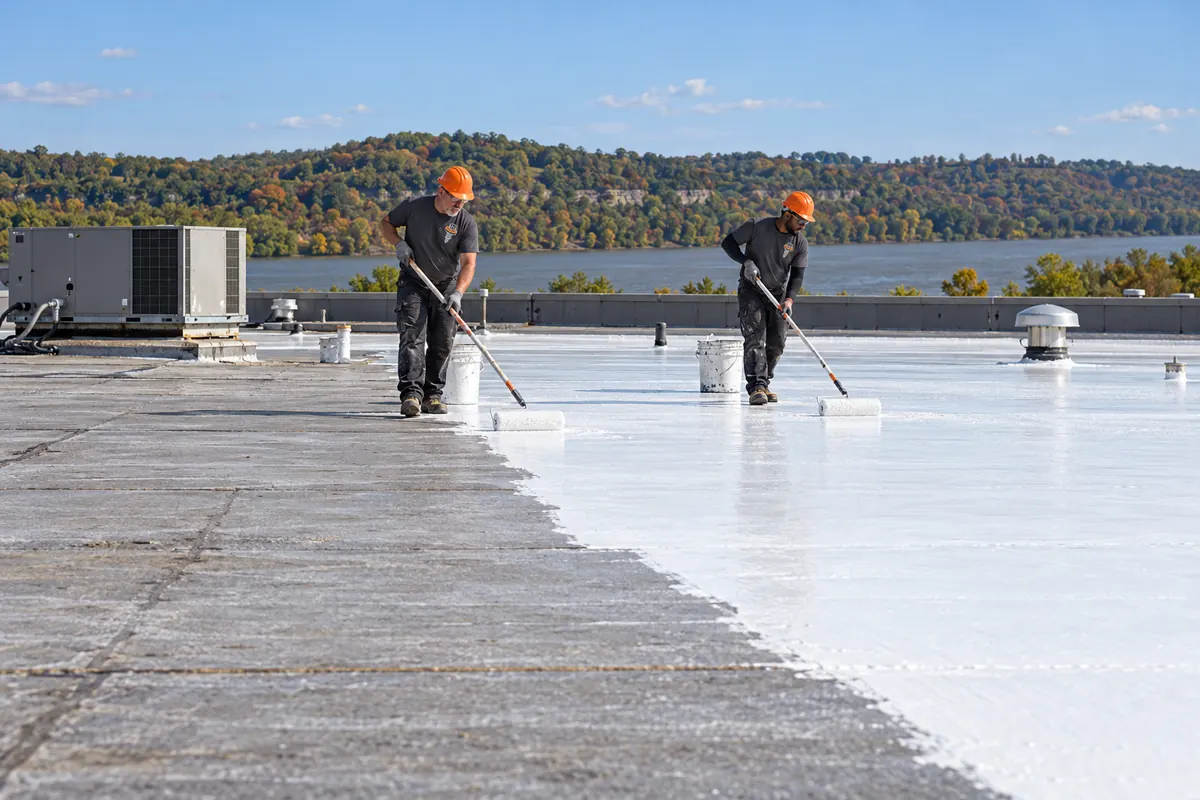
Two roofers rolling white acrylic coating across a commercial roof

Acrylic Roof Coating

Common Roofs
Sloped R-panel
Prep Focus
Chalk removal, primer

Bright white and water-based for panels that drain quickly. Acrylic needs warm, dry weather to cure and recoats with a wash and one coat.

Acrylic roof coating
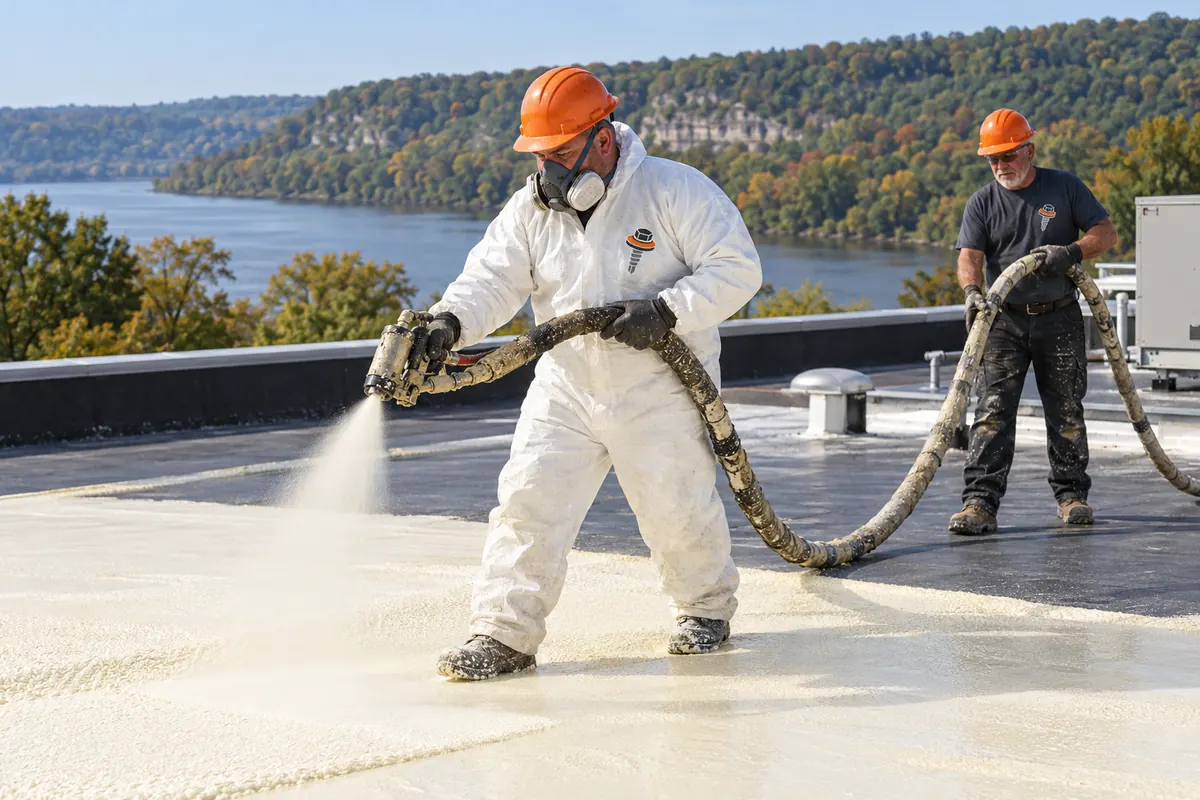
Roofer in a white suit spraying foam over a commercial roof

Spray Foam Roofing

Common Roofs
Uninsulated shops, flat sections
Prep Focus
Edge heights, air intakes

Closed-cell foam adds insulation, fills ribs, and can build slope. A silicone or acrylic topcoat goes over it to block sunlight.

Spray foam roofing
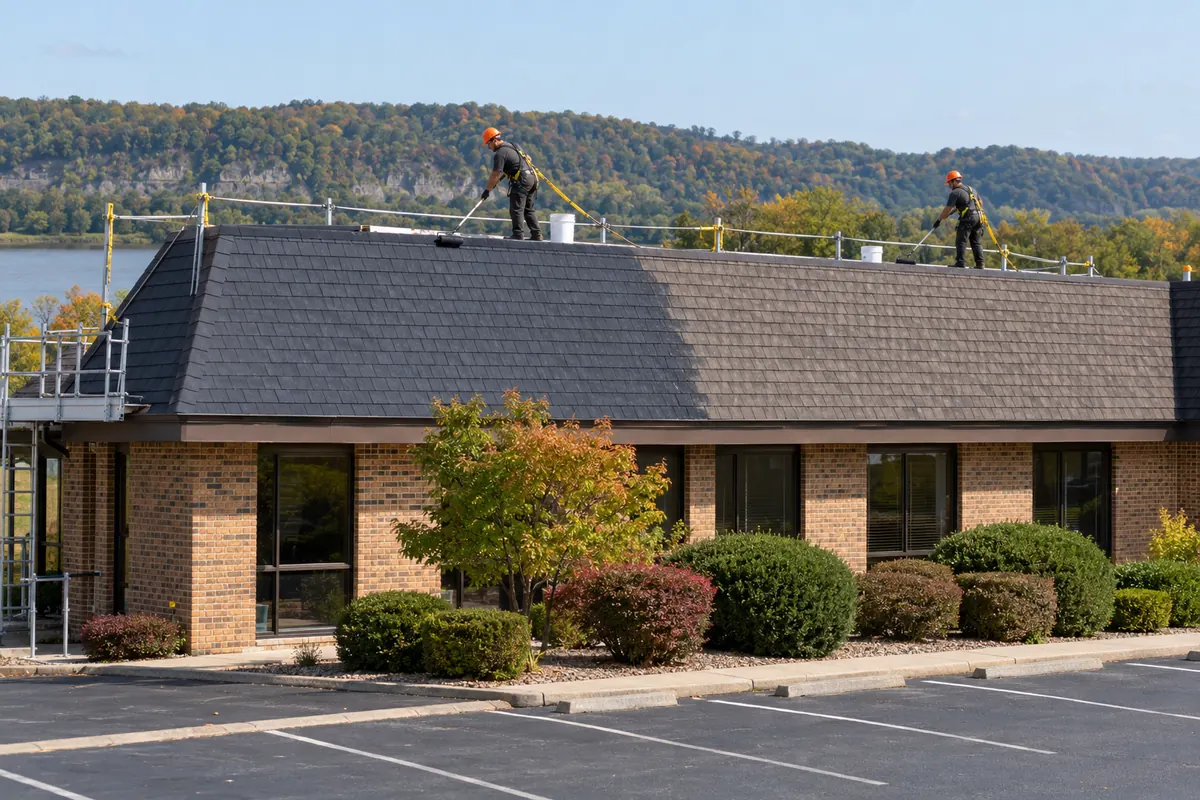
Roofers working on a pitched shingle roof over a brick office

Shingle Roof Coating

Common Roofs
Pitched commercial sections
Prep Focus
Maker approval, granule check

A narrow service for flat-lying, granule-covered shingles with the maker's approval. Curled or bald shingles get a new roof instead.

Shingle roof coating
Side By Side

Which System Fits Which Roof

Start from the roof you have. Slope, standing water, and insulation needs narrow the choice fast.

SystemRoof SlopeStanding WaterAdds InsulationRecoat Path
Metal roof coatingLow slope to steepFine with a ponding-rated top at the eaveNoSame system after a wash
SiliconeFlat and low slopeHandles it wellNoSilicone only
AcrylicSloped, drains fastWeak where water sits for daysNoAcrylic, easy
Spray foamFlat to low slopeTopcoat handles it, and foam can add slopeYes, about R-6 per inchRecoat the topcoat
Shingle coatingPitchedSheds water by slopeNoShingle-rated product
Unsure Which System?

Roof Problem But No System In Mind?

Call and describe the roof: panel type, where it leaks, and whether water sits after rain. Those three answers point to a system before anyone climbs up.

(812) 297-3434
Shared Process

How Every Coating Job Starts And Ends

The middle steps change by system, but every job opens with an inspection and closes with a thickness check.

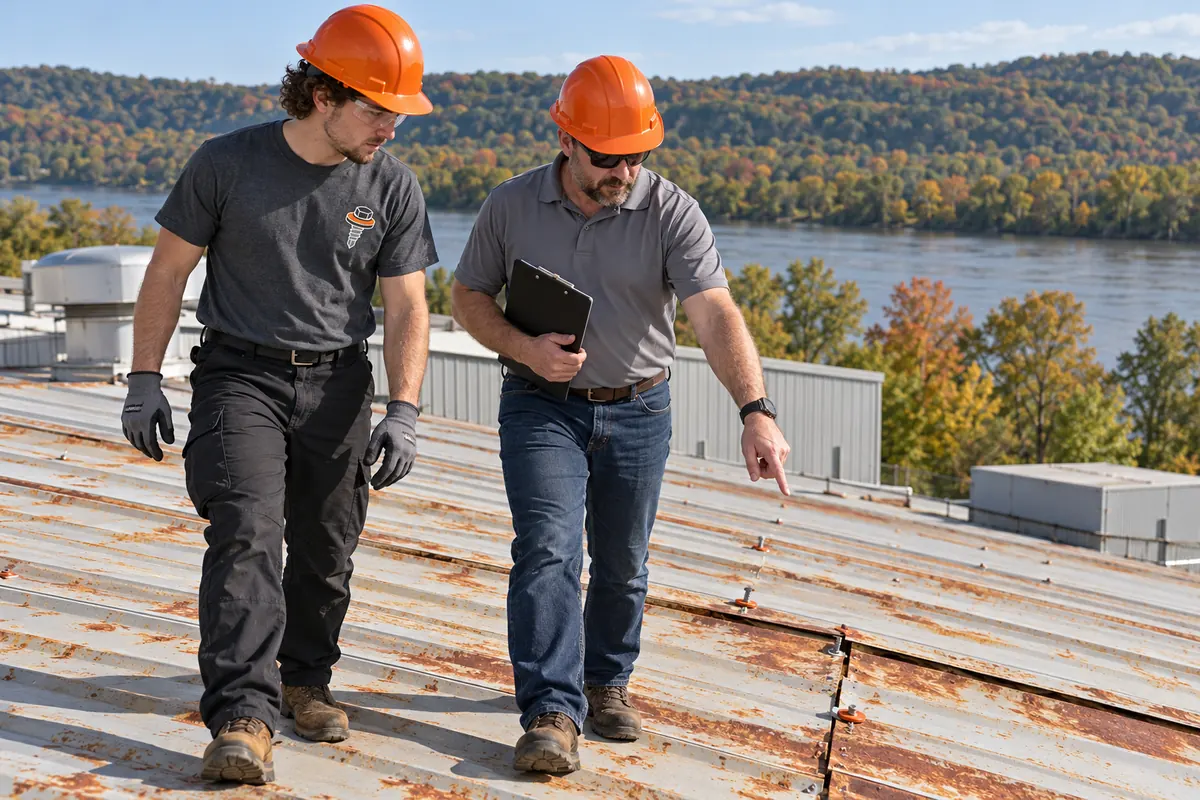
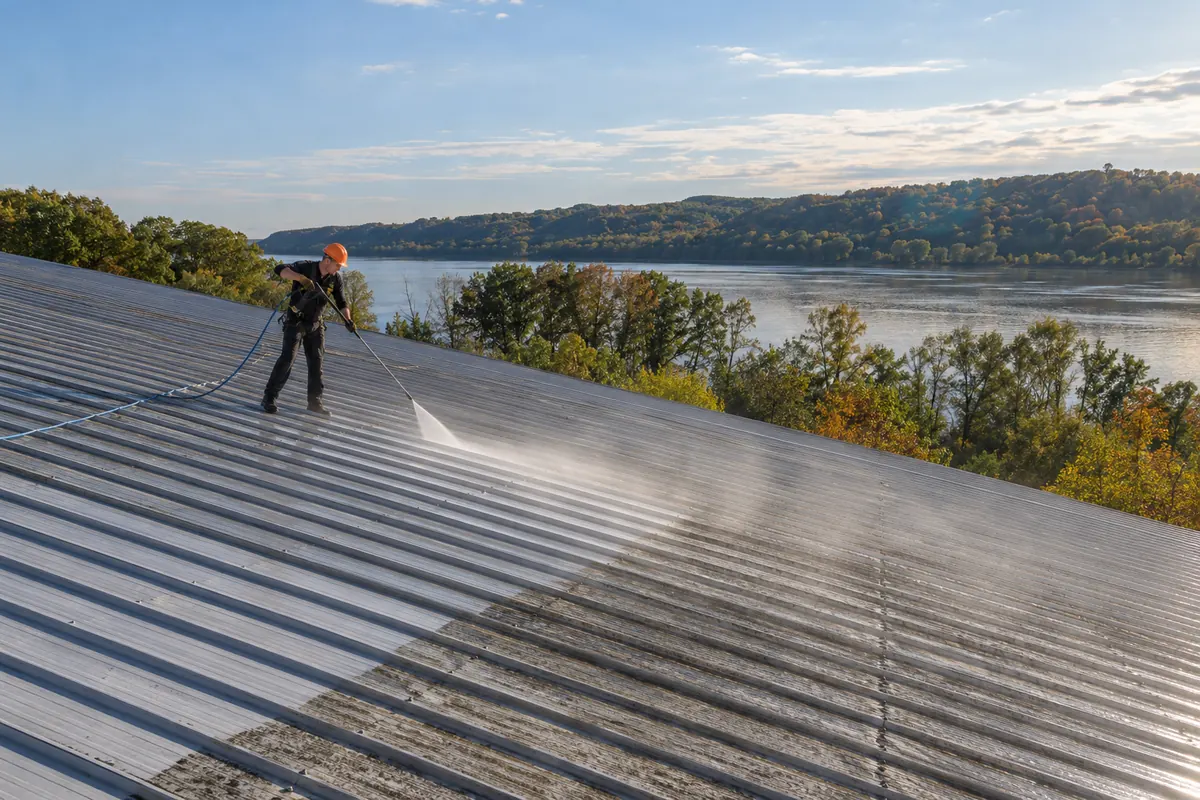
Crew lead walking a metal roof with a building owner during an inspectionRoofer pressure washing panels ahead of a coating
  1. Inspect Your Roof

    Panels, seams, drains, curbs, and the underside of the deck get checked so the system matches the roof, and moisture problems are found early.

  2. Repair The Weak Spots

    Rusted-through panels, wet insulation, cracked skylight panels, and failed flashing are fixed first, because coatings add no strength.

  3. Clean And Prepare

    Washing, rust treatment, primer, and fabric at joints follow the coating maker's rules for that system.

  4. Apply And Verify

    Coats go on to the specified thickness, and wet-film readings confirm it before the job is called done.

Choosing A System

Roof Coating Service Questions

Paths

Should I coat, restore, re-panel, or replace?

The amount of firm steel left decides it. Faded paint and a few drips point to coating; surface rust, loose screws, and leaking laps point to restoration; a handful of rusted-through panels means re-paneling those sections first.

Widespread perforation and failing purlins call for replacement or a framed retrofit. Rust that flakes away and leaves pinholes marks the line between restoring and re-paneling.

Details

How are skylight panels, ridge caps, and gutters handled?

Each is repaired on its own before the roof is coated, since these spots leak more than the open field. Cracked skylight panels are replaced in the matching profile, ridge caps are refastened and sealed, and gutters are cleaned and resealed.

Clear skylight panels are masked and coated around so they keep letting in daylight.

Hail

Do hail dents need fixing before coating?

Cosmetic dents rarely do. Dents that cracked the paint, split a seam, or pushed in a rib need repair, because broken finish lets rust start.

After a storm, photograph damage with dates before any work, then check ridge caps, rake trim, skylight panels, gutters, and unit housings.

Cost

What drives the cost of a coating job?

Roof size, rust level, fastener count, seam work, and the system chosen. Prep is usually the biggest swing, so two roofs with the same footprint can land far apart.

Skylight, gutter, and trim replacements, access and lift needs, and any added spray foam move the number too.

Mixed Roofs

Can one building get two systems?

Yes, and many do. A strip center might carry coated shingles out front and silicone on the flat roof behind, or a metal roof might take acrylic up top with silicone along a wet eave.

Each system keeps its own recoat path, so we label the zones in the job records.

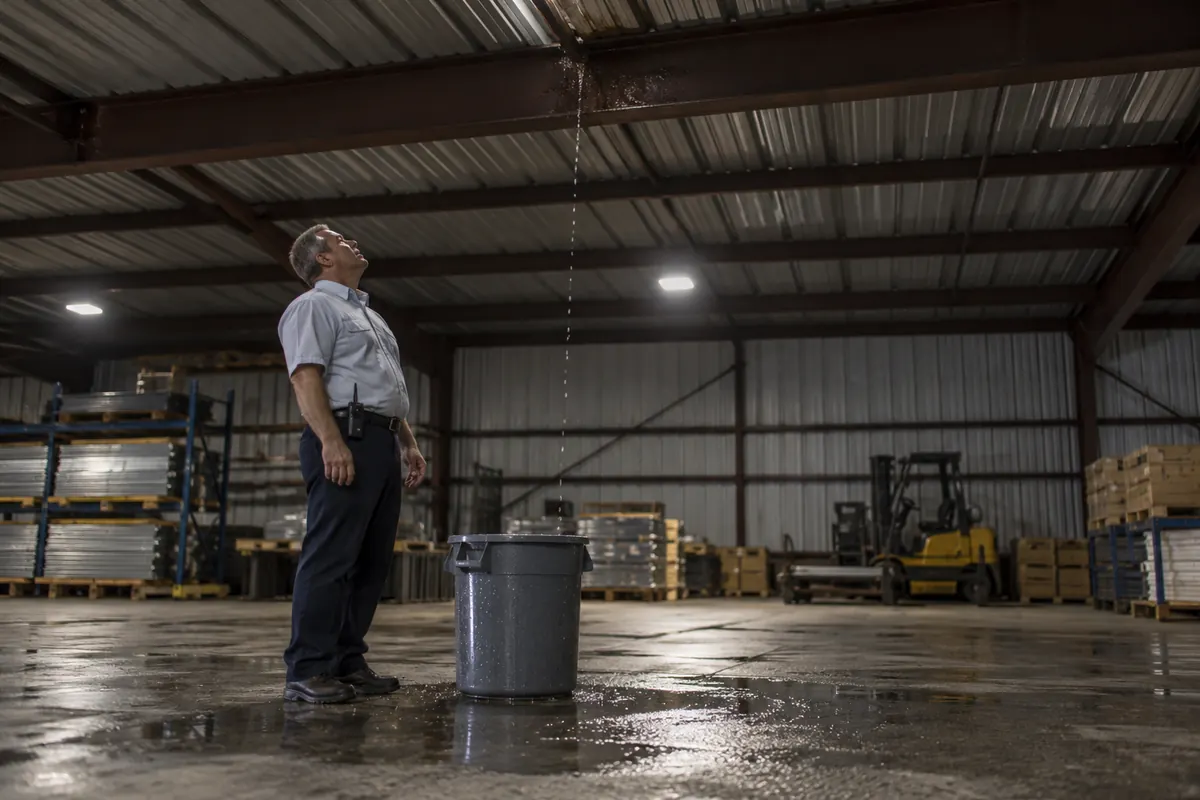
Facility manager checking a drip into a bucket inside a metal warehouse
Pick A System Together

Get A Range For Your Roof Coating

Send the roof size for a ballpark number, or call us and we will talk through which system fits.

Call Us (812) 297-3434