Holds Up Where Water Stands
What Wears Out
Water-based coatings soften and wear faster where puddles sit for days under the sun.
What The Coating Does
Silicone keeps its film in low spots, gutters, and dents near the eave.

We apply silicone roof coating in Clarksville where water stays on the roof after rain: dented eave panels, sags between purlins, gutters, and flat sections behind parapets.
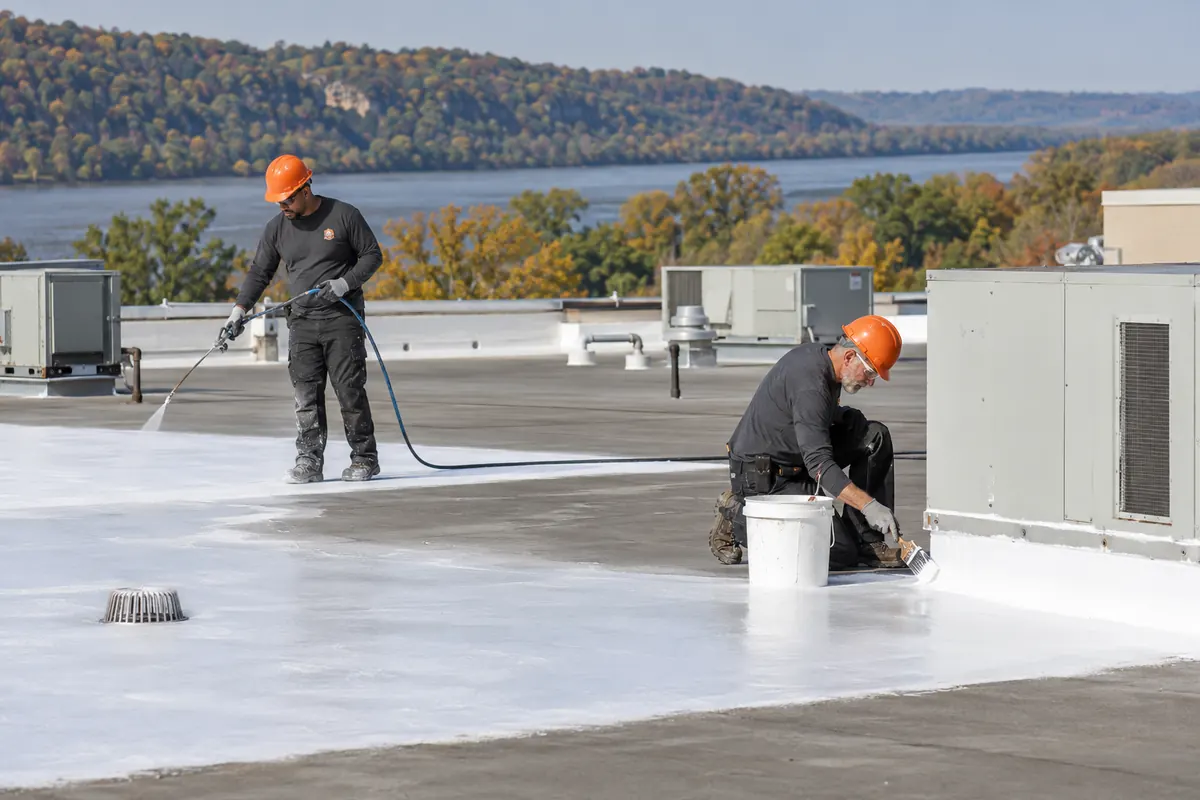
Silicone earns its place on roofs where water lingers. Roofs that shed water fast can use a cheaper system that recoats more easily.
Silicone handles standing water, but the cause of the water still gets checked. These six spots on the plan hold water most often.
Cracked sealant along the cap lets rain in even on a roof that sheds water. Both edges are resealed before the silicone goes down.
Sags between purlins leave shallow puddles a day after rain. We note each one, since a sag can point to a bent purlin below.
Overlaps across the slope dam water on low pitches. Fabric and base coat go over them before the thick silicone layer.
Water collects on the uphill side of skylight panels and curbs. The clear panels are masked and the flashing around them is coated.
Foot traffic and hail push in the panels near the eave, where silicone holds up better than water-based coatings.
Condensate and service traffic keep the area around rooftop units wet. Curb flashing is cleaned, primed, and coated with the field.
Silicone can carry the whole roof or just the wet areas. These are the setups we use on metal and flat roofs.
| Option | Where It Goes | What Goes Under It | Trade-Off |
|---|---|---|---|
| Silicone over the whole roof | Low-slope metal that ponds in many places | Rust primer where steel was treated | Collects dirt, so the white dulls |
| Silicone at eaves and gutters | Sloped roofs with wet low ends | Acrylic or urethane on the upper field | Two products to track for recoats |
| Silicone over spray foam | Foam roofs where water lingers in low spots | Fresh closed-cell foam | Foam thickness raises edge trim |
| Silicone on flat sections | Built-up or single-ply areas joined to metal | Adhesion patch results, primer if needed | Later recoats stay silicone |
Silicone pays off on roofs that stay wet. On steep panels that drain fast, the same money often buys more with acrylic.
Water-based coatings soften and wear faster where puddles sit for days under the sun.
Silicone keeps its film in low spots, gutters, and dents near the eave.
Multi-coat systems need drying time between passes, which stretches the job across more weather windows.
Silicone often goes on in one thick coat, which shortens time on the roof.
Sun bakes low-slope panels all afternoon, chalking paint and cracking old sealant.
The silicone film stands up to UV and keeps a reflective white surface, though dirt dulls it over time.
Swapping out a wet, rusting roof section means tear-off, disposal, and an open roof over the floor.
A coated roof keeps its panels working, with less waste hauled away.
Call with the spots where it collects and how long it stays. Long-standing water near the eave usually points to silicone and a check of the purlins.
(812) 297-3434Silicone needs a clean, dry surface, so most of the work happens before the coating comes out of the pail.
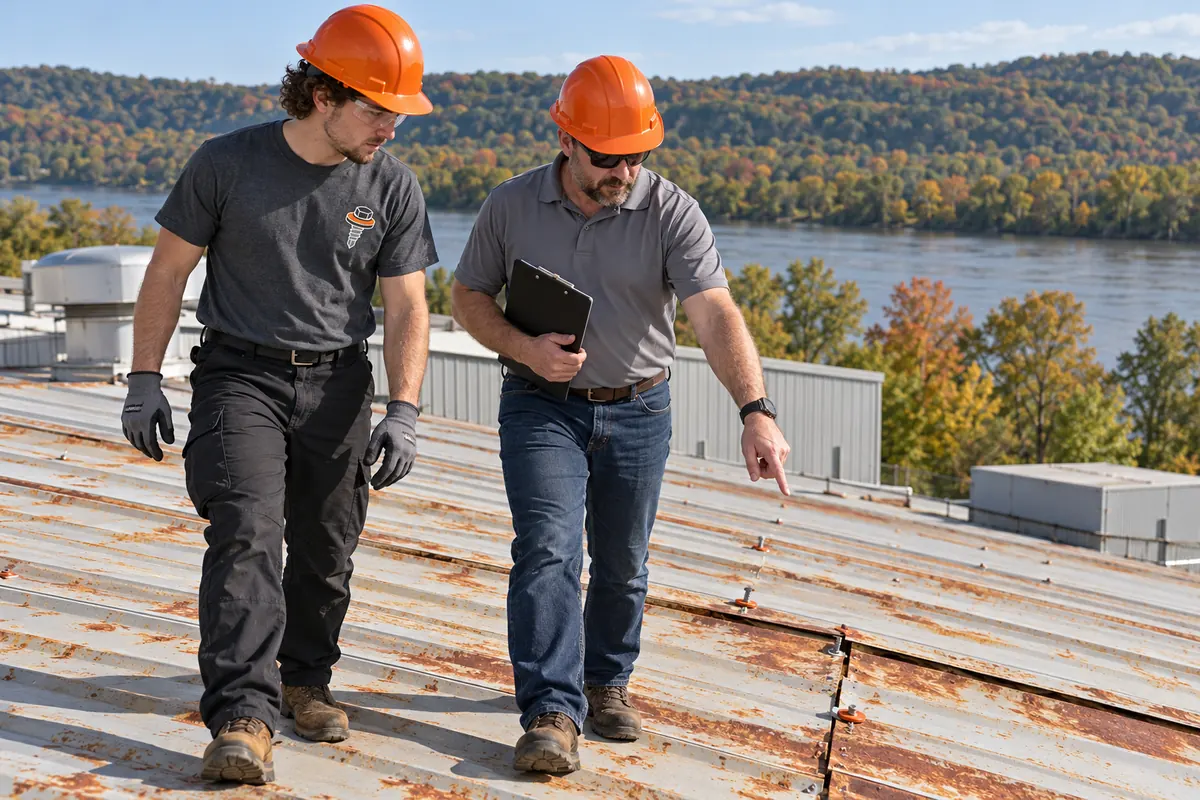
We map every low spot, check whether a sag comes from a bent purlin, and probe for wet insulation under the areas that pond.
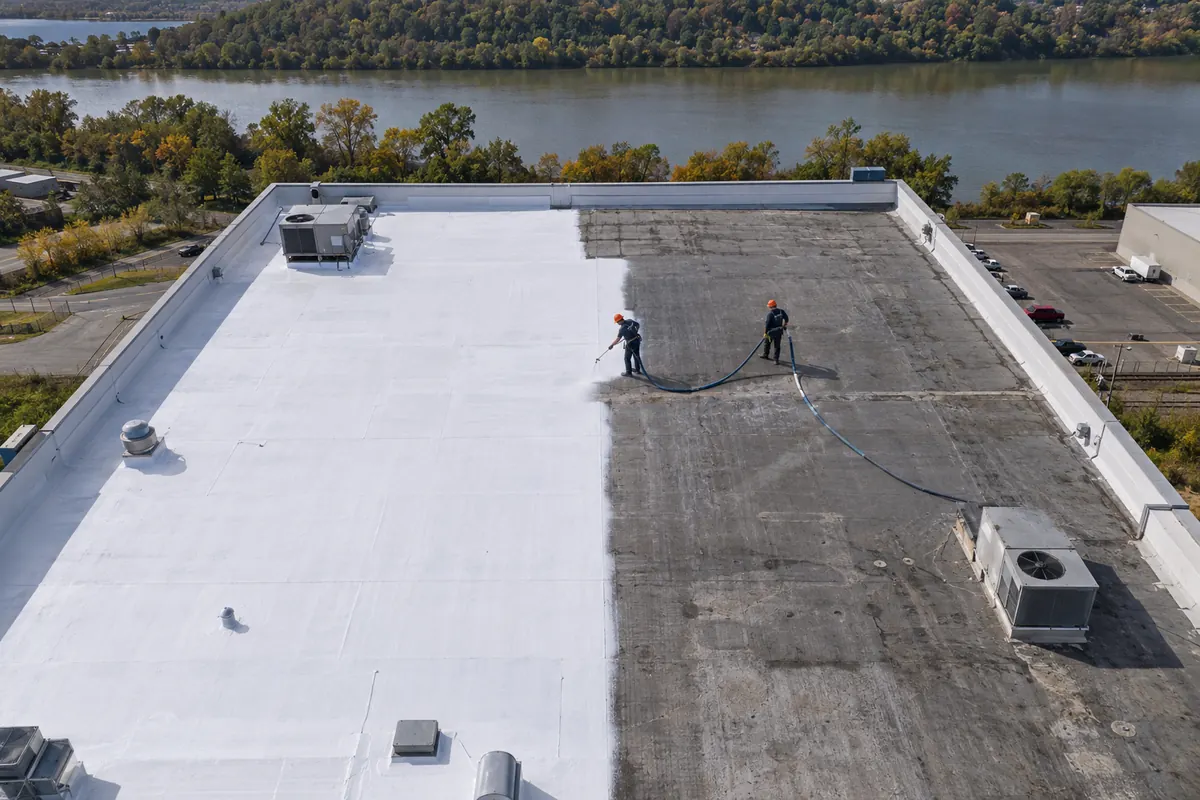
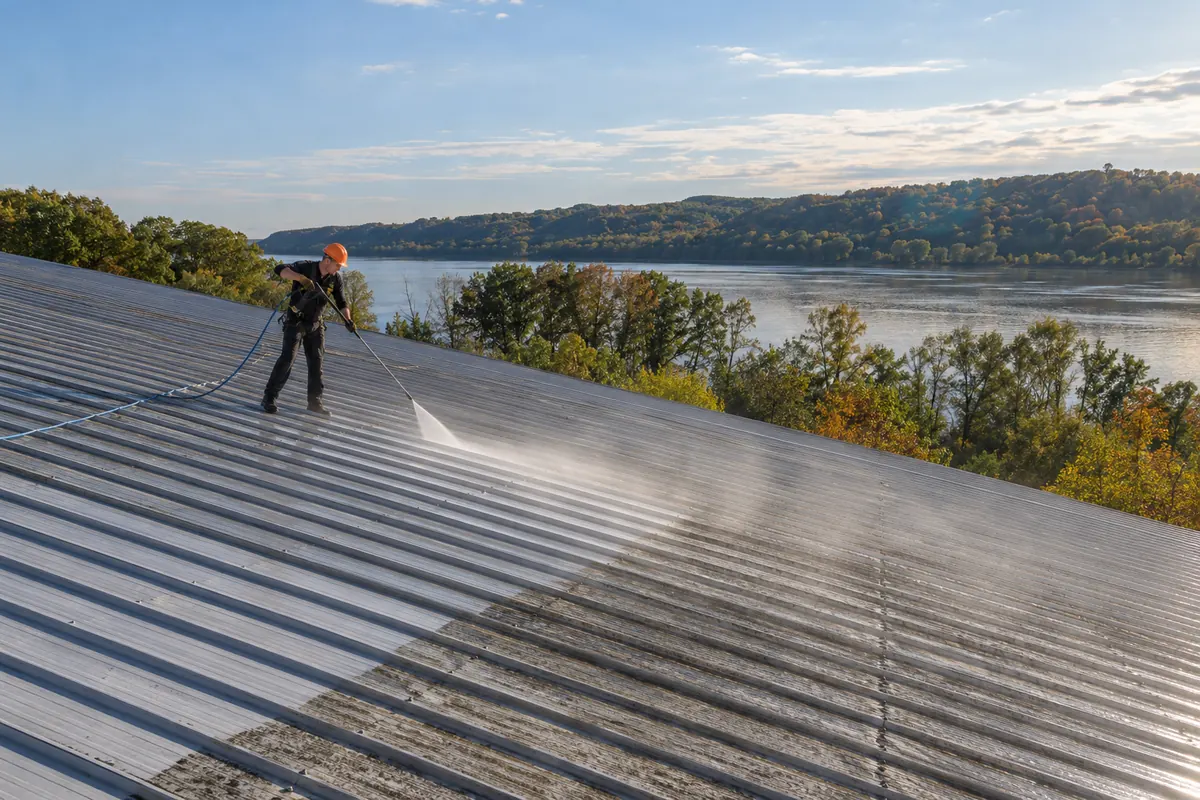
The roof is pressure washed and left to dry. A cured test patch with fabric is pulled to see whether silicone bonds on its own or needs a primer.
Treated rust gets primer, screws are sealed, and laps, ridge caps, and curbs get fabric in base coat before the field coat.
Silicone goes on in one thick coat in most areas, with extra at the eave and gutter line. A wet-film gauge confirms the thickness.
Silicone often shares a roof with another system. These are the pairings that come up on metal buildings.
Fastener and lap work under the silicone comes from the metal coating process, so the two are planned together.
Metal roof coating prepFoam can build slope toward gutters on a flat section, and silicone on top handles any water left behind.
Foam with a silicone topUpper panels that drain fast can take acrylic while silicone covers the wet eave, which saves on material.
Acrylic for steep panelsAll three work on metal, and the pick follows slope, standing water, foot traffic, and recoat plans. Silicone handles standing water and UV, acrylic is water-based and easy to recoat, and urethane stands up to foot traffic and hail.
Many jobs pair them, such as a urethane base under a silicone top. Each maker sets its own thickness and primer rules.
On low-slope metal with spots that hold water after rain, like dented eave panels or sags between purlins. Acrylics break down faster where water stands and the sun bakes the film.
Plan for two trade-offs: the white surface collects dirt, and future recoats almost always stay silicone, since most other coatings bond poorly to it.
It is pressure washed, rinsed, and dried. A dark glove wiped across the panels shows chalk, water beading shows leftover oil, and a cured test patch with fabric is pulled to check the bond.
Patches go on each panel type and color, since additions from different years carry different factory paint. Results set the primer choice.
NWS Louisville normals show about 48 inches of precipitation a year, so water sits in low spots often. That rainfall is one reason silicone goes at the eave and gutter line.
Silicone still needs a dry surface to go on. We watch the dew point and forecast and start each section on a dry morning.
Walk it once or twice a year and after big storms. Clear gutters and drains, and look for cuts near rooftop units where service techs kneel.
Dirt on the surface is normal. Small cuts get cleaned and patched with silicone, which bonds to itself.
Send the roof size for a ballpark range, or call us and describe where water sits after a storm.
Leave a name and number and we will call you back about your metal roof.