Screw Holes Sealed Over
What Wears Out
Backed-out screws and cracked washers drip onto racks and equipment, often far from the hole.
What The Coating Does
Firm screws get a sealed head, and the coating film covers the whole fastener row.
We do commercial metal roof coating in Clarksville after the hand work is done: every screw checked, laps fabric-reinforced, and rust treated down to firm steel.
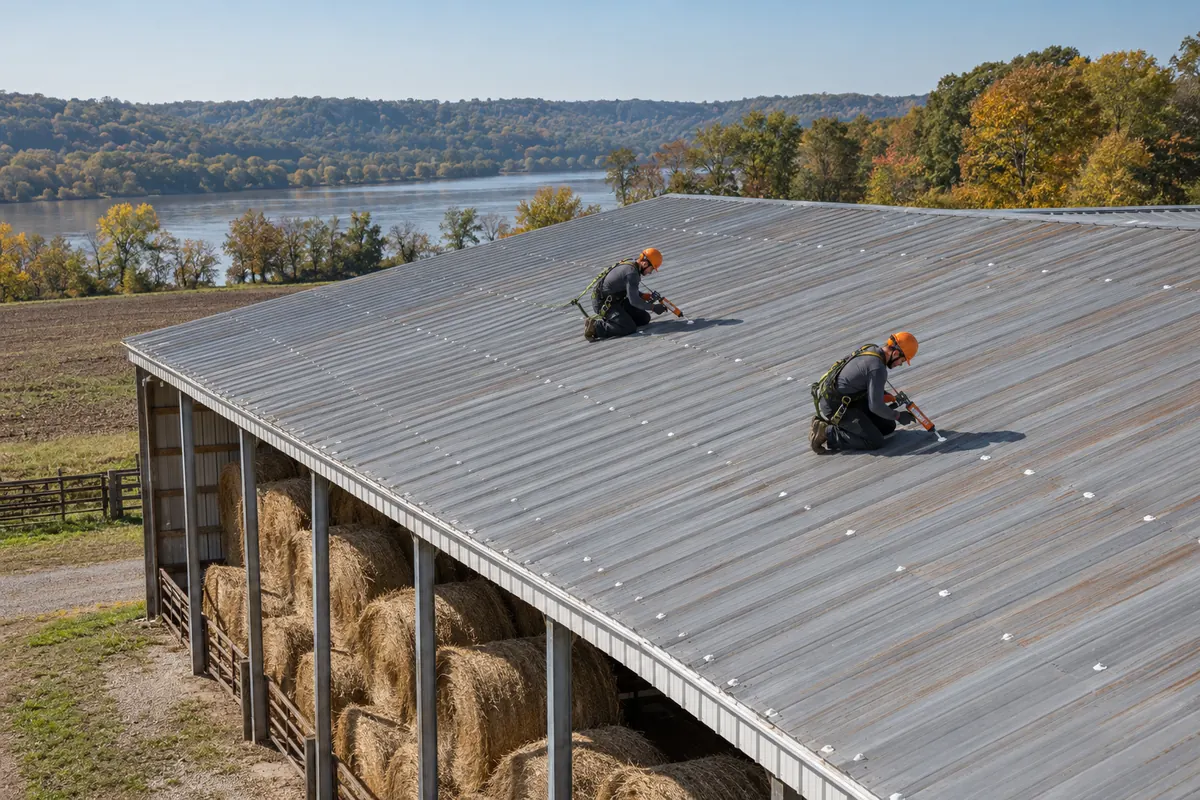
Metal roofs with firm panels, light surface rust, and leaks at screws or laps are the best candidates. Thin, perforated steel needs new panels first.
These six spots cause most drips on exposed-fastener and standing seam roofs. The numbers match the roof plan.
Wind flexes the cap at loose screws until the holes wallow out. Missing foam closures let rain blow in under it.
Rubber washers crack after years of sun and cold. Red rust bleeding from under a washer means that screw needs replacing too.
Overlaps running across the slope hold water after long rains, so they get the heaviest detail: sealant, fabric, and base coat.
Brittle fiberglass panels crack at their fasteners. We replace them in the matching rib profile and seal the new laps.
Water sits longest at the low end of each panel, which is why white rust powder and red rust gather along the eave.
Curbs cut through panels leak where flashing meets the ribs. Abandoned curbs and vents come out and get patch panels before coating.
Metal sheds water fast, which opens the door to several systems. These are the combinations we put on metal roofs most often.
| Option | Best For | Prep Before It | Recoat Later |
|---|---|---|---|
| Acrylic over rust primer | Sloped R-panel that drains quickly | Wash, prime bare steel, fabric at laps | Acrylic over a clean, dry film |
| Silicone at low spots | Dented eave panels and sags that hold water | Wash, adhesion patch, rust primer | Silicone only |
| Urethane base with an acrylic or silicone top | Roofs with foot traffic or hail exposure | Wash, prime, seal every screw head | Matching top coat |
| Spray foam plus coating | Buildings needing insulation or fighting condensation | Fix panels, extend edge trim and gutters | Recoat the foam topcoat |
Coating helps most when the steel underneath is still firm. Each benefit below depends on that prep being done.
Backed-out screws and cracked washers drip onto racks and equipment, often far from the hole.
Firm screws get a sealed head, and the coating film covers the whole fastener row.
Red rust spreads from the drip edge and washers until the steel thins out and perforates.
Abraded and primed spots sit under a continuous film that keeps water off the bare steel.
Re-paneling means tearing off steel and exposing the floor below to weather for days.
Coating keeps the existing panels working, with less tear-off waste going to the landfill.
Paint chalks and fades until little is left to protect the zinc and steel.
A coated roof is washed and recoated with the same system when the film wears thin.
Call and tell us whether the drips line up across the building or show up at single spots. Lines point to end laps; single spots point to screws.
(812) 297-3434A metal roof is coated in a fixed order. Skipping one step shows up later as peeling at the laps or drips at the screws.
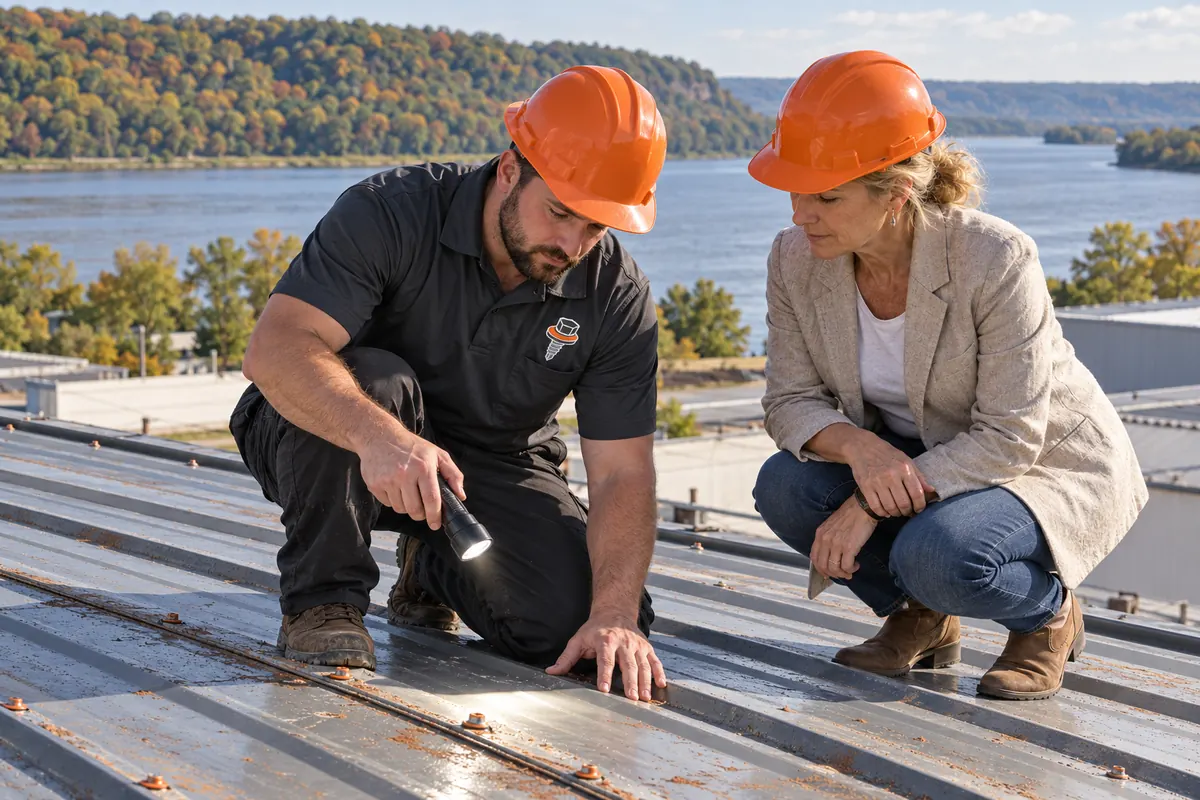
Panels, screws, laps, trim, and the underside of the deck are checked, and rusted-through panels or cracked skylight panels are marked for replacement.
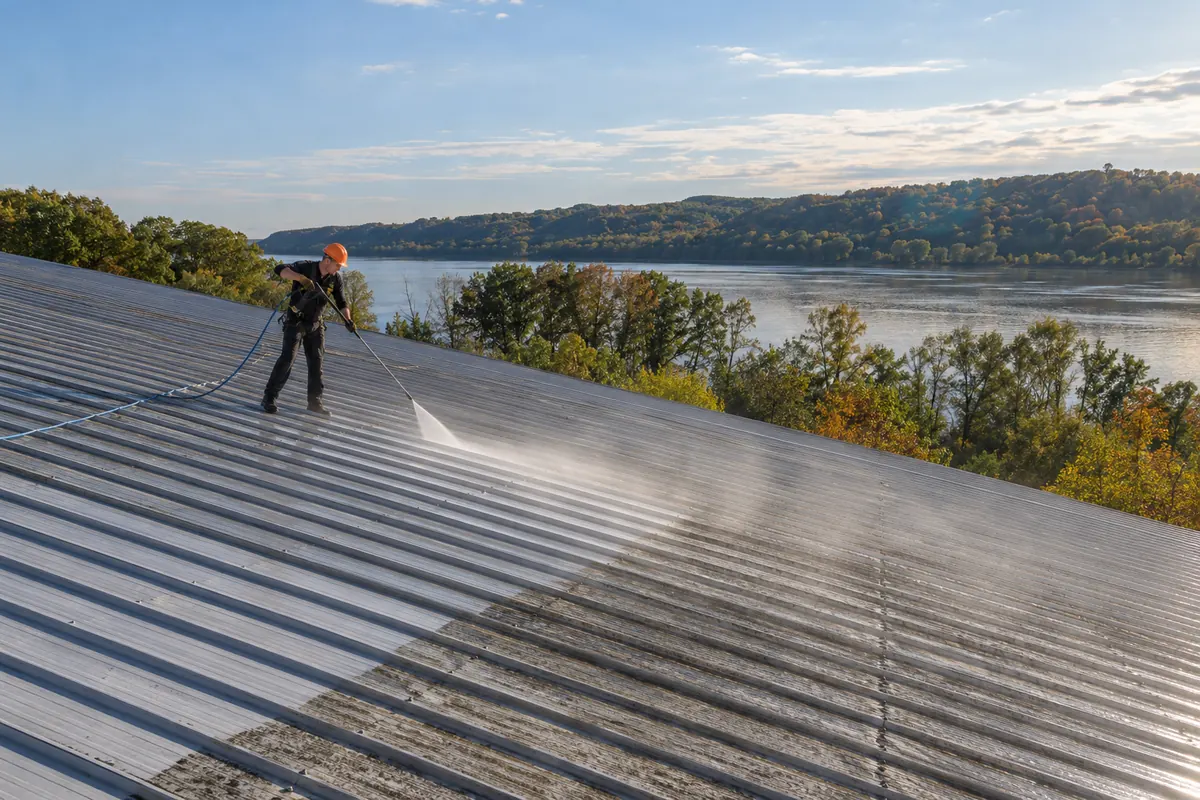
After repairs, the roof is pressure washed and dried. Red rust is abraded to firm metal and primed; white rust powder is washed off and primed as the maker directs.
Each screw is tightened, replaced, or upsized, then sealed. Laps and ridge caps get polyester fabric set in base coat.
Base and top coats go on to the product thickness. We walk the roof with a wet-film gauge and touch up thin spots.
Some metal roofs need more than a field coat. These systems cover low spots, insulation, and steep panels.
Dented eave panels that hold water after rain do better under silicone, which holds up where acrylic breaks down.
Silicone for low spotsShops that drip on cold, dry mornings have a condensation problem, and foam over the panels addresses the cause.
Spray foam over metalSteep R-panel roofs that drain fast suit a bright white acrylic, which recoats easily later.
Acrylic for sloped panelsRoofs with solid panels, light surface rust, and leaks at screws or laps. Warehouses, shops, ag buildings, self-storage rows, and church fellowship halls with R-panel or standing seam roofs often qualify.
Panels rusted through, sagging purlins, or ribs crushed by foot traffic get fixed or re-paneled first, because a coating adds no strength to thin metal.
Red rust is the steel itself corroding, seen as orange-brown stains, flakes, and pitting. White rust is the zinc layer on galvanized panels corroding, seen as white or gray powder at laps and low spots.
Red rust is wire-brushed or abraded to firm metal, then primed. White rust is washed off, then primed as the coating maker directs.
Every exposed screw is checked. Loose, stripped, or rusted ones are tightened, replaced, or swapped for an oversized screw, since cracked washers open a path for water at each hole.
Once the screws are firm, each head gets brush-grade sealant or a dab of base coat so the field coat has a smooth surface to bridge.
Laps are cleaned, primed where needed, and covered with polyester fabric set in base coat. End laps run across the slope and get the heaviest detail, because water backs up there.
These joints move every day as the steel warms and cools. Coatings that skip fabric on moving joints often split along the laps.
Yes. Standing seam hides its clips under raised seams, so prep centers on seams, panel ends, trim screws, and wall transitions.
Exposed-fastener R-panel and corrugated roofs need far more hand work, since every screw head is a possible leak. On standing seam, owners often coat to refresh a chalked finish more than to stop leaks.
Tell us the roof size and condition for a ballpark range, or call and walk us through the drips you are chasing.
Leave a name and number and we will call you back about your metal roof.