A Cooler Work Floor
What Wears Out
Bare galvanized steel and faded paint heat up and pass that heat to the floor below.
What The Coating Does
A bright white acrylic reflects more sun. Uninsulated shops with no ceiling feel the change most.
We apply acrylic roof coating in Clarksville on sloped metal roofs that shed water fast. It is water-based, bright white, and easy to recoat when it wears.
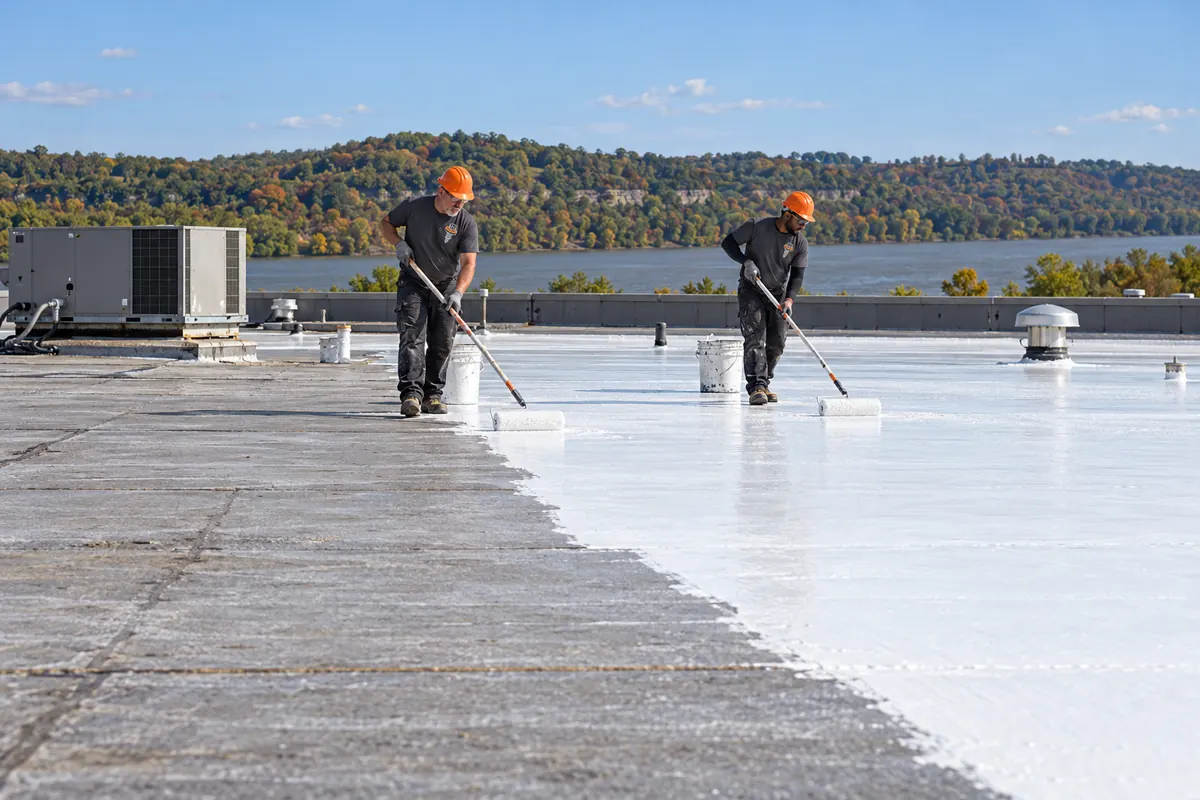
Acrylic does well on roofs that drain within hours of a storm. Where water sits for days, a different top coat holds up longer.
Acrylic bridges small gaps but stays only as good as the steel under it. These six spots get fixed first.
Gaps where closure strips have fallen out let blowing rain under the cap. New closures go in and the cap edges are sealed.
Faded paint leaves a powder that blocks adhesion. A wipe with a dark glove shows it, and washing removes it.
Acrylic alone splits over moving joints, so every end lap gets fabric embedded in base coat first.
Yellowed fiberglass panels are swapped for new ones in the same rib profile, then masked so the white coat stays off them.
Low ends of the panels stay damp longest. If water lingers here, that strip gets a ponding-rated top coat instead of acrylic.
Service paths to rooftop units wear acrylic quickly. Walk pads or a tougher urethane top coat go along those paths.
Acrylic covers most of a sloped metal roof well. The setups below show where it goes alone and where it gets help.
| Option | Best For | Cure Needs | Watch For |
|---|---|---|---|
| Acrylic over rust primer | Sloped R-panel with light rust | Warm, dry days above the maker's minimum | Rain before the film cures |
| Acrylic with a silicone eave strip | Roofs whose low ends stay wet | Two products, two sets of limits | Recoat each zone with its own product |
| Urethane base with an acrylic top | Roofs with hail exposure or service traffic | Solvent base, then water-based top | Odor near air intakes |
| Acrylic recoat | Coated roofs with a worn, chalked film | A clean, dry, tested surface | Peeling areas that need removal |
Acrylic delivers these when the roof drains well and the weather cooperates during the cure.
Bare galvanized steel and faded paint heat up and pass that heat to the floor below.
A bright white acrylic reflects more sun. Uninsulated shops with no ceiling feel the change most.
Solvent coatings near air intakes can push odor into offices and shops.
Water-based acrylic carries little smell, so tenants and staff keep working below.
Every coating wears thinner over the years under sun and rain.
Acrylic bonds well to clean, aged acrylic, so a recoat is a wash and a new top coat.
Replacing faded but firm panels sends good steel to the scrap pile.
Coating the panels you have avoids tear-off and keeps the building closed to weather.
Call and tell us whether the building has insulation under the panels. An uninsulated shop is where a white top coat shows the biggest change.
(812) 297-3434Acrylic cures by drying, so the schedule follows the forecast as much as the roof.
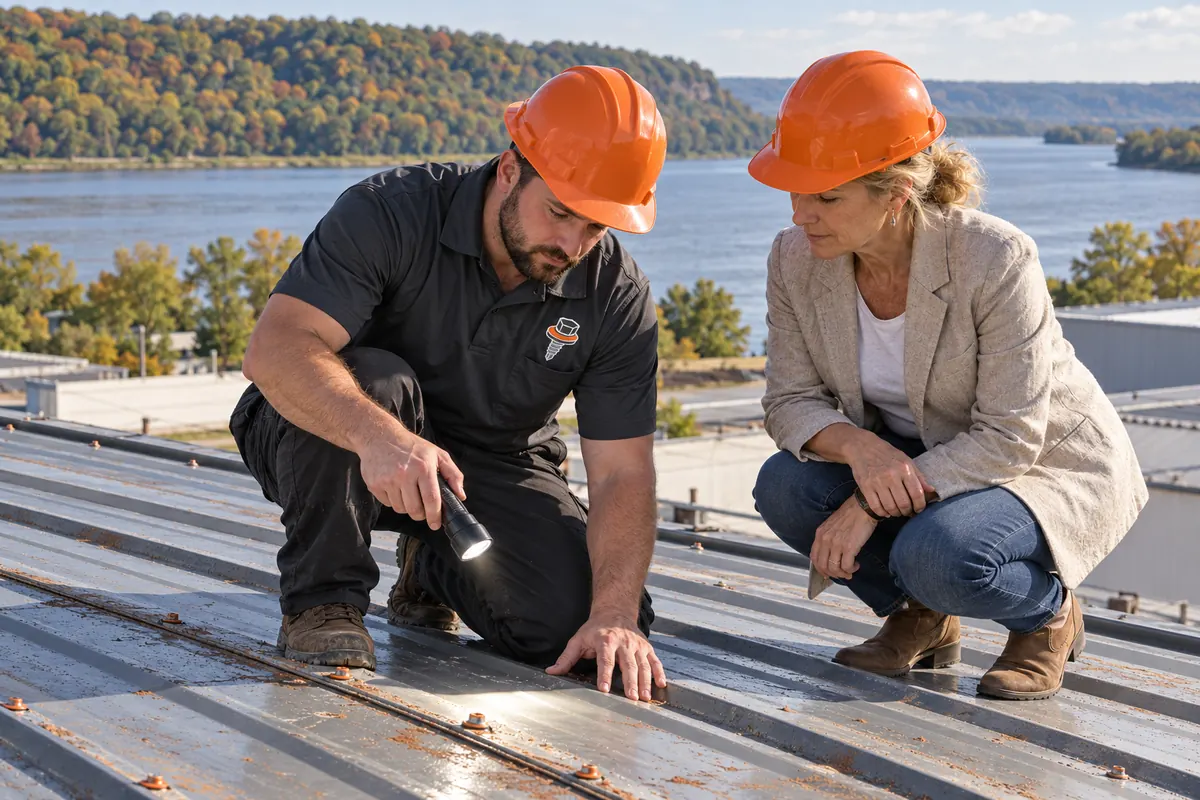
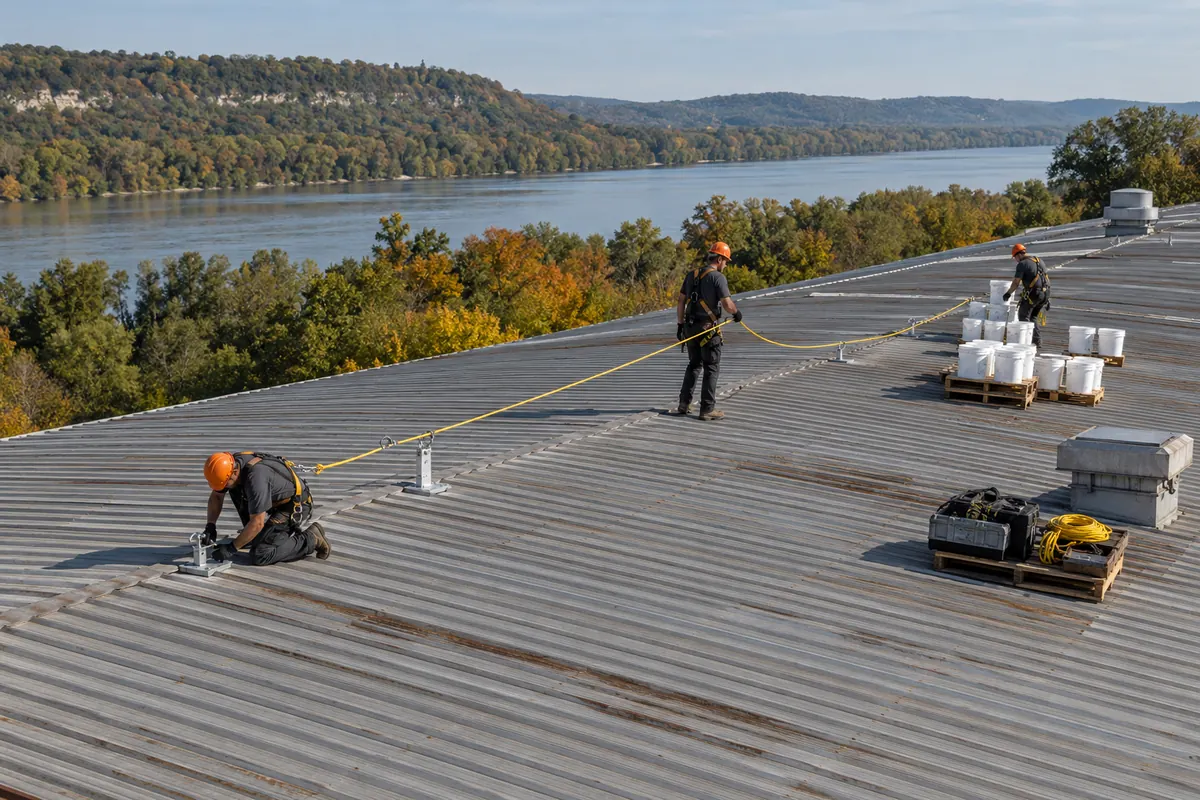
We check how fast each section drains, look for low ends that stay wet, and test how much chalk comes off the old paint.
Washing removes chalk and dirt. Bare steel and treated rust get a rust-inhibiting primer before any acrylic touches them.
End laps, side laps, ridge caps, and skylight edges get fabric in base coat, since acrylic alone cracks over moving joints.
Base and top coats go on during warm, dry stretches with no rain in the forecast. Spring and fall bring the most workable days.
Acrylic covers a lot of metal, but a few spots on most roofs need something else.
Wet eave strips and gutters get silicone, since acrylic wears fast where water sits.
Silicone for wet eavesScrews, laps, and rust are handled through the metal coating prep before the acrylic goes on.
Metal roof coating prepIf the real complaint is heat or cold-morning drips, foam over the panels adds the insulation acrylic lacks.
Spray foam roofingA white top coat reflects more sunlight than faded paint or bare galvanized steel, so the panels run cooler on summer afternoons and pass less heat inside. The change on the bill varies by building.
Uninsulated shops feel it most. Ask for the top coat’s rated values in the Cool Roof Rating Council directory, and compare bills from matching months.
Duke Energy Indiana serves many Clarksville-area customers, and cooperatives such as Clark County REMC and Harrison REMC serve others. The name on your electric bill confirms it.
Programs change yearly and only the utility decides what qualifies. Keep the top coat data sheet and dated roof photos on file in case one applies.
Warm, dry days with no rain before the film cures. Each maker lists a minimum temperature and dew point, and acrylic washes off the roof if a shower hits it too soon.
We plan acrylic for spring and fall stretches and save cold, damp weeks for other work.
Wash it, let it dry, and test a patch. Clean, aged acrylic takes a new acrylic top coat well, and areas that peeled get scraped and primed first.
Recoating before the film wears through to metal keeps the job to a wash and one coat.
Yes, most acrylic lines offer tints. A tinted coat reflects less sun than white, which matters little on an insulated building and more on a bare metal shop.
On roofs seen from the street, a color close to the original finish is a common choice.
Send the roof size and condition for a ballpark number, or call us to talk through timing around the weather.
Leave a name and number and we will call you back about your metal roof.