Color That Fits The Street
What Wears Out
Faded, chalked paint makes an older building's roof look neglected from the sidewalk.
What The Coating Does
A tinted top coat close to the original finish refreshes the roof without changing its character.
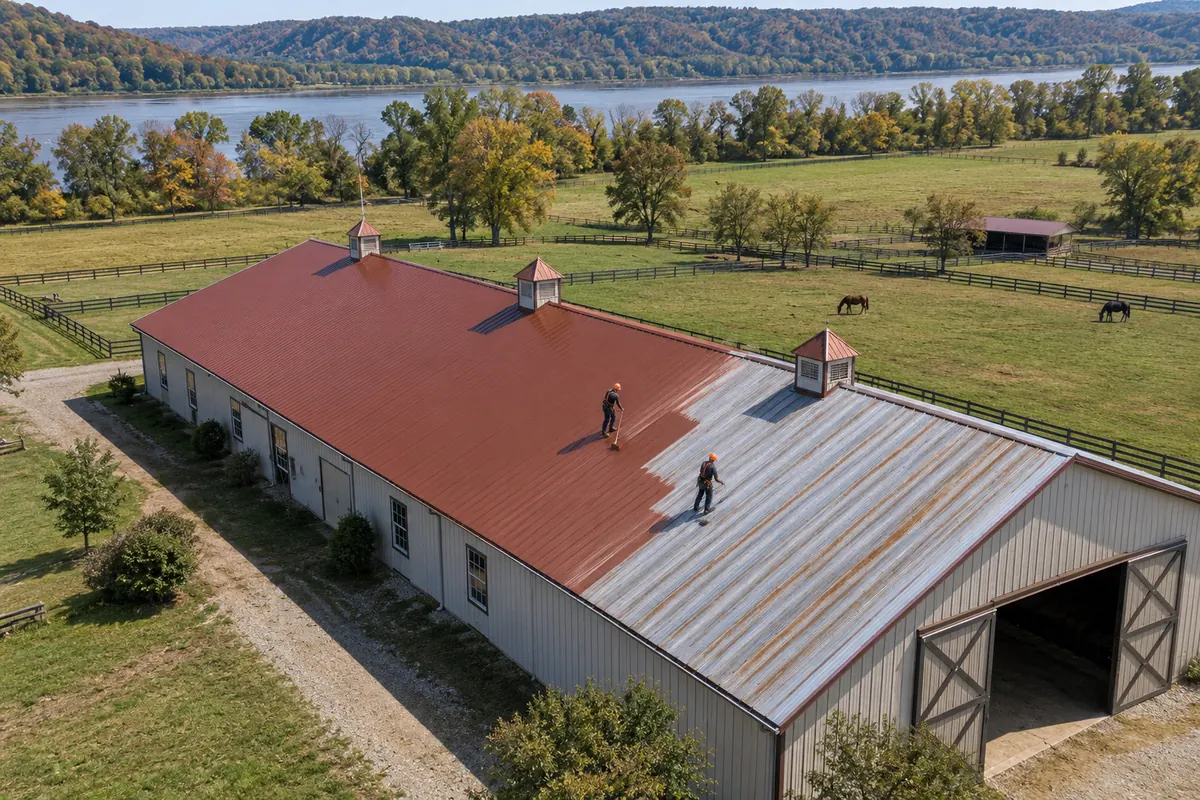
We do metal roof coating in Jeffersonville for warehouses, shops, and older downtown buildings, with color picked for street-visible roofs and extra prep along wet eaves.
Roof work on a building in a Jeffersonville historic district needs a Certificate of Appropriateness from the Historic Preservation Commission before the city permit. Parcels in the Oak Park Conservancy District need that district's pre-approval first.
Color is the main question on metal. A bright white top coat on a standing seam roof seen from the street changes a building's look, so we bring tinted chips close to the original finish.
Damp river air and older finishes shape what we find. The numbers match the plan.
On visible standing seam roofs, the ridge and seams set the look. We check raised seams for open spots before any color goes on.
Factory paint from different decades reacts differently to primers, so adhesion patches go on each panel color.
Low pitches on older warehouses let water back up at end laps, so fabric and base coat go over each one.
Penetrations on older buildings often carry layers of mastic. Loose patching comes off before new flashing and coating.
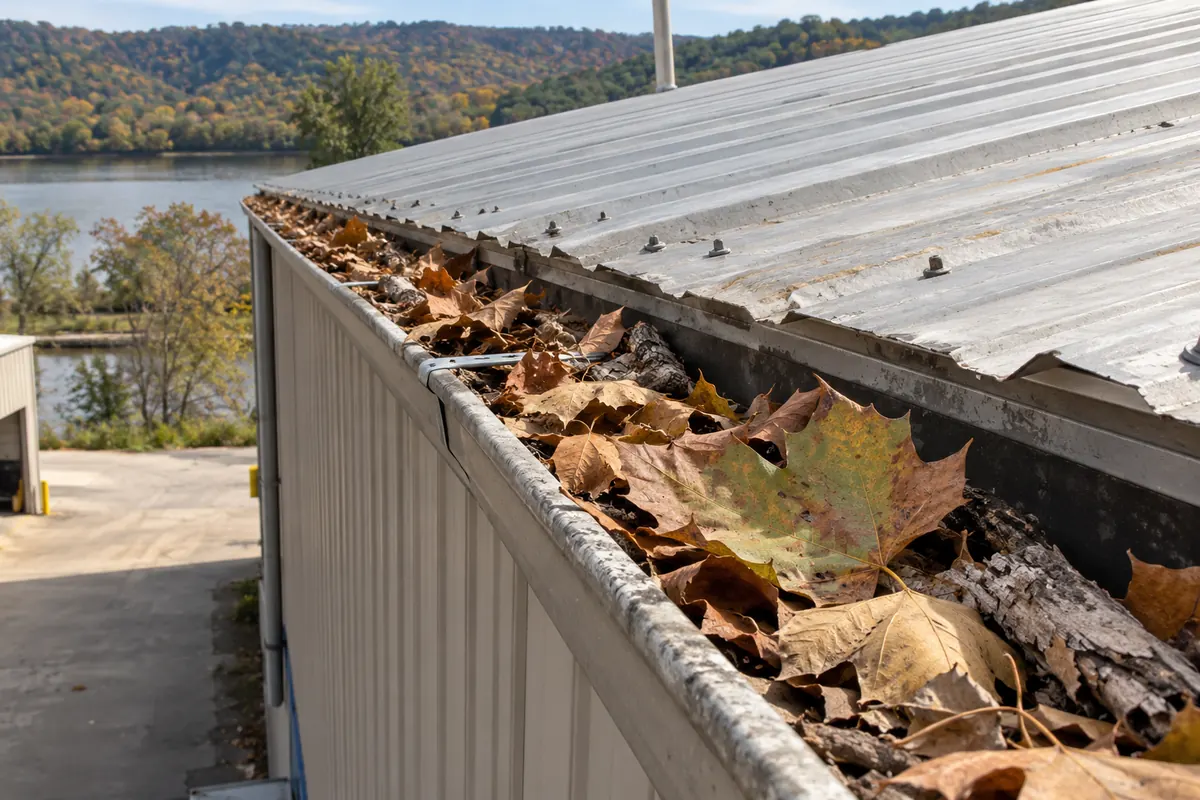
Damp air keeps the bottom few feet of each panel wet longest, so red rust starts at the drip edge and bottom end lap.
Downspouts that dump next to the foundation and curbs with rusted flashing get rerouted or resealed before coating.
These benefits apply once rust at the eave is treated and the color is approved.
Faded, chalked paint makes an older building's roof look neglected from the sidewalk.
A tinted top coat close to the original finish refreshes the roof without changing its character.
River humidity keeps panel ends wet after rain and dew, and rust eats the bottom laps first.
Primed eave ends under a continuous film keep water off the treated steel.
Rust streaks running down from washers show up plainly on a roof people see.
Sealed screw heads stop the drip and the streaking together.
Replacing panels on a historic building raises approval questions about profile and material.
Coating keeps the existing profile in place, with only the finish color to review.
These three systems cover most Jeffersonville metal roofs, from visible downtown roofs to riverfront warehouses.
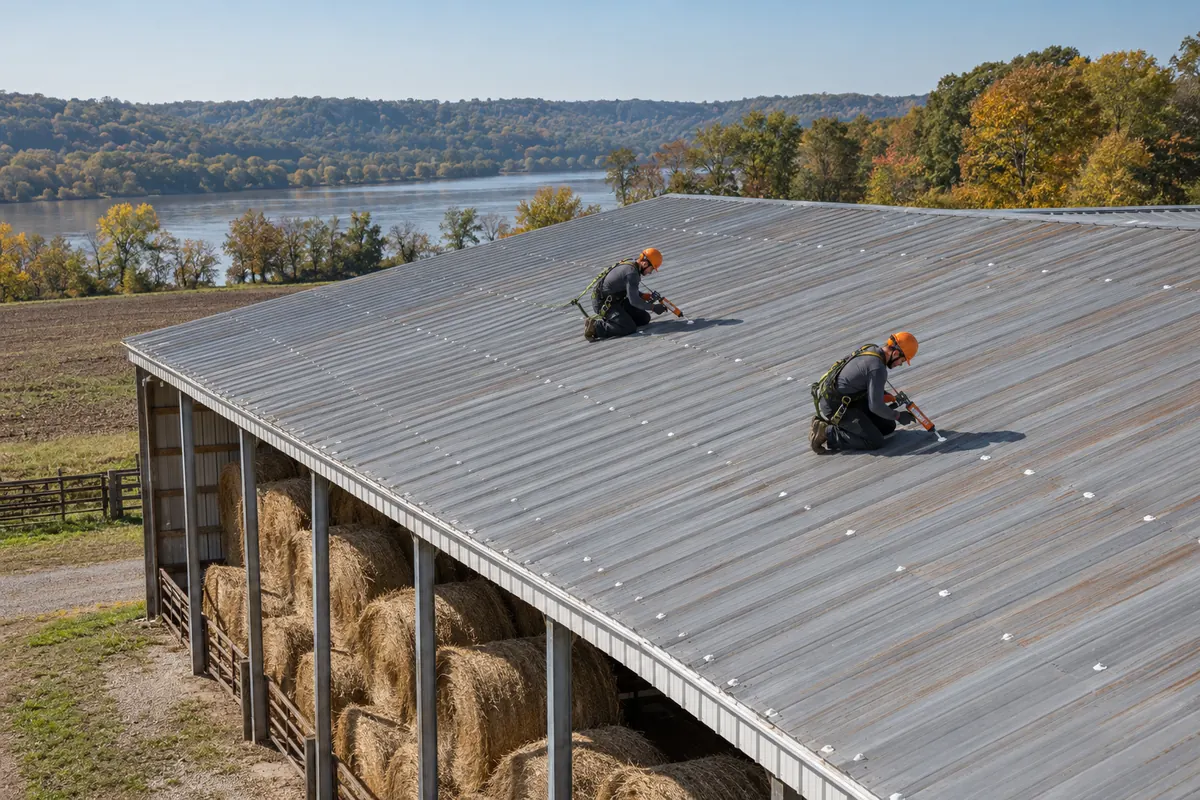
Seams, screws, and rust handled panel by panel, then a top coat in the approved color for street-facing roofs.
Metal roof coating details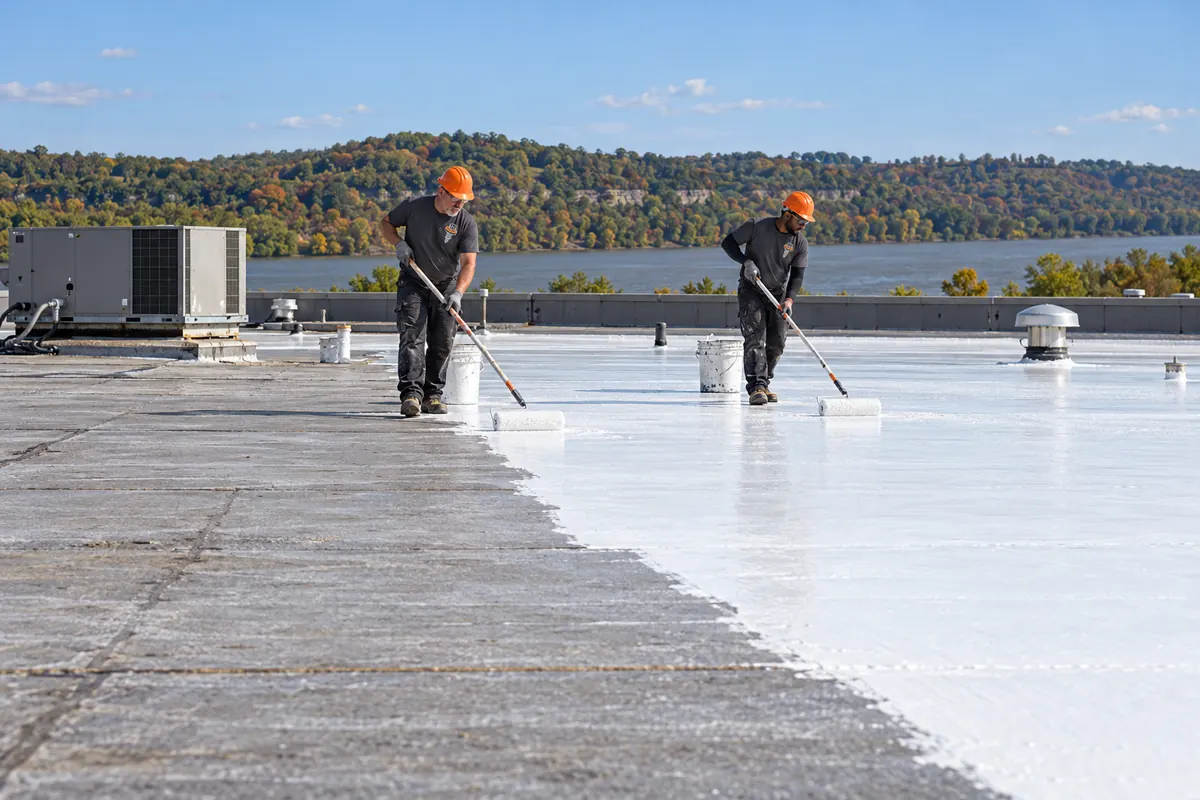
Tintable and water-based, acrylic suits sloped panels that drain fast and need a color near the original finish.
Acrylic roof coating details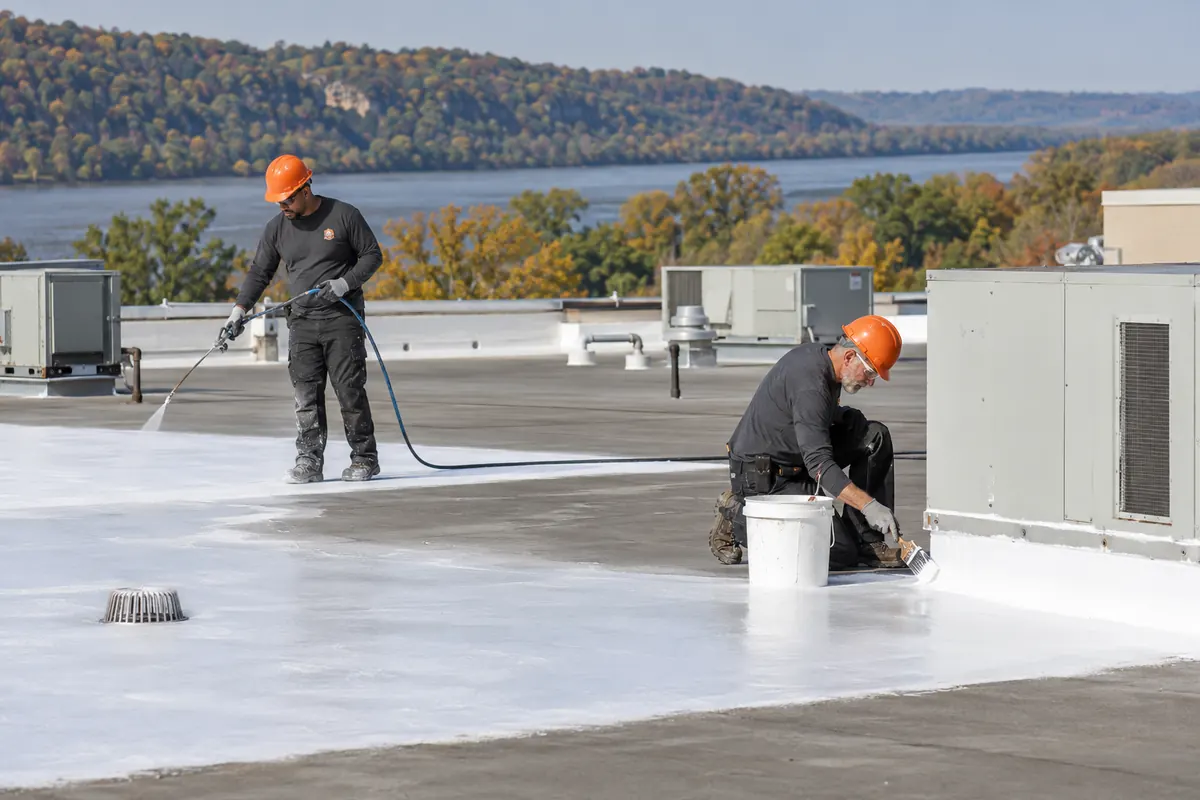
Wet eave strips and riverfront gutters where water lingers get silicone, which holds up under standing water.
Silicone roof coating detailsCall and describe where the rust sits on the panels. Rust that starts at the drip edge and bottom lap tells us how much prep the eave needs.
(812) 297-3434Approvals come before the roof work on historic parcels, so the schedule starts at the commission.
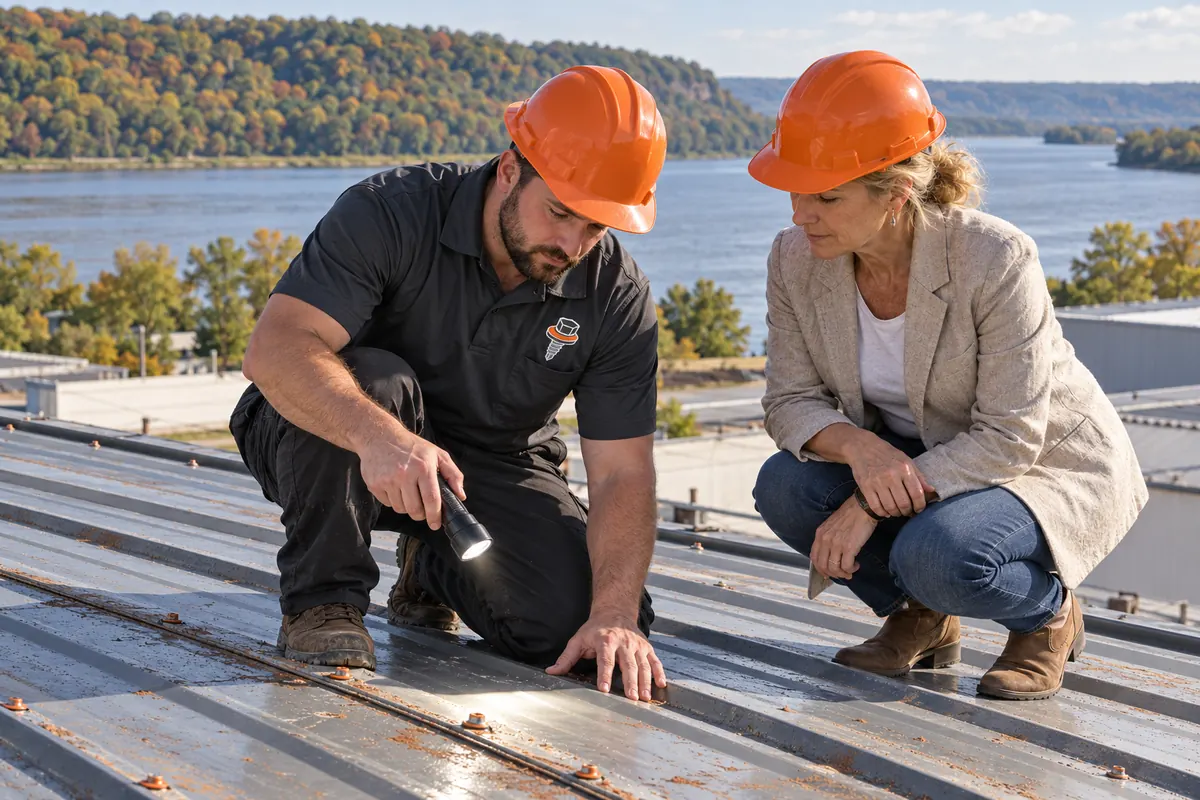
We photograph the roof from the street, note the panel profile, and check eaves, laps, and gutters for rust from damp river air.
On historic parcels, roof color chips and photos go to the Historic Preservation Commission before the Building Commission permit.
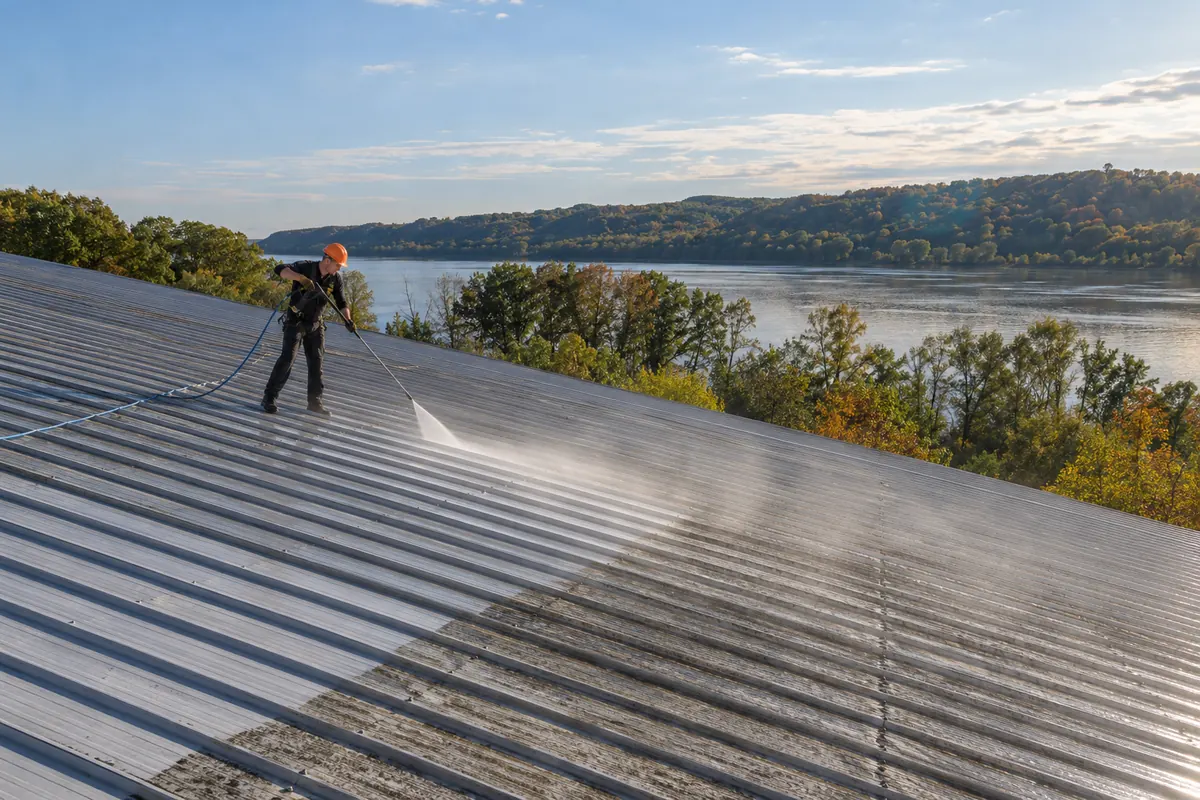
The bottom few feet of every panel are cleaned and primed with extra care, and gutter seams and straps are fixed.
Base coats go on, then the top coat in the approved shade, with thickness checked across the whole roof.
Five towns plus Clarksville round out where we coat metal roofs beyond Jeffersonville. Outside them? Call us or send us a message.
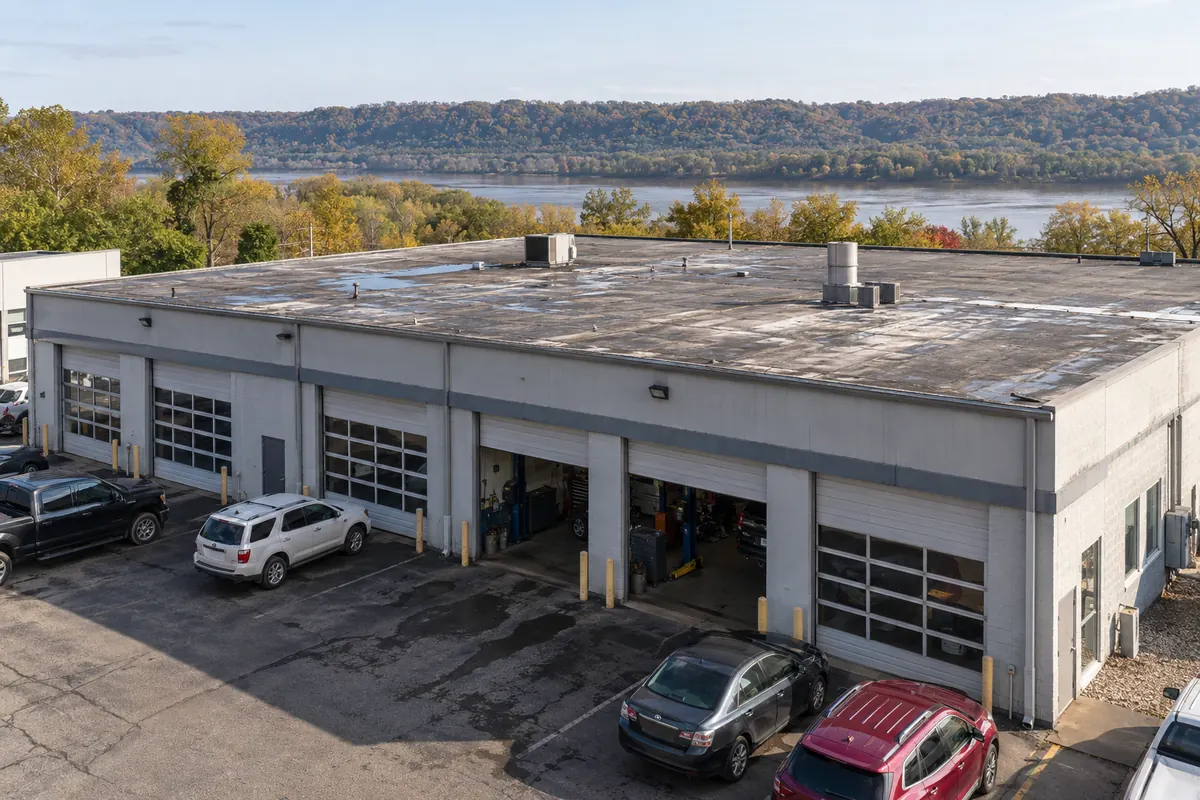
Rooftop units moved during coating, with their own permits.
Wash water and rust slurry kept out of storm inlets.
Hilltop wind, wallowed screw holes, and calm-air spray days.
Large River Ridge roofs coated in phases around truck courts.
Older downtown buildings with old paint and internal gutters.
Yes. A Certificate of Appropriateness from the Historic Preservation Commission comes before the city permit, and Oak Park Conservancy District parcels need that district's pre-approval first. The Jeffersonville Building Commission then issues the permit for commercial work.
Bring street-view photos, the panel profile, and color chips for the top coat.
Extra attention at gutters, downspouts, and the low end of each panel, where moisture lingers. NWS Louisville records that the 1937 flood covered about 90 percent of Jeffersonville, a reminder of how close much of the city sits to the Ohio River.
Expect careful priming of the bottom few feet of every panel, sealed gutter seams, and downspouts routed away from the foundation.
Coating lines offer tinted colors, and we bring chips to compare against the existing finish in daylight. Darker tints reflect less sun than white.
On a roof hidden behind a parapet, white is the usual pick; on a street-facing standing seam roof, a near match is common.
It depends on the commission's meeting calendar, so we start the paperwork before ordering material. Roof prep can wait until the certificate is issued.
Parcels outside the districts go straight to the Building Commission for the permit.
Where the metal is still firm, coating the inside of a gutter is an option. Rusted seams, end caps, and straps get sealed or replaced first.
Gutters rusted through at the seams are replaced, since coating adds no strength to thin metal.
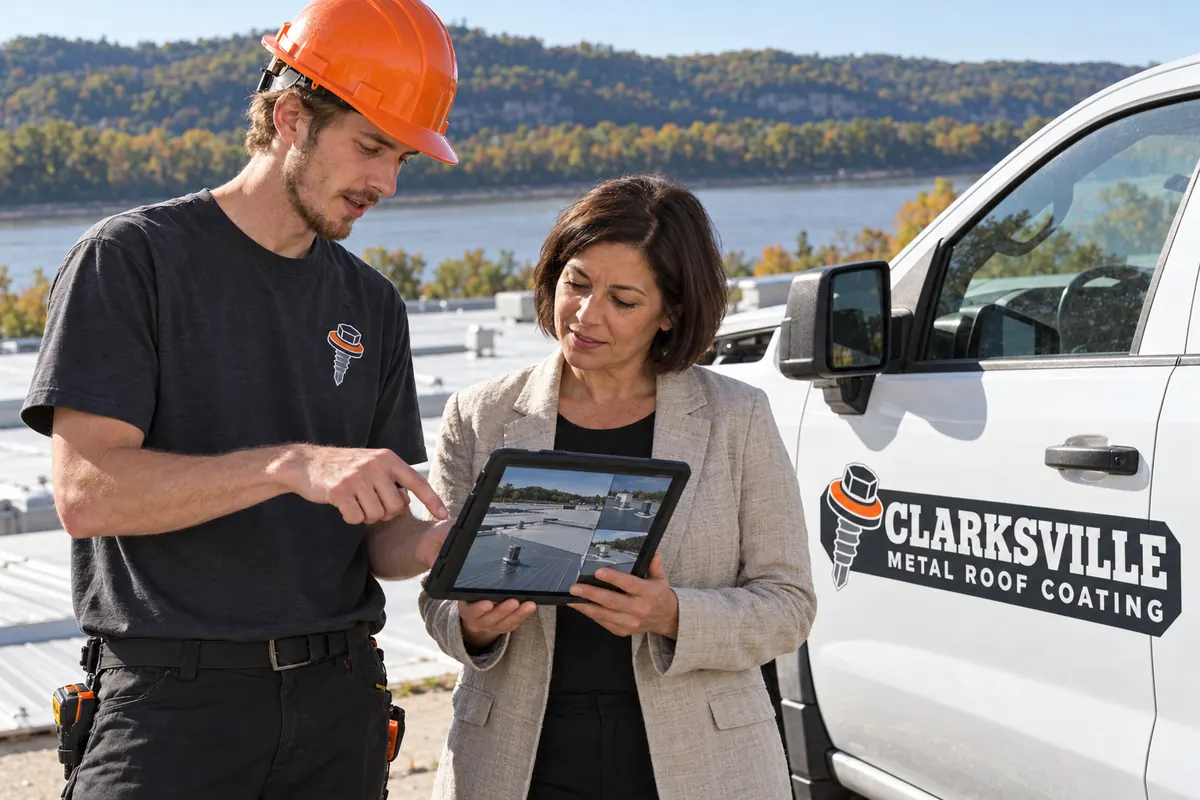
Send the roof size for a ballpark range, or call us about color, approvals, and rust at the eaves.
Leave a name and number and we will call you back about your metal roof.