A Brighter, Cooler Surface
What Wears Out
Dark asphalt shingles absorb sun and heat the attic or space below.
What The Coating Does
A light shingle coating reflects more sun from the pitched section.

We coat pitched asphalt shingle sections on Clarksville strip centers, offices, and churches when the shingles lie flat, keep their granules, and the maker approves.
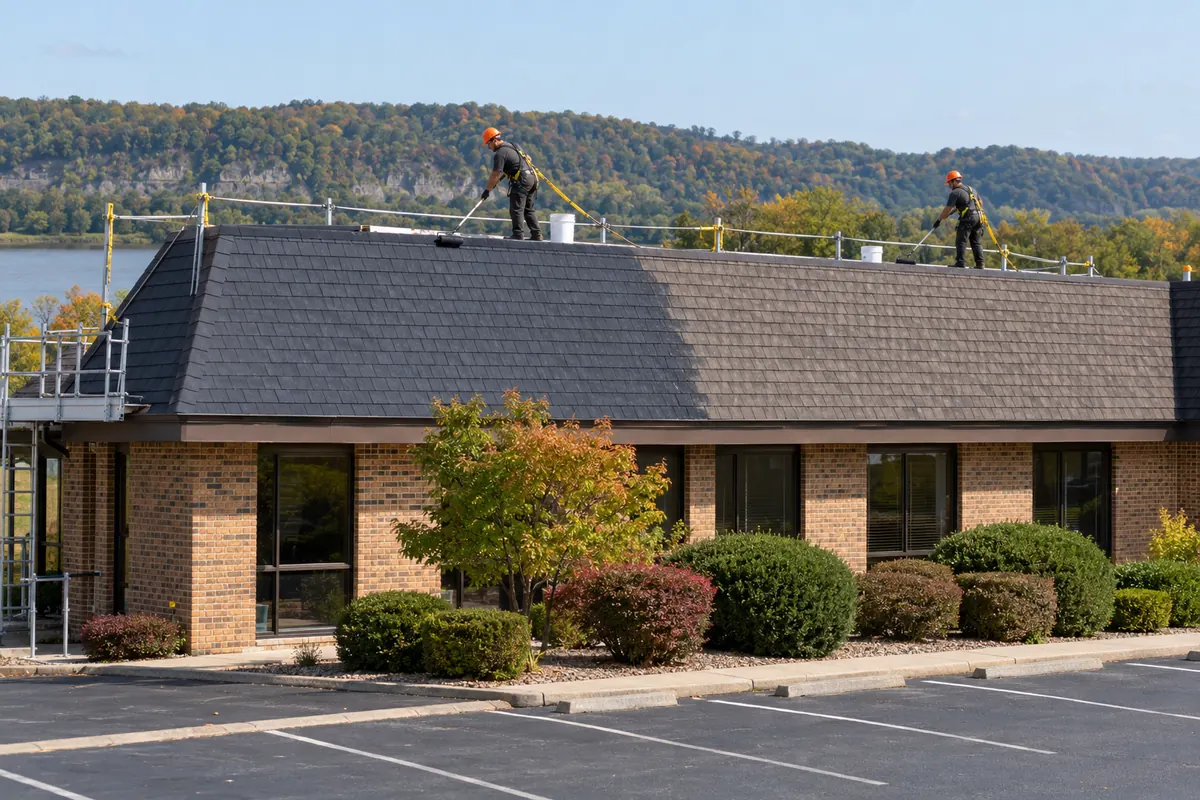
Shingle coating has a narrow gate. Flat, intact shingles with the maker's approval qualify; curled or bald ones point to a new roof.
The plan stands in for a pitched roof section. These six zones decide whether shingle coating fits or a new roof makes more sense.
Cap shingles crack first along the ridge. Split caps get replaced before any coating is considered.
Granules protect the asphalt from the sun. Heavy loss in the field exposes the mat and rules out coating.
Edges that curl or cup leave gaps a coating bridges poorly, so we lift and check courses along each lap line.
Pipe boots and vents crack around their collars. New boots and flashing go in before the field is coated.
Water backing up at the eave softens the decking. Soft spots near the gutter need decking repair first.
Where a shingle section meets a wall or equipment curb, step flashing and counterflashing get checked and resealed.
Shingle coatings are made for asphalt and differ from the products sold for metal. Here is how we sort shingle sections.
| Shingle Condition | Usual Path | Work Involved | Note |
|---|---|---|---|
| Flat, granules intact, maker approves | Shingle coating | Clean, repair boots and flashing, apply shingle-rated coating | Keep the maker's letter on file |
| Flat, light granule loss | Coating after a closer check | Test areas, repair caps, then coat | Coverage rate rises on rough surfaces |
| Curled or cupped in places | Repair or replace those areas | Replace damaged shingles, then decide | Coating leaves curls in place |
| Bald, brittle, or soft decking | New roof | Tear-off and decking repair | Coating is the wrong tool here |
On the right shingle roof, a coating buys time. These benefits apply only after the shingle checks pass.
Dark asphalt shingles absorb sun and heat the attic or space below.
A light shingle coating reflects more sun from the pitched section.
Aging shingles shed granules into the gutters with every heavy rain.
The coating locks remaining granules down and covers the mat.
Replacing a shingle section means tear-off, dumpsters, and an open roof over offices or a sanctuary.
Coating flat, intact shingles puts off that work while the roof stays closed.
Strip centers often mix a pitched shingle front with a metal or flat roof behind.
Coating both sections gives one finished look and one upkeep schedule.
Call and describe the shingles: flat or curled, and how much grit washes out after rain. That tells us whether to look at coating or a new roof.
(812) 297-3434Most of the work is the check that decides whether coating belongs on the roof at all.
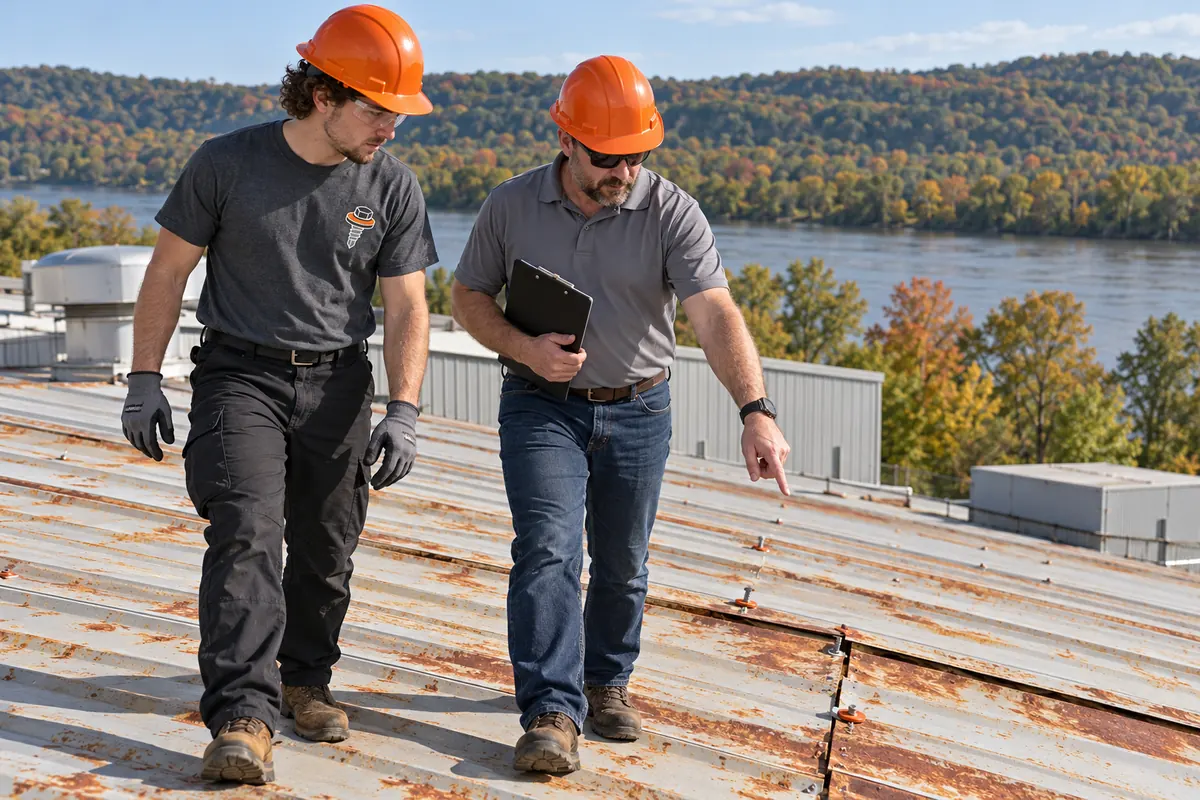
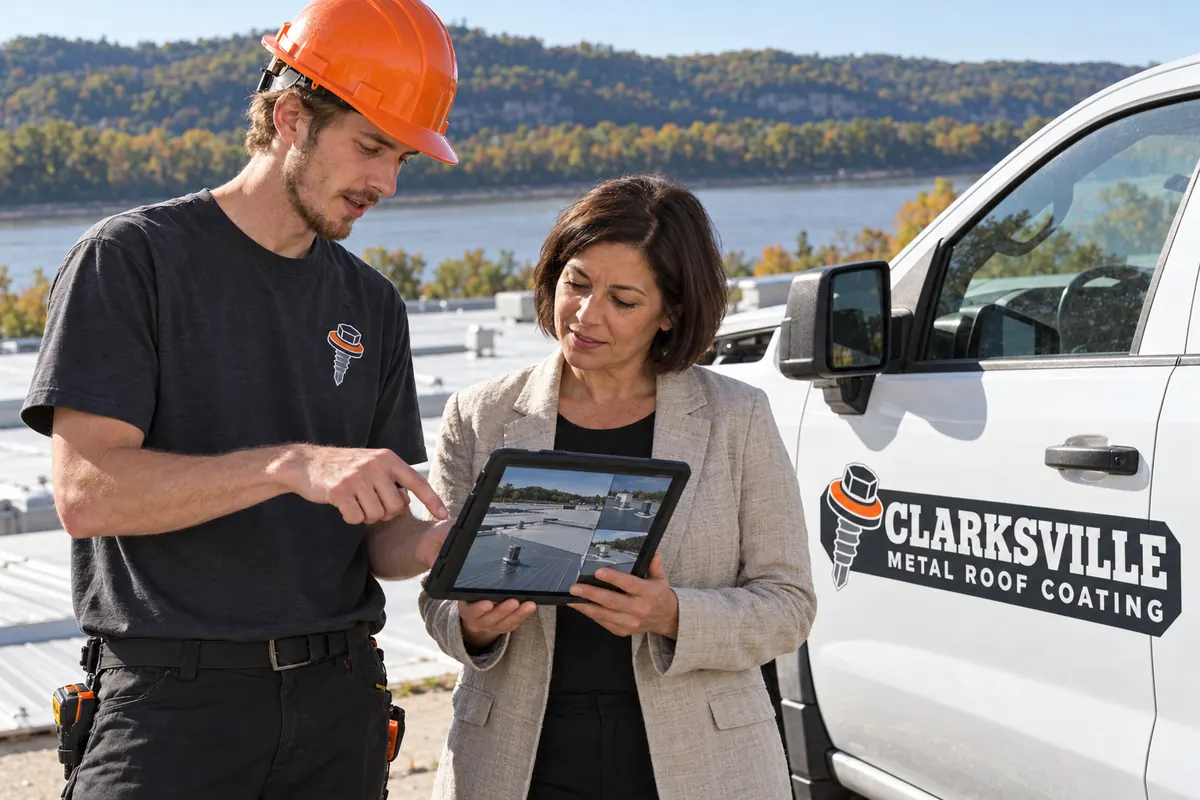
We lift courses to check for curling, measure granule loss, probe for soft decking, and note every vent, boot, and wall flashing.
The shingle maker's written guidance on coating is pulled, and code and permit questions go to the local building office.
Cracked caps, split shingles, and failed boots get replaced, then the section is cleaned with a method the coating maker approves.
A shingle-rated coating goes on to the specified coverage, with extra attention at laps, valleys, and around penetrations.
Shingle sections usually sit beside metal or flat roofs. These systems cover the rest of the building.
Metal additions behind a shingle front get screw, lap, and rust work before their own coating.
Metal roof coatingFlat roofs behind a parapet that hold water take silicone, which handles standing water.
Silicone roof coatingSloped metal canopies and awnings that drain fast can share an acrylic top coat.
Acrylic roof coatingSome can. The shingles need to lie flat, keep most of their granules, and carry the shingle maker's approval for coating. Pitched sections on strip centers, offices, and churches are where this comes up most.
Curled or bald shingles, and soft spots from trapped moisture, point to repair or a new roof instead.
Shingle makers write their own rules about coatings, and some limit what goes on their product. Their written guidance is the first document we check.
Keep that letter with the building records, next to the coating data sheet and the inspection notes.
Asphalt shingles take coatings made for asphalt, which differ from the products sold for metal roofs. A metal product on shingles risks poor adhesion.
Coverage rates also run higher on shingles, since the granule surface is rough and soaks up more coating.
Ask the local building office first. In Clarksville that is the Building Commissioner, which takes applications through the town's online portal.
Coating is lighter work than a reroof, though scope decides the answer. Bring the roof area and the coating data sheet.
When shingles are near the end of their service, curling across the field, or bald in wide patches. Coating those buys little time.
We say so plainly after the check, and the metal or flat sections of the building can still be coated on their own.
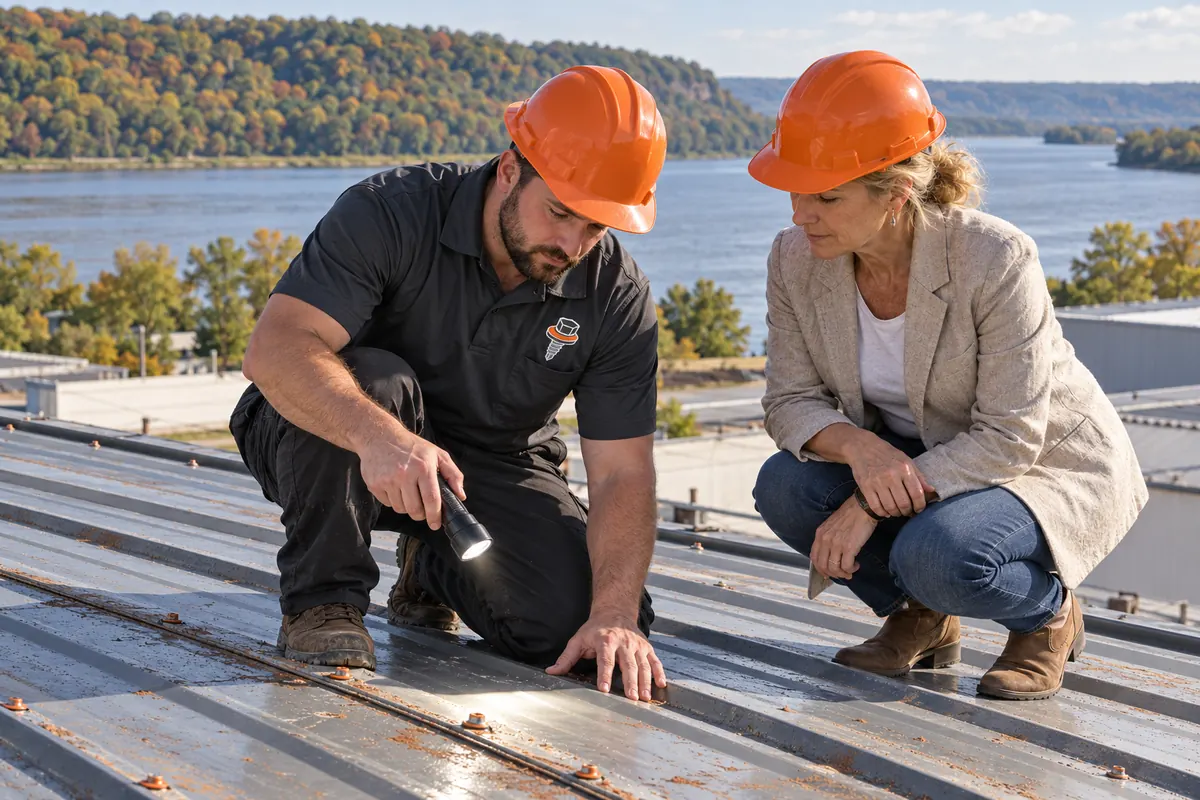
Send the roof size for a ballpark number, or call us and describe the shingles and how old they are.
Leave a name and number and we will call you back about your metal roof.