Operations Keep Running
What Wears Out
Tearing off panels over an active plant means shutting areas down under an open roof.
What The Coating Does
Coating from the top lets production and shipping continue below.

We do metal roof coating in Charlestown for large River Ridge industrial roofs and outlying metal shops, working in phases around docks, truck courts, and shifts.
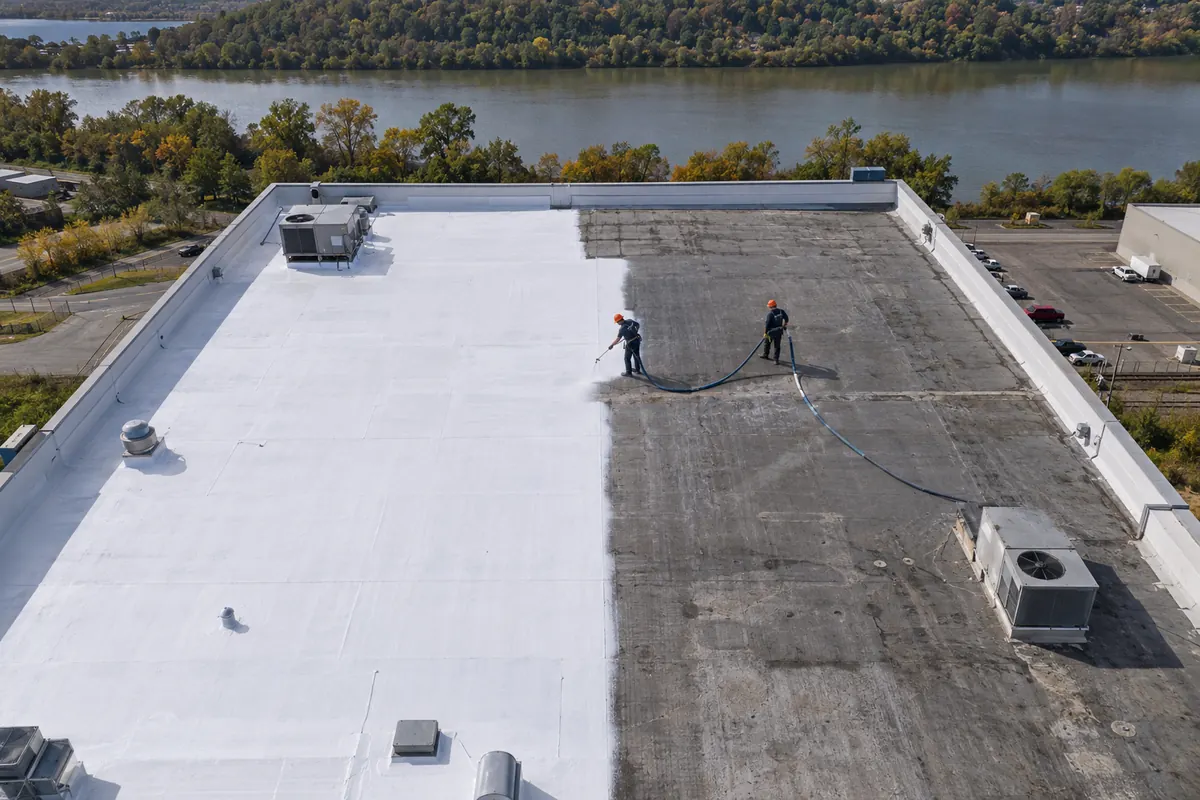
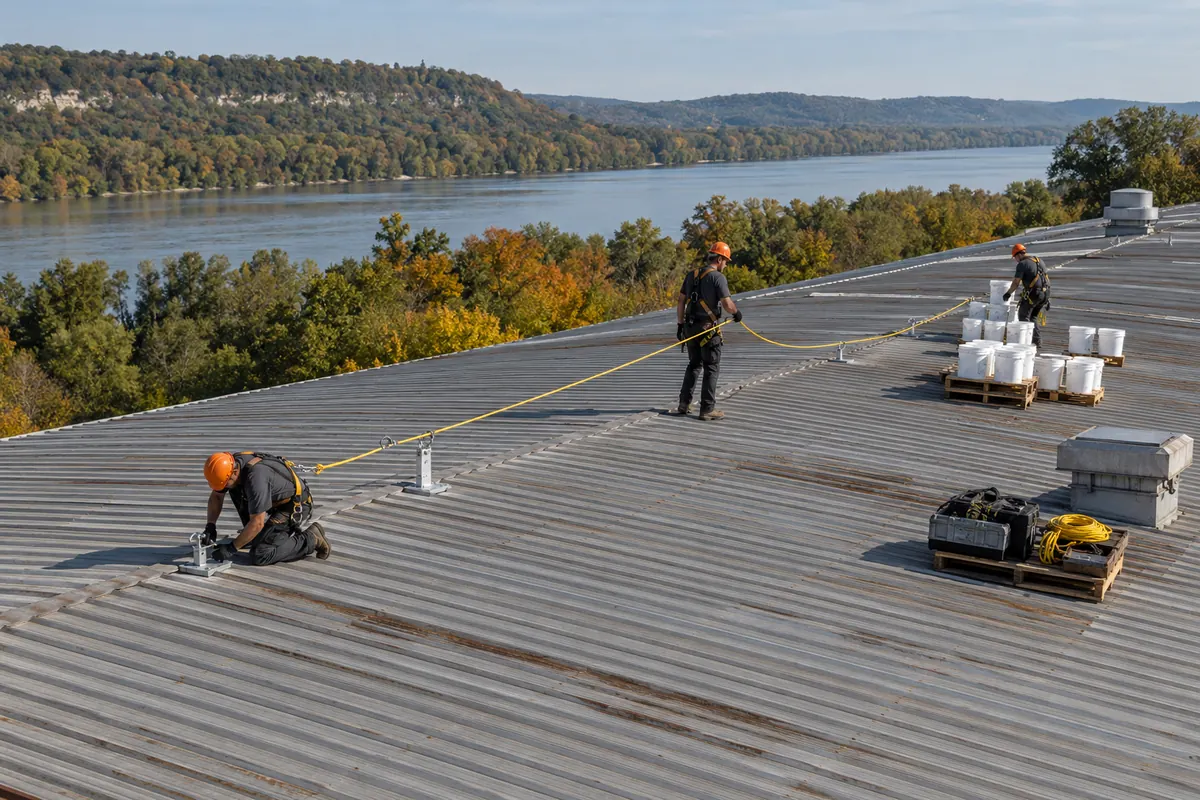
River Ridge Commerce Center spans Charlestown and Jeffersonville, and it has approved land sales in Charlestown for industrial facilities planned at roughly 200,000 to 600,000 square feet.
Roofs that size get coated in phases. Each section is cleaned, sealed, and base-coated before the crew moves on, so an unfinished area is never left open to rain overnight.
Size multiplies every detail. These six spots drive the schedule on a big roof.
Ridges hundreds of feet long move with temperature. Cap joints and closures are checked along the whole run.
Large roofs carry expansion joints that open and close daily. They get flexible detailing the field coat can follow.
Long panel runs need splices, so each slope can carry several rows of end laps. Every row gets fabric and base coat.
Rows of skylight panels light the floor below. Cracked panels are swapped, and the rows are masked during coating.
Dock doors sit under the eave, so gutter and wash-water work is timed around truck traffic.
Roof fans and air intakes run with production. Each is shut down or covered in step with the section being sprayed.
On a large roof, these benefits add up section by section.
Tearing off panels over an active plant means shutting areas down under an open roof.
Coating from the top lets production and shipping continue below.
Rows of end laps across long runs are where most large-roof leaks start.
Fabric and base coat seal each row before the field coat ties them together.
Acres of faded steel soak up summer sun over the work floor.
A light top coat reflects more sunlight across the whole roof.
Replacing a roof that size usually lands in one large budget year.
Coating section by section lets the work follow a phased plan.
Large industrial roofs and outlying shops in Charlestown usually take one of these systems.
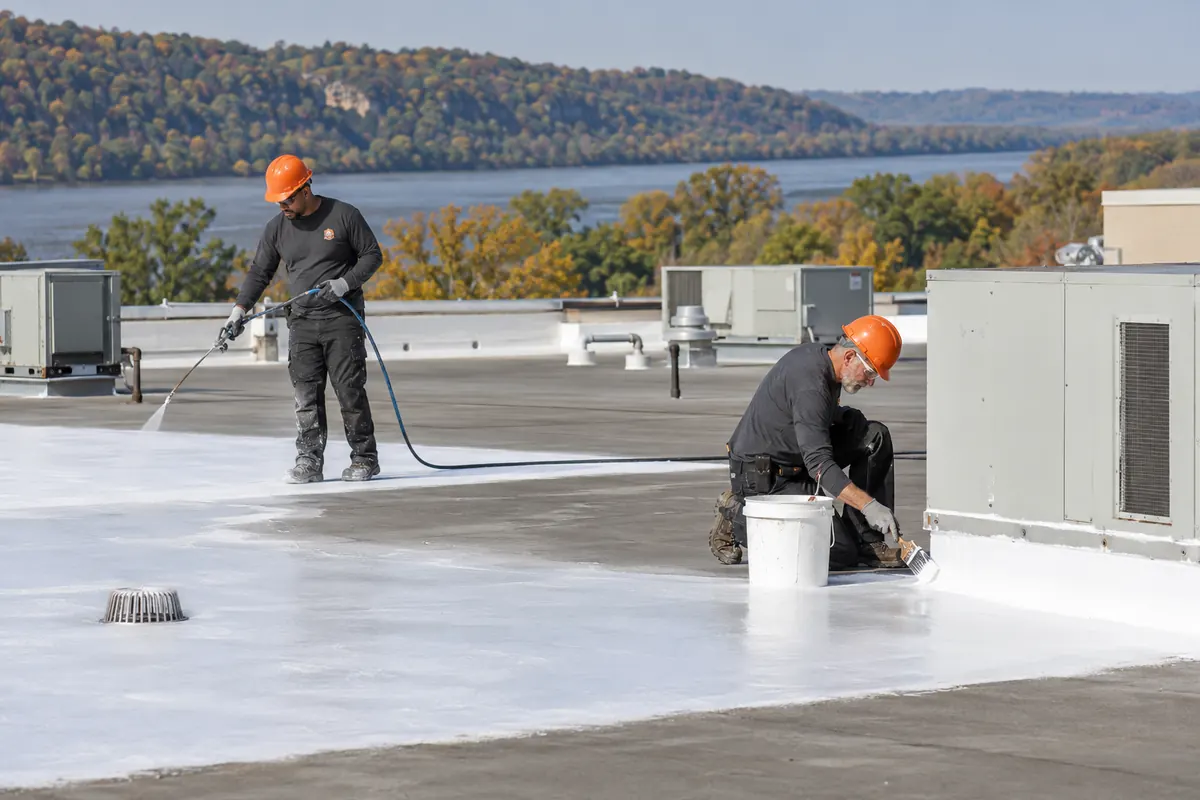
Low-slope industrial roofs with ponding near drains and gutters take silicone, often in one thick coat per section.
Silicone for industrial roofs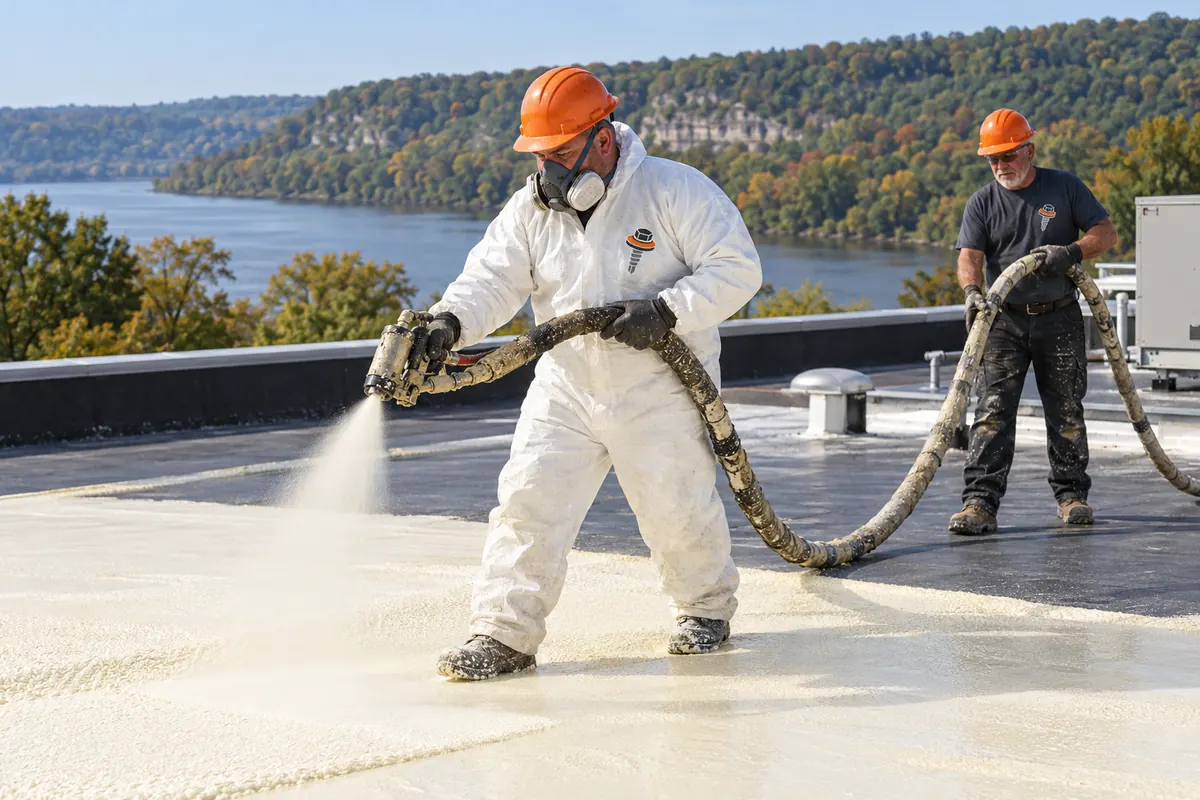
Plants that need insulation or fight condensation get foam, sprayed in sections with intakes shut down.
Spray foam for plants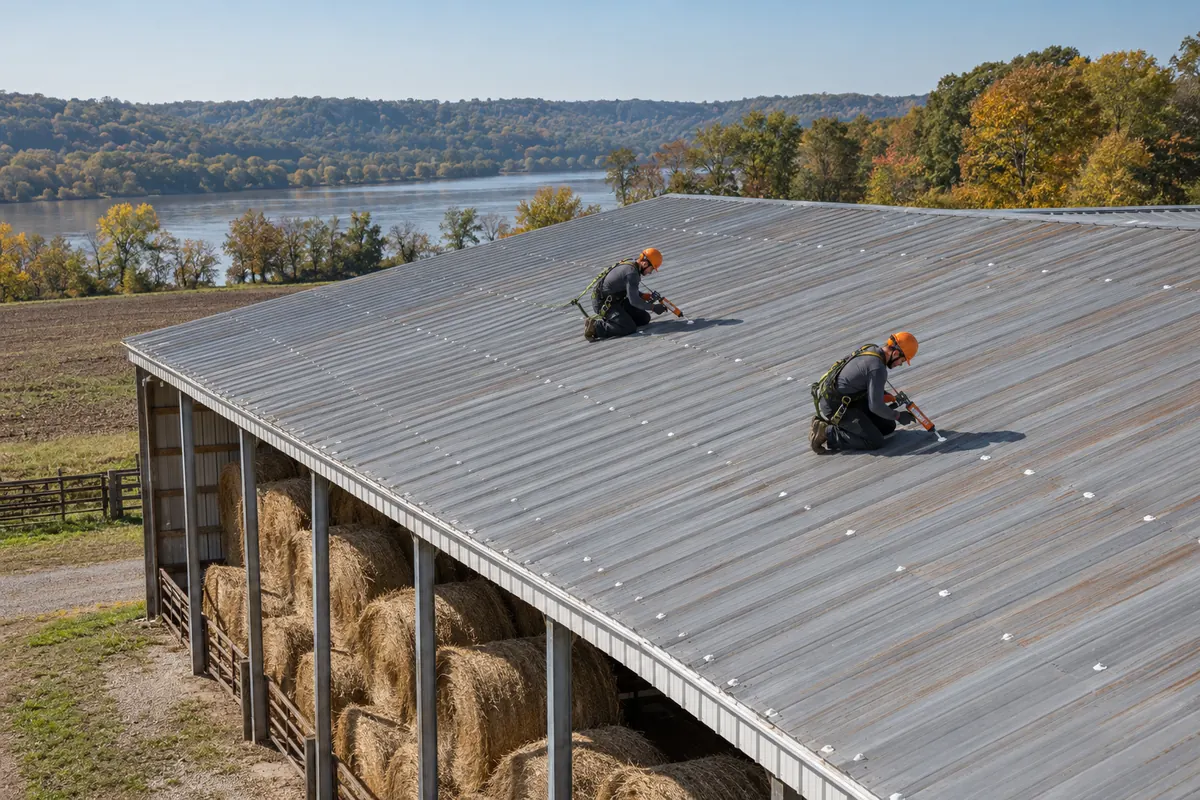
Exposed-fastener shops on outlying parcels with rust at washers and end laps get the full metal prep and coat.
Metal coating for shopsCall with your dock schedule and shift times. We map the phases so the loud work and wash water miss your busiest hours.
(812) 297-3434Phases keep the roof closed every night and the plant running every day.
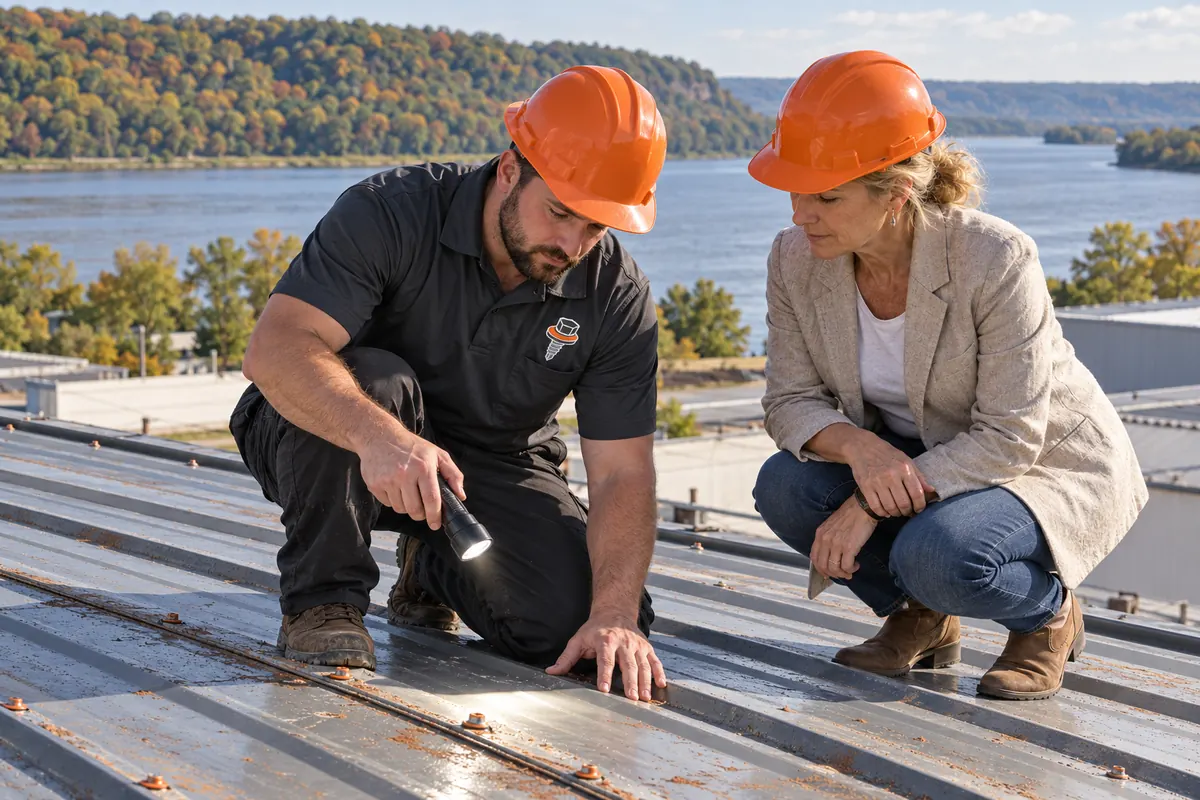
We walk the full roof, map end lap rows, expansion joints, skylight rows, and fans, and confirm who approves work under the lease.
Sections are sized so each one can be cleaned, sealed, and base-coated in its window, and dock and intake schedules are set with operations.
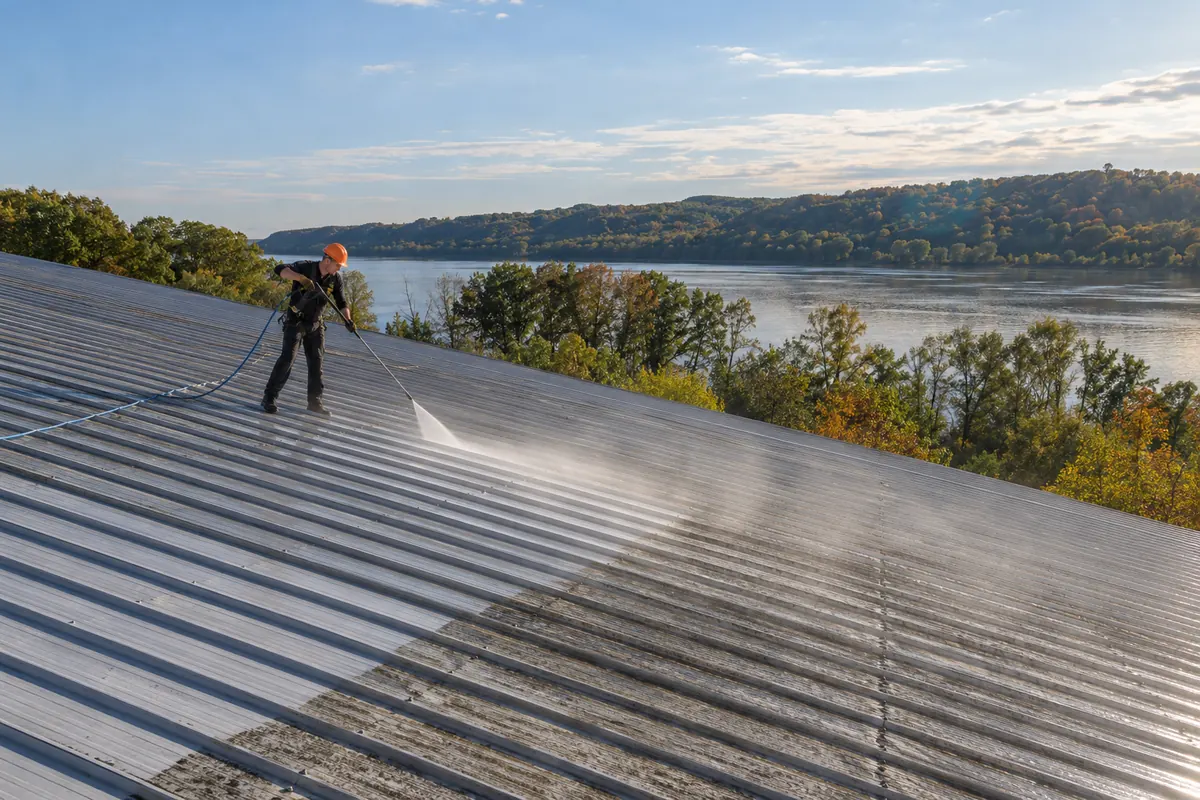
Each section is washed, dried, and detailed, with fabric at every end lap and joint, before the next section opens.
Top coats follow across finished sections, and wet-film checks are recorded section by section.
Five towns beyond Charlestown, plus Clarksville, round out our metal roof coating area. Outside them? Call us or send us a message.
Historic-district color approvals and riverfront drip-edge rust.
Rooftop units moved during coating, with their own permits.
Wash water and rust slurry kept out of storm inlets.
Hilltop wind, wallowed screw holes, and calm-air spray days.
Older downtown buildings with old paint and internal gutters.
In phases, with each section cleaned, sealed, and base-coated before the crew moves on. Long panel runs, expansion joints, long ridge lines, and rows of skylight panels and exhaust fans all need planning on roofs that size.
Coordinate dock schedules, roof access, and air intake shutdowns with operations staff. Leases sometimes assign roof upkeep, so confirm who approves the work.
Buildings inside city limits start with Charlestown city hall, and parcels outside the city go through Clark County Planning and Zoning. Call city hall first to confirm which office handles commercial roof permits.
The city line runs close to many rural sites, so confirm jurisdiction by parcel number. Bring photos of rust at washers and end laps, the ridge cap, and skylight panels.
The lease decides. Some assign roof upkeep to the tenant, while others keep it with the owner.
We send the scope to whoever signs off, and the roof inspection notes go to both parties.
Each phase is sized so it can be cleaned, sealed, and base-coated within its weather window. That size changes with the roof slope, the forecast, and the dock schedule.
Nothing is left washed and open overnight, since every phase ends sealed.
Yes. Metal shops and equipment buildings on outlying parcels often carry exposed-fastener roofs with rust at the washers and end laps.
Those get the same screw, lap, and rust work as a big plant, on a smaller schedule.
Work over each dock waits for a window in the shipping schedule. Gutters above the doors are cleaned and coated during that window, and wash water is routed away from the dock aprons.
Lifts stay out of the truck court during shipping hours and set up on the far side of the building, so drivers keep their turning room.
Send the roof size for a ballpark range, or call us with your dock schedule and the sections that leak most.
Leave a name and number and we will call you back about your metal roof.