Fewer Holes Around Units
What Wears Out
Years of equipment changes leave screw holes, straps, and dead curbs scattered across the roof.
What The Coating Does
Holes are patched and the coating covers the old penetrations in one film.

We do metal roof coating in New Albany on shops, warehouses, and retail buildings, and plan around the rooftop units that get raised, moved, or disconnected along the way.
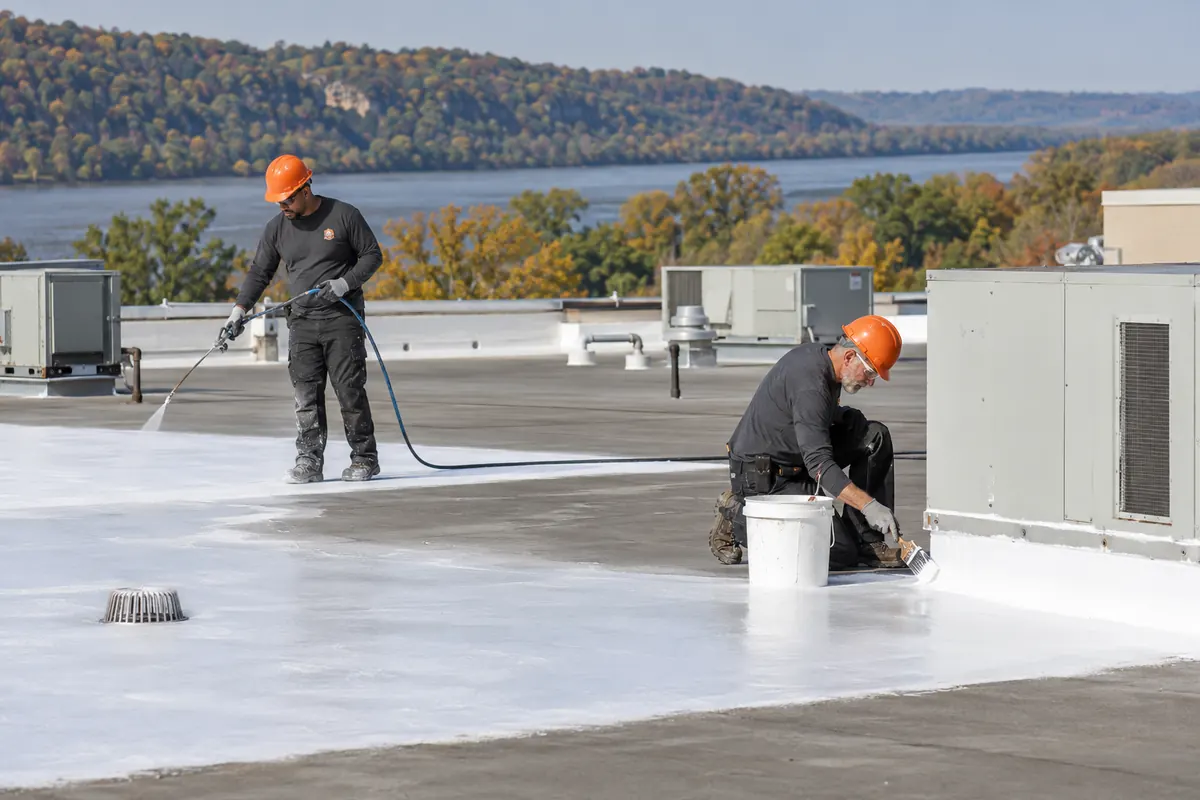
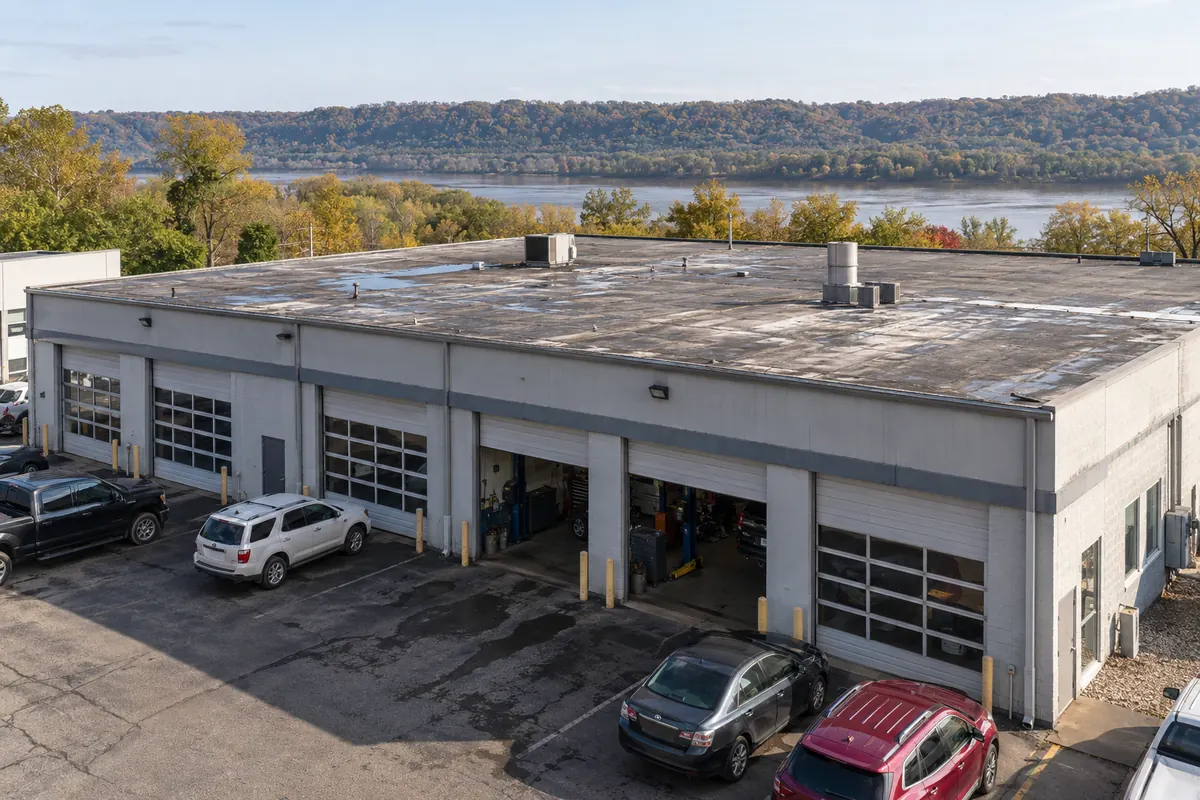
Coating jobs on metal often turn up old curbs, abandoned vents, and conduit straps screwed through the panels. Removing them leaves holes that need patch panels and sealant before coating.
Moving or adding rooftop equipment can call for permits beyond the roof itself. The city's permit portal lists separate permit types, so electrical work at a unit can need its own approval.
Equipment changes the roof around it. These six spots get settled before a coat goes on.
Old ridge vents and turbine stubs often sit near units. Dead ones come out and the ridge is closed with matching cap.
Straps screwed through the panels to hold conduit and gas lines leave rusted holes when moved. Each hole gets a patch.
Laps hidden under unit platforms rust out of sight, so platforms are lifted or worked around to reach them.
Curbs left from removed units leak at their flashing. They come out, and the opening gets a patch panel in the right profile.
Unit drain lines often dump onto the panels and run to the gutter, rusting a stripe along the way. Lines are rerouted.
Working curbs get new flashing sealant, and the unit height is checked so coating and any added foam stay below the curb top.
These gains come from settling the equipment first, then coating around it.
Years of equipment changes leave screw holes, straps, and dead curbs scattered across the roof.
Holes are patched and the coating covers the old penetrations in one film.
Drain lines dripping on bare panels rust a stripe all the way to the eave.
Rerouted lines and a coated surface keep that stripe from coming back.
Equipment platforms hide rusting laps that nobody sees until water shows inside.
Laps under platforms get the same fabric and coating as the rest of the roof.
Separate visits from roofers and equipment trades mean more days with a unit off.
Planning both together lets the unit go down once while the roof around it is finished.
Roofs crowded with equipment lean toward these three systems.
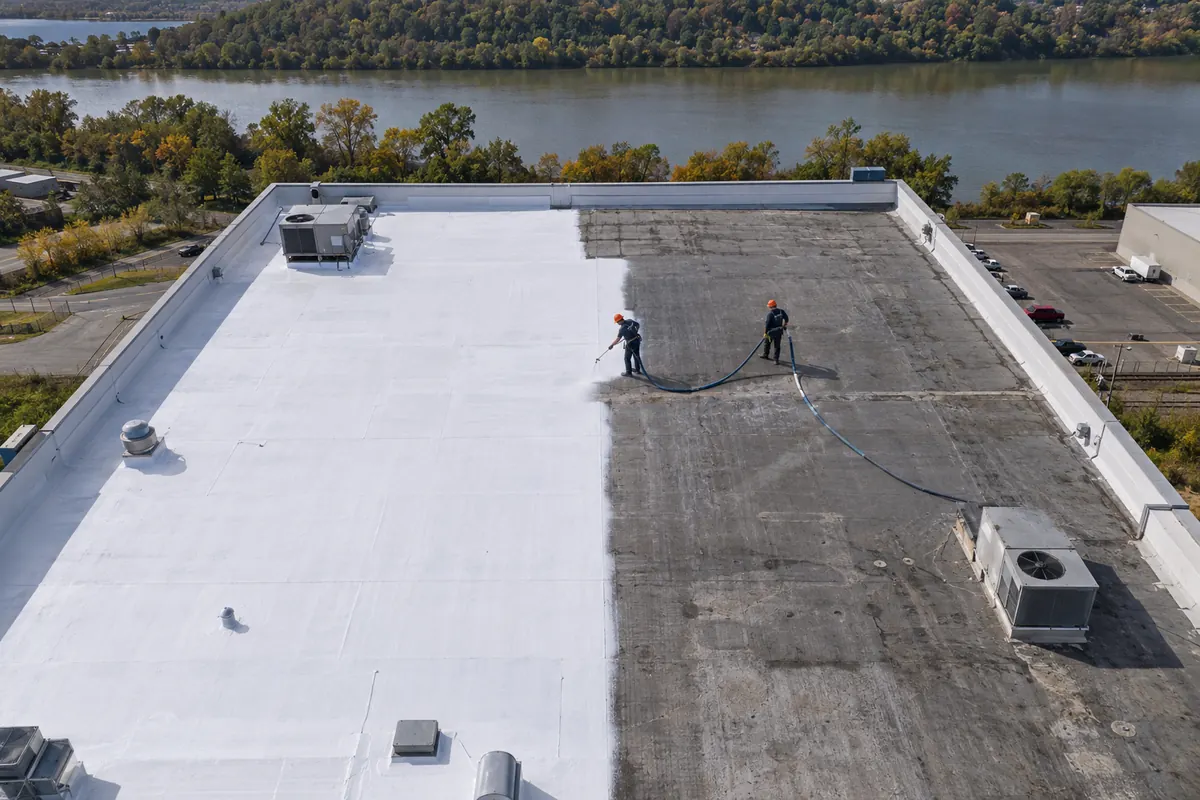
Areas around units stay wet from condensate and service traffic, and silicone holds up where water stands.
Silicone around rooftop units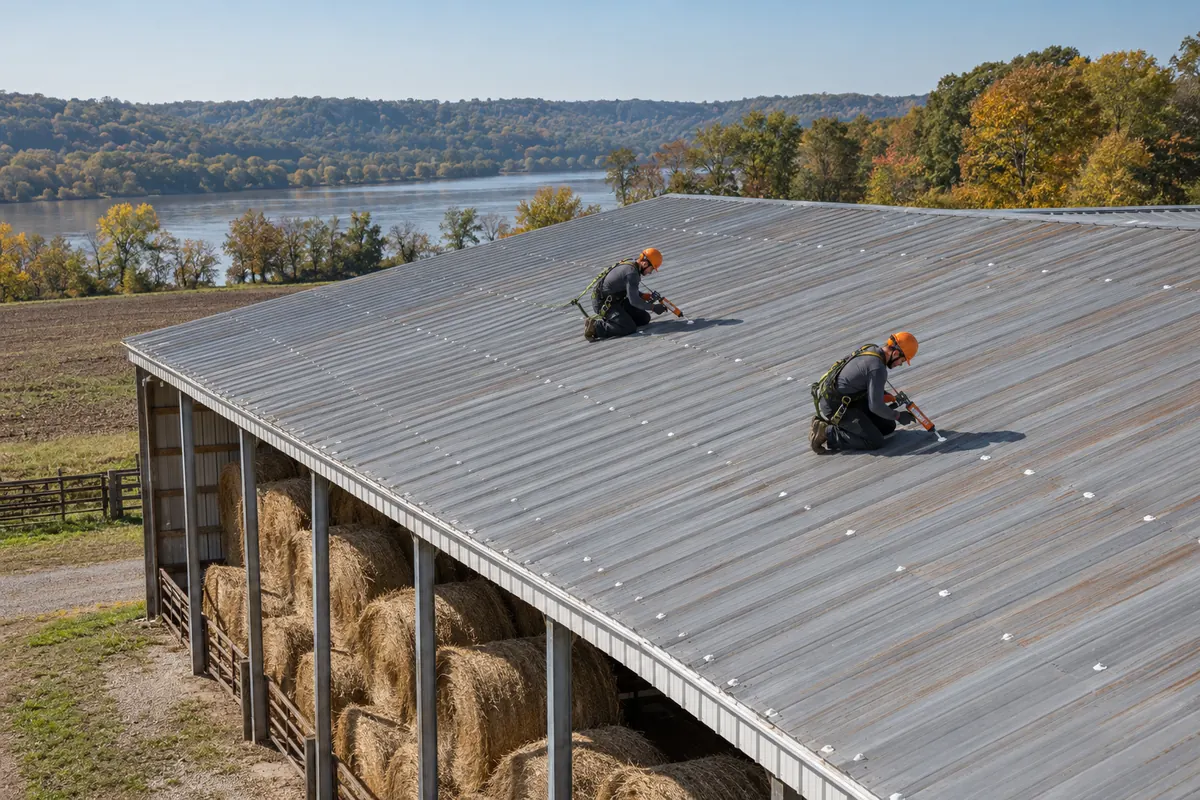
Fastener rows, laps, and patch panels around old penetrations are the core of metal roof coating prep.
Metal coating prep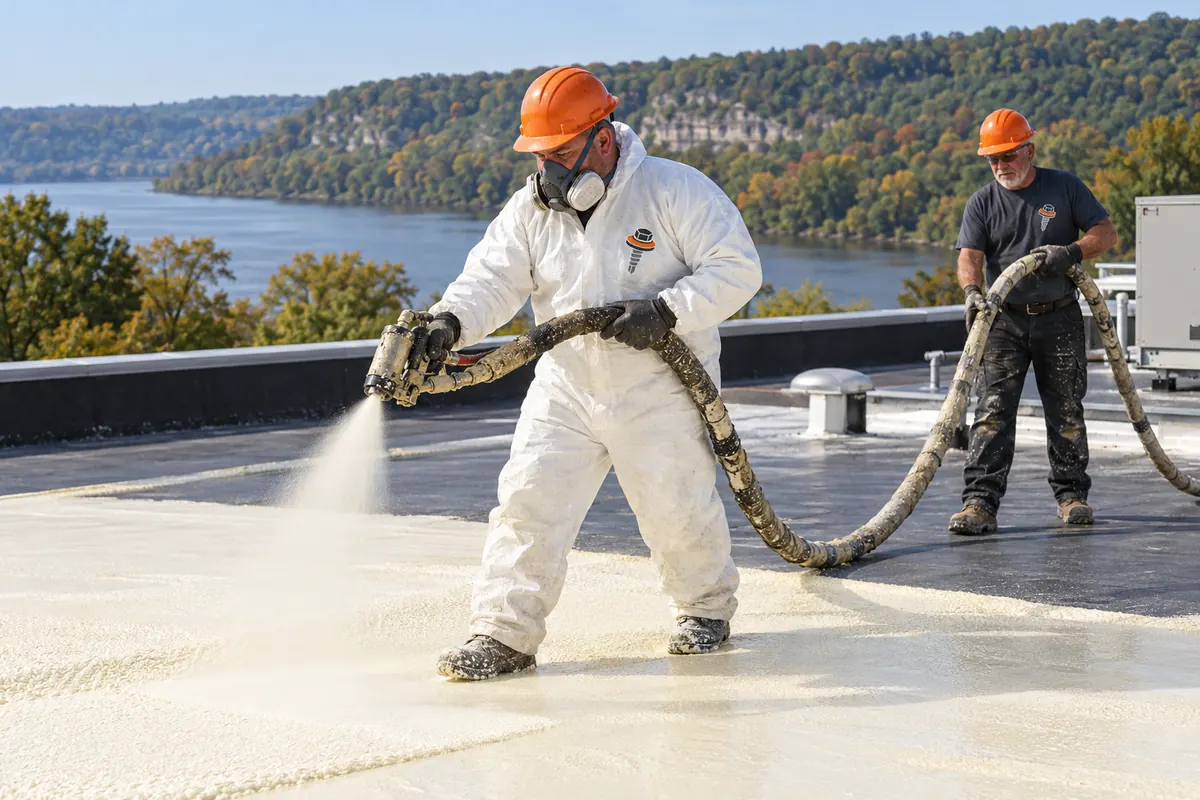
Foam adds insulation, but it raises the roof surface, so unit curb heights are measured before it goes on.
Foam and curb heightsCall before the new unit goes up. Coating around the curb while the old unit is off saves a second shutdown later.
(812) 297-3434Equipment work and roof work are planned as one job, so units go down only once.
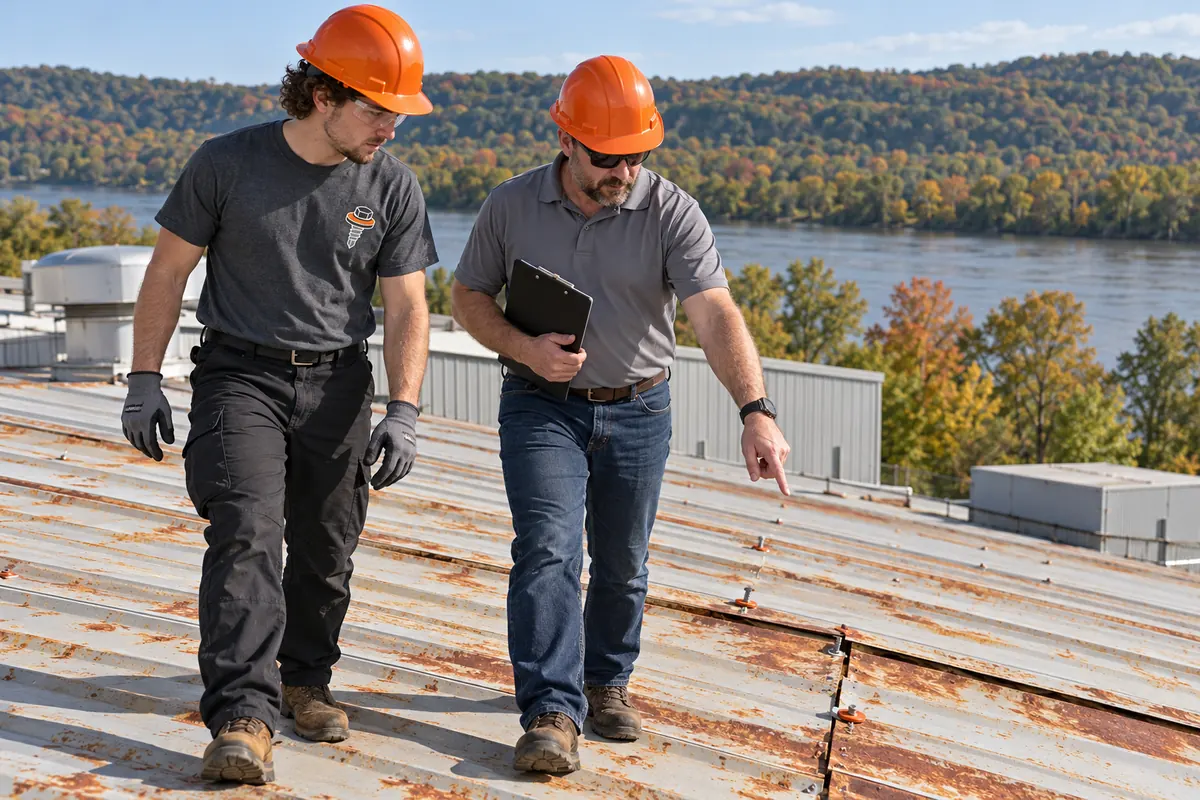
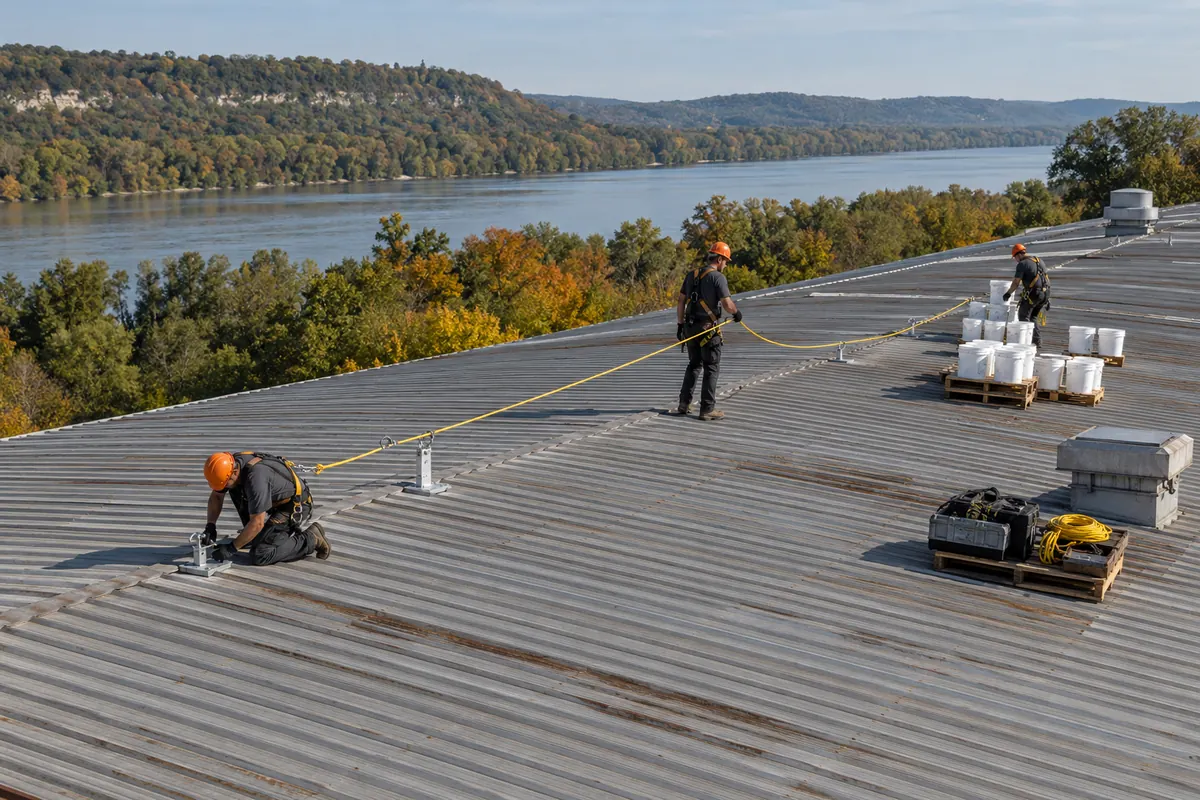
We list every unit, curb, vent, and strap, mark which ones stay, and check the panels and laps hidden under platforms.
The city building department confirms which trades need their own permits, and unit shutdowns get scheduled with your service company.
Dead curbs, vents, and straps come out. Patch panels and sealant close the holes, and condensate lines are rerouted.
Base and top coats go on with extra detail at each curb. Units come back on after the coating around them cures.
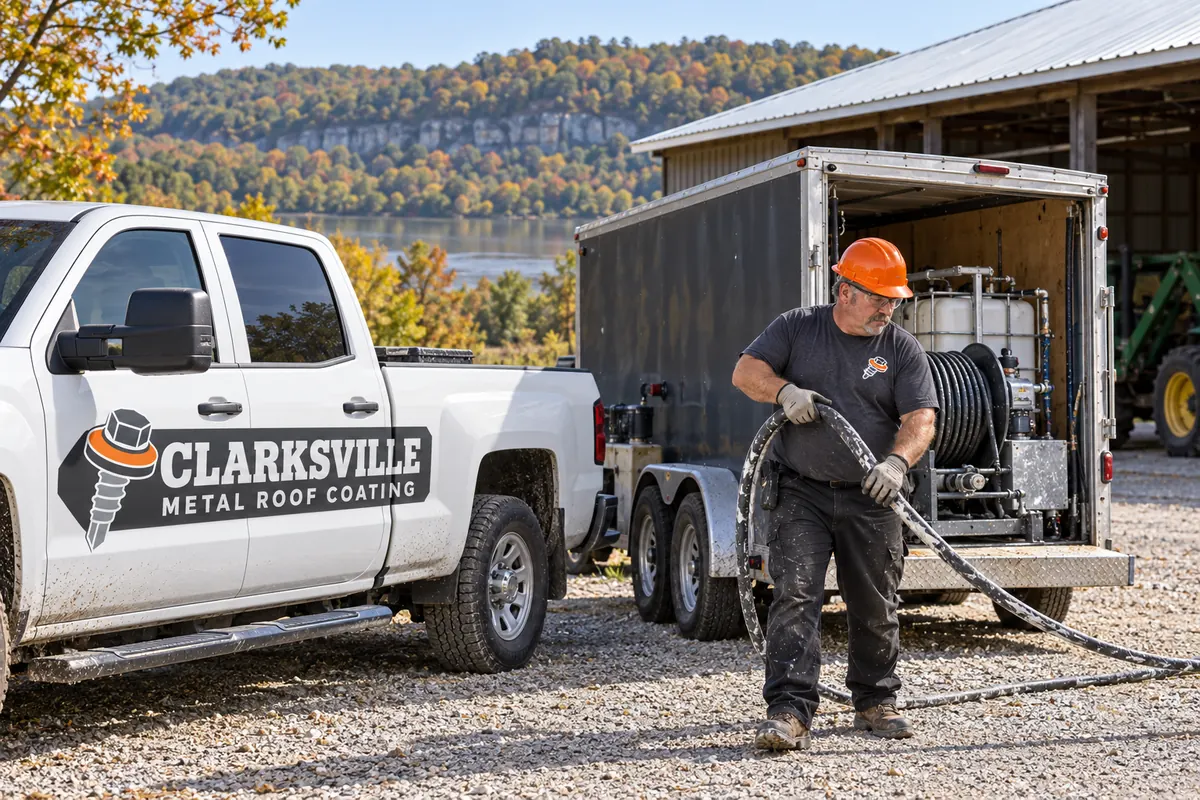
Clarksville and five towns besides New Albany make up our metal roof coating area. If your building sits elsewhere, call us or send us a message.
Historic-district color approvals and riverfront drip-edge rust.
Wash water and rust slurry kept out of storm inlets.
Hilltop wind, wallowed screw holes, and calm-air spray days.
Large River Ridge roofs coated in phases around truck courts.
Older downtown buildings with old paint and internal gutters.
The City of New Albany's building department, which has a building commissioner, inspectors, and a Building Commission board that meets monthly. Its public permit portal lists every permit type.
Parcels outside city limits go to Floyd County Building and Development Services. Prepare the address, roof area, panel type, and a sketch of gutters, skylight panels, and units.
It can. The city lists separate permit types, including meter inspection permits, alongside commercial building permits, so electrical work at a unit can need its own approval.
List the units being raised, moved, or disconnected, the abandoned curbs coming out, and any conduit or gas lines strapped to the panels.
Condensate lines often drain straight onto the panels. The steady water breaks down paint and rusts a stripe toward the eave.
We reroute the line to a drain or gutter, treat the rust, and coat the stripe with the rest of the roof.
A coating adds very little height. Spray foam adds inches, so curb heights are measured before foam goes on.
Low curbs get raised before foam so flashing still laps over the roof surface.
Techs kneel and set tools around units, wearing the coating faster there. Walk pads along the service path protect it.
A yearly look at the area around each unit catches cuts before water gets under the film.
They come out unless they still serve something inside. Each opening gets a patch panel in the same rib profile, sealed at the laps, so the coating spans one flat surface.
Dead curbs left in place keep adding flashing joints to maintain, and each one is another spot where water can find a way in over time.
Send the roof size for a ballpark range, or call us with a list of the rooftop units and what is changing.
Leave a name and number and we will call you back about your metal roof.