Owner FAQ

Clarksville Metal Roof Coating Questions

Plain answers to the metal roof coating questions Clarksville building owners ask most, from rust and fasteners to permits by town.

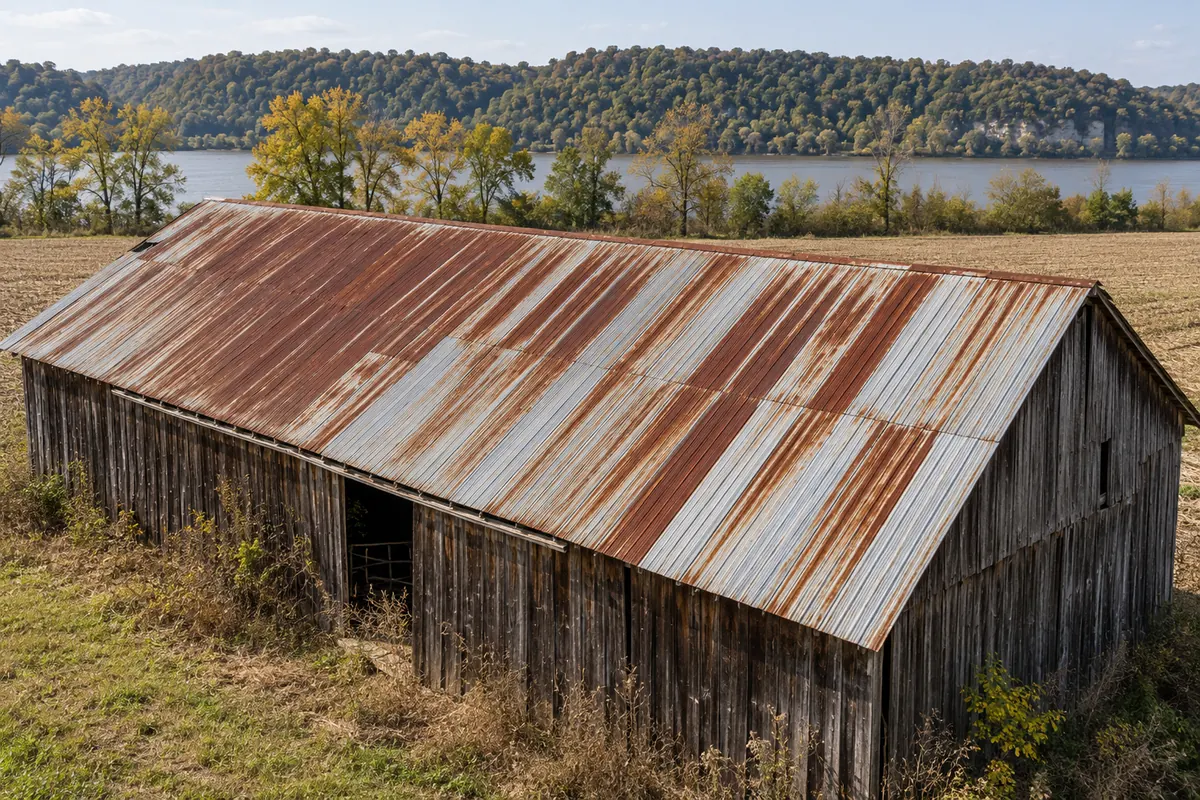
Weathered metal barn roof streaked with red rust beside a field
About These Answers

Metal Roof Coating, Answered For Clarksville

Metal roof coating is a rubbery liquid layer built up over steel roof panels that covers laps, screw heads and seams and keeps rust from spreading. Clarksville Metal Roof Coating coats commercial metal roofs and offers silicone, acrylic, spray foam and shingle roof coating for buildings in Clarksville, Clark County, Indiana, and nearby towns.

Metal Roof Coating Basics

What does a metal roof coating do on a commercial building?

A metal roof coating seals the fasteners, laps and seams of a steel roof and adds a new weathering layer over the panels. It goes on as a liquid, by roller or spray, and cures into a continuous rubber-like film.

On an exposed-fastener roof, the work centers on the spots where leaks start: screw heads, side laps, end laps, ridge caps and the trim around skylight panels. Those details get sealant and reinforcing fabric before the field coats go on.

Rust treatment comes first, because coating over loose red rust leaves a weak bond. A light-colored top coat also reflects sunlight that would otherwise heat the panels.

Which commercial metal roofs are good candidates for coating?

Metal roofs with solid panels, light surface rust and leaks at fasteners or laps are the best candidates for coating. Warehouses, shops, ag buildings, self-storage rows and church fellowship halls with R-panel or standing seam roofs often fit that description.

Signs that point toward a coating:

  • Chalky, faded paint that rubs off on your hand
  • Surface rust spots around screw heads and along the drip edge
  • Drips at end laps during long rains
  • Worn sealant at ridge caps and skylight panels

Panels with holes rusted through, sagging purlins, or ribs crushed by foot traffic need those sections fixed or re-paneled first. A coating bonds to the steel it is given and adds no strength to thin metal.

Should I coat, restore, re-panel or replace a metal roof?

Coating fits a roof with solid steel, restoration fits one with scattered damage, and re-paneling or replacement fits one where rust has eaten through large areas. The amount of firm steel left decides the path.

Roof conditionUsual pathWhat the work includes
Faded paint, worn sealant, a few dripsCoatClean, seal fasteners and laps, prime rust spots, apply field coats
Surface rust on many panels, loose screws, leaking lapsRestoreAbrade rust, replace or upsize fasteners, reinforce seams, then coat
A handful of rusted-through or crushed panelsRe-panel those sections, then coatRemove bad panels, install the matching profile, seal the new laps
Widespread perforation, failing purlinsReplace or retrofitNew panels or a framed system over the old roof

Rust that flakes away under a scraper and leaves pinholes marks the line between restoring and re-paneling.

Rust, Fasteners and Seams

What is the difference between red rust and white rust on metal panels?

Red rust is corrosion of the steel itself, while white rust is corrosion of the zinc layer on galvanized panels. Both need attention before a roof coating goes on, and each is cleaned in its own way.

Red rustWhite rust
Looks likeOrange-brown stains, flakes, pittingWhite or gray powder, often at laps and low spots
What it meansThe protective layer is gone and steel is corrodingThe zinc is corroding as it protects the steel
Usual prepWire brush or abrade to firm metal, then a rust-inhibiting primerWash off the powder and residue, then prime as the coating maker directs

Red rust bleeding from under washers and along the drip edge is a sign the fasteners need attention too. White rust often hides at side laps, where water sits between overlapping panels.

What happens to the screws and washers during a metal roof coating?

Every exposed fastener gets checked, and loose, stripped or rusted screws are tightened, replaced or swapped for an oversized screw. The rubber washers under screw heads dry out and crack after years of sun and cold, which opens a path for water at each hole.

Once the fasteners are firm, each head is sealed. Crews use brush-grade sealant or a dab of base coat over the screw and washer so the field coat has a smooth surface to bridge.

An R-panel roof can carry thousands of screws, and a single backed-out screw can drip onto stored goods for months before anyone traces it. Hand-checking them is slow work and one of the most important steps on the job.

How are end laps and side laps sealed before coating?

End laps and side laps are cleaned, sealed and covered with reinforcing fabric or seam tape so the coating spans each joint without cracking. These joints move every day, as steel expands in afternoon sun and shrinks again at night.

  • End laps run across the slope where one panel overlaps the next one downhill. Water backs up there, so they get the heaviest detail.
  • Side laps run up the slope at each panel edge.
  • Ridge cap joints and closure strips at the eave round out the list.

The usual sequence is clean, prime where needed, embed polyester fabric in base coat over the lap, then coat the field. Coatings that skip fabric on moving joints often split along the laps.

How is prep different on standing seam and exposed-fastener roofs?

Exposed-fastener roofs need far more prep than standing seam roofs, because every screw head is a possible leak. Standing seam panels hide their clips under raised seams, so prep there focuses on seams, panel ends and trim.

DetailExposed-fastener (R-panel, corrugated)Standing seam
FastenersCheck, replace and seal every screwClips hidden; check trim screws
SeamsSeal side laps and end lapsInspect raised seams for open spots or failed sealant
MovementPanels pinned at every screwPanels float on clips, so the coating must stretch with them
Common leak pointsWashers, end laps, ridge capPanel ends, penetrations, wall transitions

On standing seam, owners often choose a coating to refresh a chalked, faded finish or to add a reflective surface, with leak repair a smaller share of the work.

How are skylight panels, ridge caps and gutters handled?

Skylight panels, ridge caps and gutters are treated as separate details, each repaired before the roof is coated. These spots leak more often than the open panel field on most metal buildings.

  • Fiberglass skylight panels turn yellow and brittle with age. Cracked ones are replaced with new panels in the matching rib profile, and the laps are sealed.
  • Ridge caps are checked for loose screws and missing closure strips, then sealed along both edges.
  • Gutters get cleaned, and rusted seams and end caps are sealed or replaced. Coating the inside of a gutter is an option where the metal is still firm.

Coating over a skylight panel blocks its daylight, so crews mask the clear panels and coat around them.

Choosing a Coating

Silicone, acrylic or urethane: which coating works best on a metal roof?

Silicone, acrylic and urethane coatings all work on metal roofs, and the right pick follows from roof slope, standing water, foot traffic and recoat plans. Metal roofs shed water quickly, which opens the door to coatings that would struggle on a flat roof.

CoatingStrengths over metalTrade-offs
SiliconeHandles standing water and UV; holds up in low spots and guttersPicks up dirt; few products bond to it later, so recoats stay silicone
AcrylicWater-based, bright white, easy to recoatWeak where water sits for days; needs warm, dry curing weather
Urethane (aromatic or aliphatic)Tough against foot traffic, hail and impactSolvent odor; aromatic grades need a UV-stable top coat

Many metal jobs pair systems, such as a urethane base with a silicone or acrylic top. Each manufacturer sets thickness, primer and compatibility rules for its products.

When should I pick silicone for a metal roof?

Low-slope metal roofs with spots that hold water after rain, such as dented panels near the eave or slight sags between purlins, are where silicone earns its place. Water-based acrylics break down faster than silicone where water stands and the sun bakes the film.

Silicone often goes on in one thick coat, which shortens time on the roof. It needs a clean, dry surface, and most metal roofs still need a rust primer underneath where red rust was treated.

Plan for two trade-offs. Silicone surfaces collect dirt, so a white roof dulls over time. Future recoats almost always stay with silicone, since most other coatings bond poorly to it.

Is spray foam over a metal roof better than a coating alone?

Spray foam over metal adds insulation and can build slope, while a coating alone seals and protects the existing panels with no added insulation. Foam fits buildings that need more R-value or suffer from condensation; a coating alone fits roofs where the main problems are leaks and rust.

FactorCoating onlySpray foam plus coating
InsulationNo added R-valueClosed-cell foam, which a DOE guide puts near R-6 per inch
Panel ribs and lapsSealed in placeBuried under foam that can fill the ribs flat
ThicknessThin filmInches of foam; edge trim and gutters may need extending
Condensation under panelsUnchangedFoam keeps panels closer to indoor temperature
UpkeepRecoat when the film wearsRecoat the foam's coating; patch dings

Foam over metal raises the roof edge, so plan gutter, rake trim and eave details before any spraying starts.

Can asphalt shingle roofs on commercial buildings be coated?

Shingle roof coating works on some commercial asphalt shingle roofs, as long as the shingles still lie flat, keep most of their granules and are approved for coating by their manufacturer. Pitched shingle sections on strip centers, office buildings and churches are where this service comes up most.

The limits are real:

  • Curled, cupped or cracked shingles leave gaps a coating bridges poorly.
  • Bald spots with heavy granule loss expose the asphalt mat.
  • Manufacturer approval matters, so check the shingle maker's written guidance first.
  • Trapped moisture under soft spots needs decking repair before any coating.

Shingle coatings are formulated for asphalt and differ from the products sold for metal. Where shingles are near the end of their service, a new roof is usually the better path.

Does a white coating on a metal roof lower cooling costs?

A white or light-colored roof coating reflects more sunlight than faded paint or bare galvanized steel, which keeps panel temperatures lower on summer afternoons. Cooler panels pass less heat into the building, though the effect on bills varies from one building to the next.

Uninsulated metal shops and warehouses with no ceiling feel the change most, because the panels sit right over the work floor. Buildings with thick insulation under the deck see less difference.

The Cool Roof Rating Council keeps a directory of tested solar reflectance and thermal emittance values for roof products. Ask for the rated values of the chosen top coat and file them with the building records. Compare utility bills from matching months before and after the work.

Climate and Weather Around Clarksville

How does the Clarksville area climate wear on a metal roof coating?

Hot, humid summers, wet springs and repeated winter freeze-thaw are the main weather stresses on a coated metal roof around Clarksville. NWS Louisville 1991-2020 normals for the Louisville station, just across the Ohio River, show about 48 inches of precipitation a year, a January mean near 36°F and a July mean near 80°F.

Those swings matter on metal because steel panels grow and shrink with every warm afternoon and cold night. That daily movement works on laps, ridge caps and screw holes, so the coating at those joints needs reinforcement and enough stretch.

Frequent rain also leaves water sitting in low spots and gutters. Silicone or a ponding-rated top coat at the eave and gutter line holds up where water lingers.

Should hail dents on metal panels be fixed before coating?

Cosmetic hail dents on metal panels rarely need fixing before coating, while dents that cracked the paint, split a seam or pushed in a panel rib do. A dent alone changes shape; a dent that broke the finish lets rust start.

After a hailstorm, check these spots:

  • Ridge caps and rake trim, which take direct hits
  • Fiberglass skylight panels, which crack or punch through
  • Gutters and downspouts, which dent and pull loose
  • Rooftop unit housings and their curb flashing

Photograph damage with dates before any work, since insurance adjusters often want to see it untouched. A coating over hail-pitted panels seals fine cracks in the old paint, and urethane or a thicker silicone film adds some impact resistance for later storms.

How do severe storms in southern Indiana affect metal roofs?

Severe wind attacks metal roofs at the edges first: rake trim, eave trim, ridge caps and any panel with loose screws. The NWS Louisville office documented an EF-4 tornado across southern Indiana and a separate EF-1 in Clark County during the March 2, 2012 outbreak.

A coating adds no uplift strength. Fasteners, clips and purlins hold the panels down, which is why fastener work comes before coating.

During prep, crews look for:

  • Elongated screw holes where panels have flexed in wind
  • Missing stitch screws at side laps
  • Lifted trim at gable ends and corners

After a storm, walk the perimeter from the ground and look for bent trim or panel edges standing up.

Why do some metal buildings drip inside on cold mornings?

Drips from the underside of metal panels on cold, dry mornings usually come from condensation, while drips during rain point to a roof leak. Warm, moist air inside the building meets cold steel and turns to water, much like a cold glass on a summer day.

Clues that point to condensation:

  • Water on the floor in a wide pattern, with no single leak line
  • Rust on purlins and panel undersides away from the laps
  • Drips on clear, cold mornings with no rain

A surface coating does little for condensation, because the cold surface sits under the panel. Foam on top of the panels, interior insulation with a vapor retarder, or better ventilation address the cause. Many metal shops and barns show both problems, so the roof visit checks for each.

Question About Your Roof?

Have A Question These Answers Miss?

Call and ask it. Questions about your own panels, rust, or permits are easier to answer with the building in mind.

(812) 297-3434

Prep, Application and Downtime

What are the steps to coat a commercial metal roof?

Coating a metal roof follows a fixed order, and a skipped step shows up later as peeling or leaks.

  1. Inspect Your Roof, checking panels, fasteners, laps, trim and the underside of the deck.
  2. Repair rusted-through panels, cracked skylight panels and loose trim.
  3. Clean the surface with pressure washing and a cleaner the coating maker approves.
  4. Treat rust by abrading red rust and priming bare steel.
  5. Fasten and seal screws, then reinforce laps and ridge caps with fabric.
  6. Apply base and top coats to the thickness the product calls for.
  7. Walk the roof with a wet-film gauge and touch up thin spots.

Each coating maker lists temperature, dew point and dry-time limits, so the schedule bends around the forecast. Spring and fall bring the most workable days around Clarksville.

How is a metal roof cleaned and tested before coating?

A metal roof is pressure washed, rinsed and left to dry, and then an adhesion test patch shows whether the coating bonds on its own or needs a primer. Chalky paint, dirt, oil around exhaust fans and white rust all interfere with adhesion.

Tests on the roof:

  • Wipe test: a dark glove picks up chalk from faded paint.
  • Water break test: water beading on washed panels shows leftover oil or residue.
  • Adhesion pull: a cured test patch with embedded fabric is pulled to check the bond.

Patches go on each panel type and color if the roof has additions from different eras. Results set the primer choice and sometimes change the coating system before the main job starts.

Can a warehouse or shop stay open during metal roof coating?

Most warehouses, shops and ag buildings stay in use while the roof is coated, since the work happens on top of the panels with no tear-off. Crews plan around a few things that touch daily operations.

  • Rooftop air intakes and exhaust fans get shut down or covered during spraying.
  • Loading docks under the roof edge are scheduled around wash-water runoff.
  • Vehicles parked near the eaves are moved or covered against overspray.
  • Forklift lanes under skylight work close while panels are swapped.

Odor varies by product. Water-based acrylics carry little smell, and solvent urethanes carry more. Share shift schedules and delivery windows so the loud work lands in quiet hours.

Cost, Value and Taxes

What drives the cost of coating a metal roof?

Metal roof coating cost is driven by roof size, rust level, fastener count, seam work and the coating system chosen. Two roofs with the same footprint can land far apart once prep is counted.

Main cost drivers:

  • Rust treatment, from spot priming to full abrasion
  • Fastener replacement or sealing on exposed-fastener panels
  • Lap and ridge cap reinforcement with fabric
  • Skylight panel, gutter and trim replacements
  • Coating type, primer and total film thickness
  • Access, including roof height, slope and lift needs
  • Spray foam, if insulation is added

Prep is often the biggest swing. A clean standing seam roof needs far less hand work than an R-panel roof with rust at every washer.

Can a metal roof coating qualify for Section 179?

Roofs on existing nonresidential buildings can qualify for the Section 179 deduction, and IRS Publication 946 sets the 2026 limit at $2,560,000, with the phase-out starting above $4,090,000 of qualifying property. A roof improvement counts when it is placed in service after the building itself was first placed in service.

Residential rental property is excluded. Warehouses, shops, offices and other commercial buildings in Clark County follow the same federal rules as anywhere else.

Whether a coating job counts as a repair, a capital roof improvement or Section 179 property comes down to the scope of the work and your tax position. Keep invoices that separate rust treatment, fastener work, panels and coating, and talk with a CPA before filing.

Permits, Codes and Utilities

Do I need a permit to coat a metal roof in southern Indiana?

Check with the local building office before coating a commercial metal roof, because each Indiana city, town or county runs its own permit process. Building rules are adopted statewide by the Fire Prevention and Building Safety Commission and enforced locally, and a coating-only job, a re-panel and spray foam over metal can each be handled differently.

TownGovernmentOffice to contact
ClarksvilleTown, Clark CountyClarksville Building Commissioner
JeffersonvilleCity, Clark CountyJeffersonville Building Commission
SellersburgTown, Clark CountyBuilding, Construction Permitting and Code Enforcement
CharlestownCity, Clark CountyCharlestown city hall
New AlbanyCity, Floyd CountyNew Albany building department
Floyds KnobsUnincorporated, Floyd CountyFloyd County Building and Development Services
CorydonTown, Harrison CountyHarrison County Plan Commission in Corydon

Bring roof square footage, panel type, and notes on any added insulation or rooftop equipment.

When does a metal roof project need IDHS plan review?

Indiana's Department of Homeland Security reviews plans for Class 1 structures, the category covering most commercial buildings, and issues a Construction Design Release when plans meet state rules. Roof work that adds insulation, changes structure or adds rooftop equipment is the kind most likely to raise the question.

A straight coating over existing panels is lighter work than a reroof, yet scope decides the answer. Spray foam over metal adds insulation and weight. New HVAC curbs cut fresh openings in the panels. Re-paneling with a heavier profile changes loads on the purlins.

IDHS also publishes a form for a design release without full plan review in some cases. Ask the local building office and IDHS plan review early, before materials are ordered.

Which electric utilities serve Clarksville-area buildings?

Duke Energy Indiana serves many Clarksville-area customers, and rural electric cooperatives such as Clark County REMC and Harrison REMC serve others. The name on the electric bill confirms the provider for a given building.

Utility business programs change from year to year, and only the utility decides what qualifies. Before a coating or foam job, ask whether reflective roof coatings or added roof insulation count toward a current program, and what paperwork it wants.

Keep these on file:

  • Product data sheets showing the top coat's rated reflectance
  • Foam thickness and R-value, if spray foam is added
  • Dated photos of the finished roof, including ridge caps and skylight panels

Questions by Town

Who handles permits for coating a metal roof in Clarksville, Indiana?

The Clarksville Building Commissioner's office handles construction permits inside the Town of Clarksville and takes applications through the town's GovWell permit portal. The office enforces state-adopted building codes and the town zoning ordinance, and it issues certificates of occupancy.

Clarksville is a town government in Clark County, so the town office covers parcels inside town limits.

For a metal roof job, have the parcel address, roof area, panel type (standing seam or R-panel) and a count of rusted panels being replaced. Mention skylight panel swaps and new rooftop equipment, since those change the panel layout.

How do metal additions on older Clarksville buildings change a coating job?

Metal additions on older Clarksville buildings shift the coating job toward transitions, where a metal roof meets a brick wall or an older roof section. Clarksville was chartered in 1783 at the Falls of the Ohio and calls itself the oldest American town in the Northwest Territory, so its commercial properties mix building eras.

At those transitions, check:

  • Counterflashing tucked into mortar joints, which loosens as mortar wears
  • Sealant at the head wall where panels butt into masonry
  • Gutters that empty onto a lower roof section

Panel profiles from separate additions each get their own adhesion test patch, since factory paint systems changed over the decades.

Does coating a visible metal roof in a Jeffersonville historic district need approval?

Yes, roof work on a building in a Jeffersonville historic district needs a Certificate of Appropriateness from the Historic Preservation Commission before the city permit. Parcels in the Oak Park Conservancy District need that district's pre-approval first, and the Jeffersonville Building Commission then issues the permit for commercial work.

Color is the main question on metal. A bright white coating on a standing seam roof seen from the street changes a building's look far more than one on a flat roof hidden behind a parapet.

Bring street-view photos, the panel profile and color chips for the top coat. Coating lines offer tinted colors, so ask about a shade near the original finish.

What do Jeffersonville riverfront metal buildings need from a coating?

Jeffersonville riverfront metal buildings need extra attention at gutters, downspouts and the lower end of each panel, where moisture lingers longest. The NWS Louisville office records that the 1937 flood covered about 90 percent of Jeffersonville, a reminder of how close much of the city sits to the Ohio River.

Damp river air keeps the eave end of metal panels wet longer after rain and dew. Red rust tends to start along the drip edge, at the bottom end lap and in gutter seams.

For these buildings:

  • Clean and prime the bottom few feet of every panel with extra care.
  • Seal gutter seams and replace rusted gutter straps.
  • Route downspouts so water leaves the foundation quickly.

Who issues commercial permits for metal roof work in New Albany?

The City of New Albany's building department issues commercial permits inside city limits, with a building commissioner, inspectors and a Building Commission board that meets monthly. Its public permit portal lists every permit type the city offers.

New Albany is in Floyd County, yet city parcels go to the city office. Parcels outside city limits go to Floyd County Building and Development Services.

For a metal roof coating or re-panel, prepare the parcel address, roof area, panel type and a sketch marking gutters, skylight panels and rooftop units. Ask which inspections apply before the top coat goes on.

Does moving rooftop equipment on a New Albany metal roof bring in another permit?

Moving or adding rooftop equipment during a New Albany metal roof job can call for permits beyond the roof itself. The city's permit portal lists separate permit types, including meter inspection permits, alongside commercial building permits, so electrical work at rooftop units can need its own approval.

Coating jobs on metal often turn up old curbs, abandoned vents and conduit straps screwed through the panels. Removing those leaves holes that need patch panels and sealant before coating.

Before work, list:

  • Rooftop units that will be raised, moved or disconnected
  • Abandoned curbs and vents to remove
  • Conduit and gas lines strapped to the panels

Ask the city building department which trades need their own permits.

What should Sellersburg owners prepare for a commercial metal roof permit?

Sellersburg owners should start with the town's Commercial Building Permit Application and its Commercial Class 1 submittal checklist, both linked from the Building, Construction Permitting and Code Enforcement Department page. Applications can go through the town's online portal.

Sellersburg is a town in Clark County with its own building office, so permits inside town limits come from the town. The Class 1 checklist helps sort out which plans and product data a roof job calls for.

For a metal roof, gather:

  • Panel type, gauge if known, and roof area
  • Coating and primer product data sheets
  • A roof sketch showing ridge caps, gutters, skylight panels and rooftop units

How is wash water handled when coating a metal roof in Sellersburg?

Wash water and rust-treatment runoff from cleaning a metal roof in Sellersburg should stay out of storm inlets, since the town works with the Clark County Soil and Water Conservation District on stormwater outreach and construction site erosion control inspections.

Pressure washing loosens chalk, dirt, white rust powder and flakes of red rust, and that slurry runs off the eaves and through the downspouts.

Practical steps:

  • Cover or filter nearby storm inlets during washing.
  • Disconnect or bag downspouts where runoff would reach a drain.
  • Stage the spray rig and coating pails on pavement.

Ask the town building office whether the job needs erosion control steps before setup.

Who issues building permits for metal buildings in Floyds Knobs?

Floyd County Building and Development Services issues building permits in Floyds Knobs, since the community has no town government of its own. The county office handles commercial projects and recommends booking an appointment for permit questions.

Many commercial and farm buildings around Floyds Knobs sit on rural parcels with open lots, which makes lift access easier for metal roof work. Ask the county how it treats a farm building compared with a commercial shop before work starts.

Bring the parcel number, roof size, panel type, and photos of the ridge cap, eaves and any skylight panels to the appointment.

How does hilltop wind in Floyds Knobs affect a metal roof coating job?

Hilltop wind in Floyds Knobs puts extra stress on metal roof edges and slows coating work, since buildings on the higher ground of the knobs sit more exposed than sheltered sites in the river valley. Wind flexes panels at loose screws, which wallows out the holes over time.

Before coating, exposed buildings get:

  • Fastener upsizing where holes have elongated
  • Stitch screws added at side laps that have spread
  • Rake and eave trim fastened tight

Spray days need calm air, because wind carries overspray across open lots and onto vehicles. Rolling replaces spraying on breezy days. After big storms, check ridge caps and gable trim from the ground.

How should River Ridge industrial metal roofs in Charlestown be coated?

Large River Ridge metal roofs in Charlestown are best coated in phases, with each section cleaned, sealed and base-coated before the crew moves on. River Ridge Commerce Center spans Charlestown and Jeffersonville, and it has approved land sales in Charlestown for industrial facilities planned at roughly 200,000 to 600,000 square feet.

Roofs that size raise their own issues:

  • Long panel runs with many end laps across the slope
  • Expansion joints and long ridge lines that move with temperature
  • Rows of skylight panels and exhaust fans
  • Lift staging around active truck courts

Coordinate dock schedules, roof access and air intake shutdowns with operations staff. Tenant leases sometimes assign roof upkeep, so confirm who approves the work.

Who issues roof permits for metal buildings in and around Charlestown?

Charlestown is a city in Clark County, so buildings inside city limits start with Charlestown city hall, while parcels outside the city go through Clark County Planning and Zoning. Call city hall first to confirm which office handles commercial roof permits.

The city line runs close to many rural sites, so confirm jurisdiction by parcel number before applying.

Metal shops and equipment buildings on outlying parcels often carry exposed-fastener roofs with rust at the washers and end laps. Bring photos of those spots, the ridge cap and any skylight panels when you apply.

Who handles building permits for metal roof work in Corydon?

The Harrison County Plan Commission, through the county planner's office in Corydon, takes building permit applications for Harrison County and assigns inspectors by area. Corydon is a town, so owners inside town limits should confirm with the town and the county which office covers their parcel.

Ask which inspector covers the property before scheduling work. For a metal roof job, bring the parcel number, roof area, panel type and photos of gutters, ridge caps and rooftop units.

Harrison REMC serves many rural Harrison County buildings. Check the electric bill to see which provider serves yours, since utility programs differ by provider.

What should owners of older Corydon buildings know before coating a metal roof?

Owners of older Corydon buildings should plan around appearance and masonry before coating, because Corydon was Indiana's first state capital in 1816 and its downtown keeps many older masonry buildings. Where one of those buildings has a visible standing seam roof, coating color changes how it reads from the street.

Before coating:

  • Pick a top coat color close to the original panel finish if the roof is visible.
  • Repoint loose mortar where counterflashing tucks into brick.
  • Check old paint layers before sanding or blasting, since older finishes need special handling.
  • Clear internal gutters and cast-iron leaders.

Getting Started

What should I have ready before a metal roof visit?

Have the roof's basic history and a list of leak spots ready before a metal roof visit, since both shape what the crew checks first.

  • Roof age, panel type and any past coatings, if known
  • Leak locations marked on a floor plan, with notes on rain drips versus cold-morning drips
  • Photos of rust at screws, end laps, ridge caps and gutters
  • Access details: roof hatch, ladder, lift needs and who holds keys
  • Hours, shift changes and rooftop equipment schedules

During the visit, a crew lead walks the panels, checks fasteners and laps by hand, looks at the underside for rust and condensation, and talks through whether coating, restoration or re-paneling fits the roof.

Sources

    Ready For Numbers?

    Turn These Answers Into A Price Range

    Send the roof size for a ballpark estimate, or call us with the questions still on your list.

    Call Us (812) 297-3434