Better Adhesion
What Wears Out
Chalk, dirt, and white rust powder left on panels keep the coating from bonding.
What The Coating Does
A thorough wash and dry give the primer and base coat clean steel to grip.
We do metal roof coating in Sellersburg on shops, warehouses, and commercial buildings, and we plan where the wash water goes before the pressure washer starts.
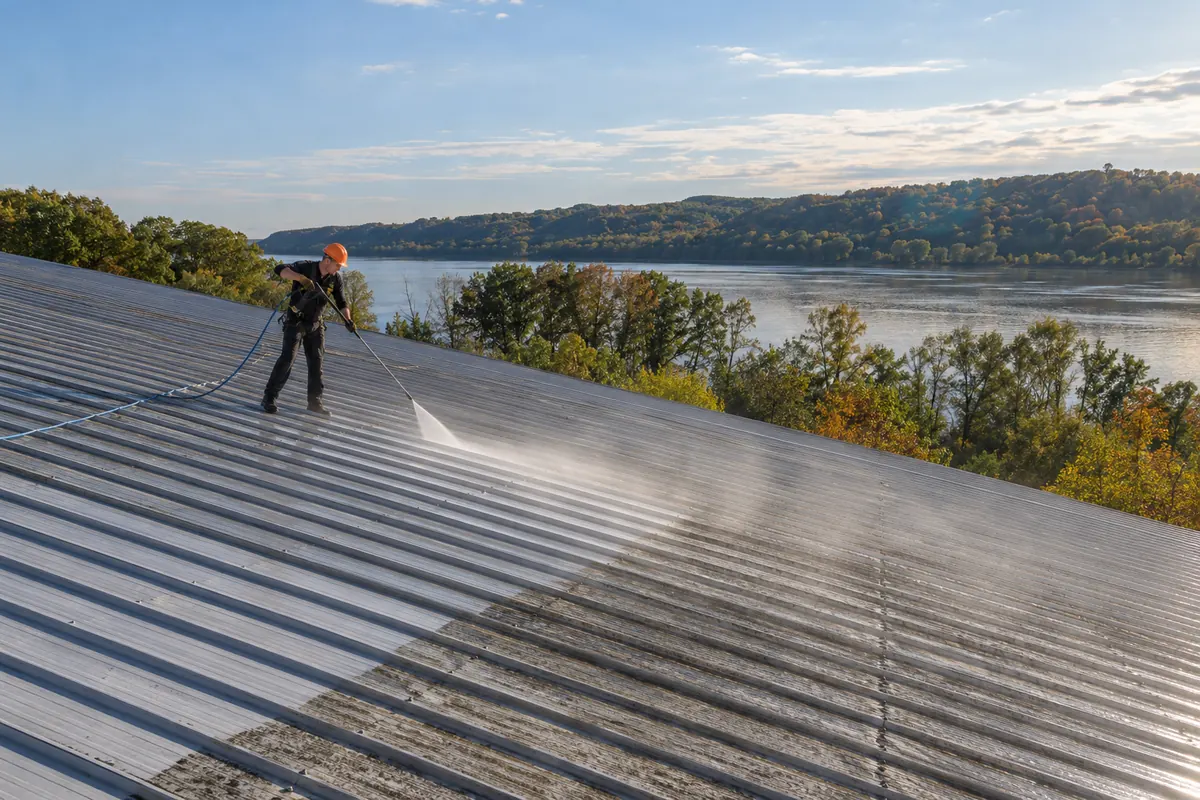
Pressure washing loosens chalk, dirt, white rust powder, and flakes of red rust, and that slurry runs off the eaves and through the downspouts. Sellersburg works with the Clark County Soil and Water Conservation District on stormwater outreach.
We plan the runoff before setup: nearby storm inlets covered or filtered, downspouts bagged where water would reach a drain, and the spray rig parked on pavement.
Washing and runoff touch every part of the roof. These are the six spots we watch.
Wash water forced under a loose cap can wet insulation. Cap screws are tightened before the washer comes out.
Most slurry comes off the field, where faded paint turns to powder. That is where the cleaner and rinse go first.
Dirt packs into end laps and holds moisture. Laps are flushed, dried, then sealed with fabric.
Brittle fiberglass panels crack under washer pressure, so they are rinsed gently and replaced if already cracked.
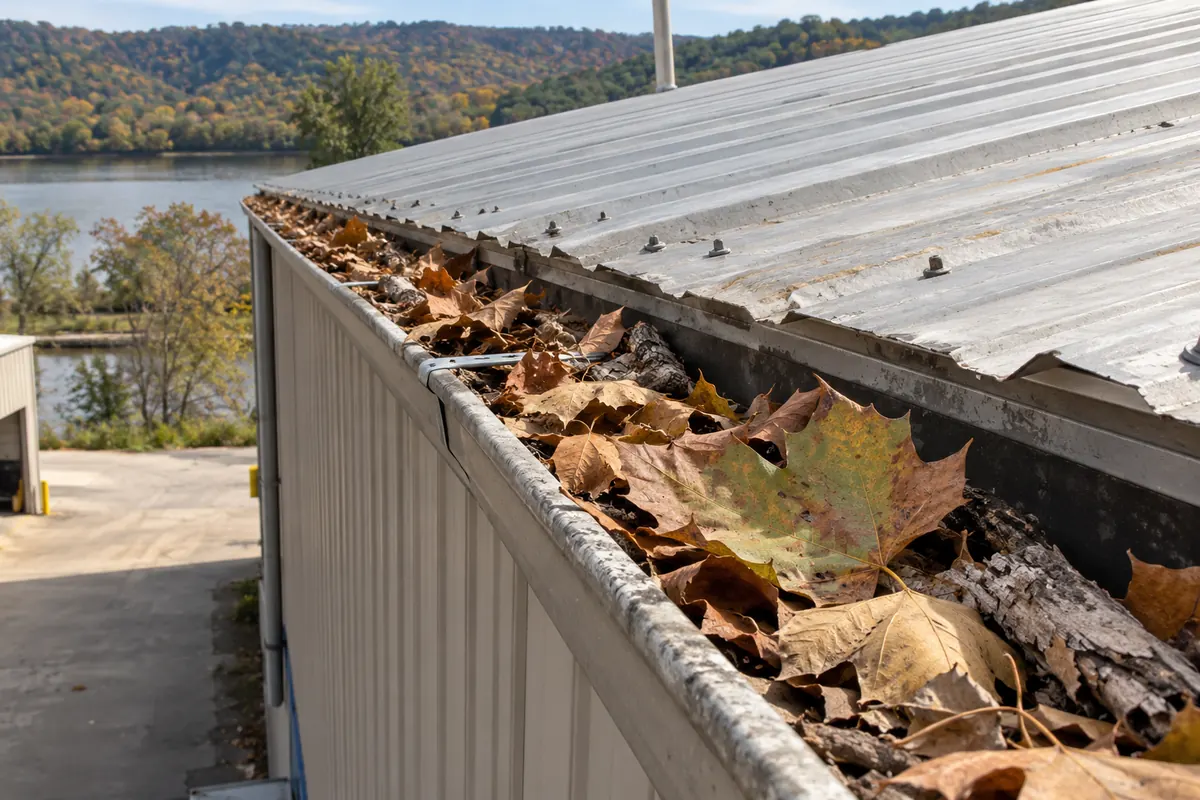
Every drop of runoff passes through here. Gutters are cleared first so slurry stays in the channel instead of spilling onto walkways.
Rooftop units are shut off and covered during washing so mist and debris stay out of intakes.
The coating gains below start with a clean, dry, well-drained roof.
Chalk, dirt, and white rust powder left on panels keep the coating from bonding.
A thorough wash and dry give the primer and base coat clean steel to grip.
Coating over loose red rust traps it and leads to peeling within a few seasons.
Abraded, rinsed, and primed rust spots stay under a firm film.
Rust slurry headed for a storm inlet becomes a problem for the lot and the town.
Covered inlets and bagged downspouts hold slurry on the property during cleaning.
Replacing chalked but firm panels adds tear-off debris to the runoff plan.
Coating keeps the panels in place, so washing is the only messy step.
After the wash, these systems cover most Sellersburg metal roofs.
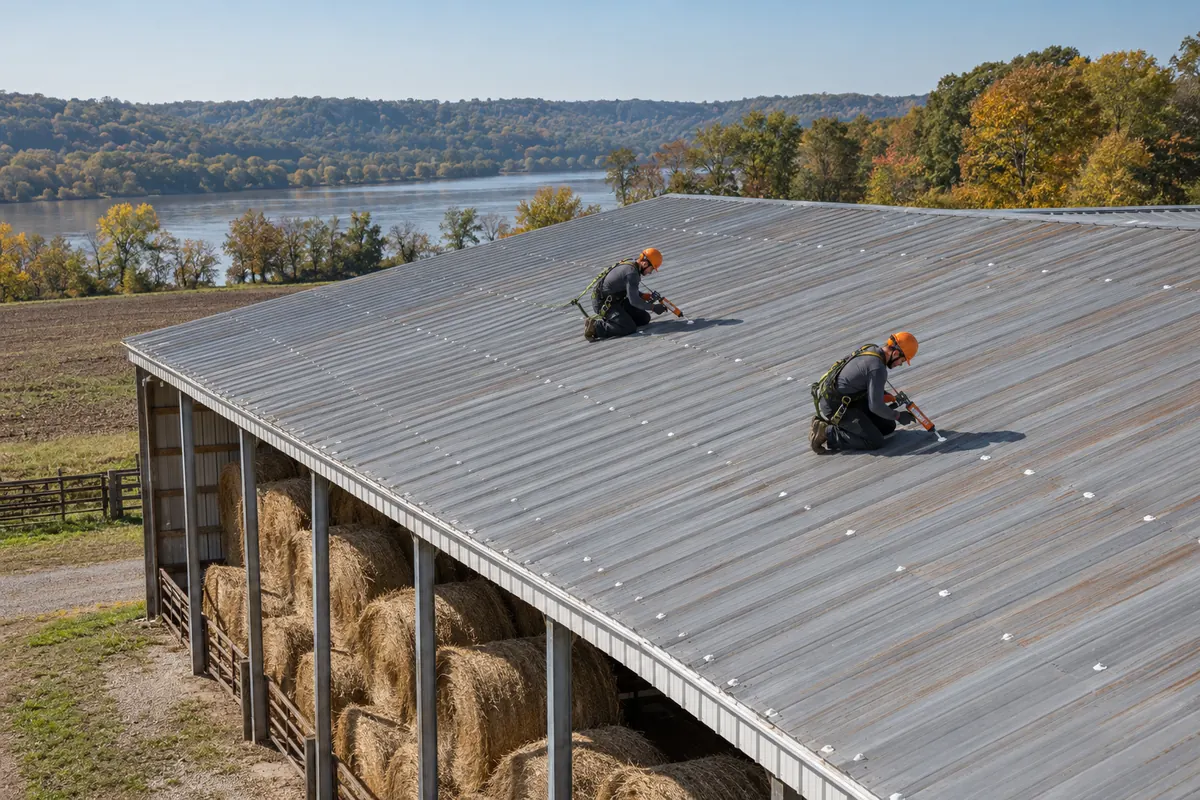
Screws, laps, and rust handled after cleaning, then a field coat over the whole roof.
Metal roof coating steps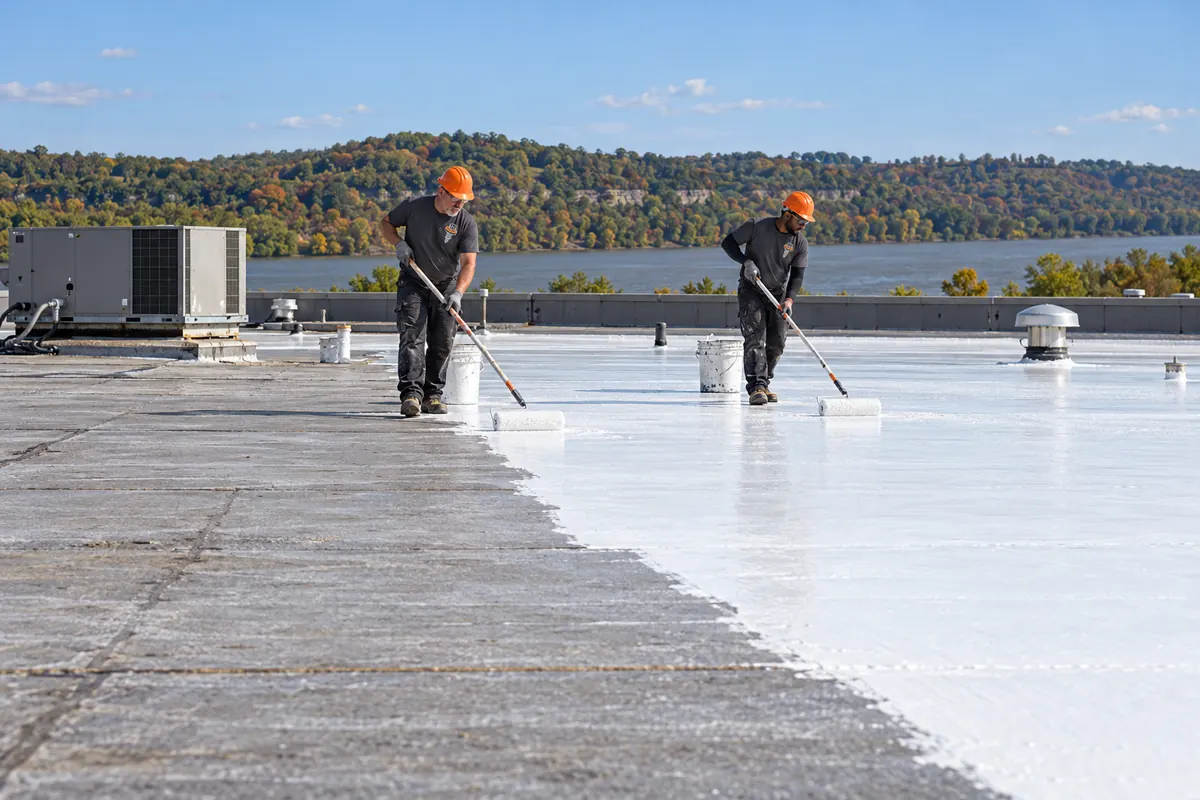
Sloped panels that drain fast take a white acrylic, which recoats with a simple wash later.
Acrylic for sloped panels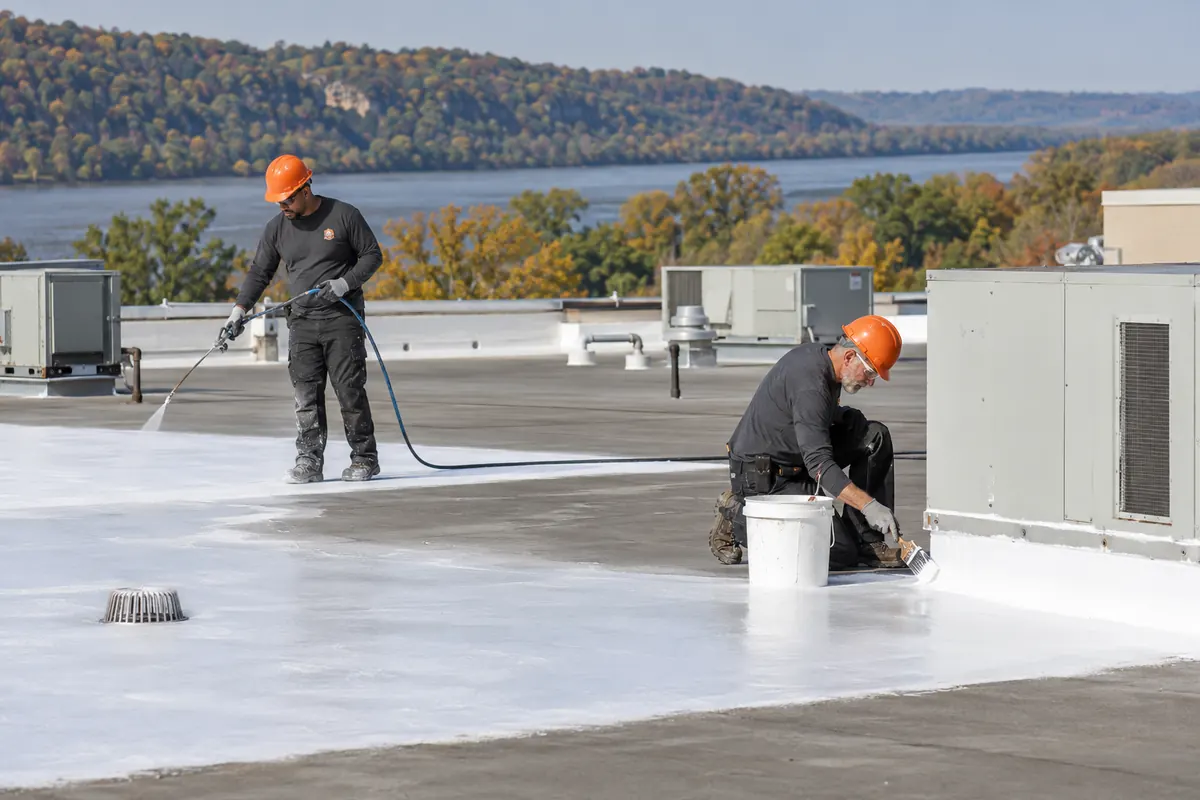
Dented eave panels and gutters that stay wet get silicone, which handles standing water.
Silicone for wet eavesCall and tell us where the downspouts empty. We plan the rinse around inlets and drains before any washing starts.
(812) 297-3434The runoff plan comes before the cleaning, and the cleaning comes before everything else.
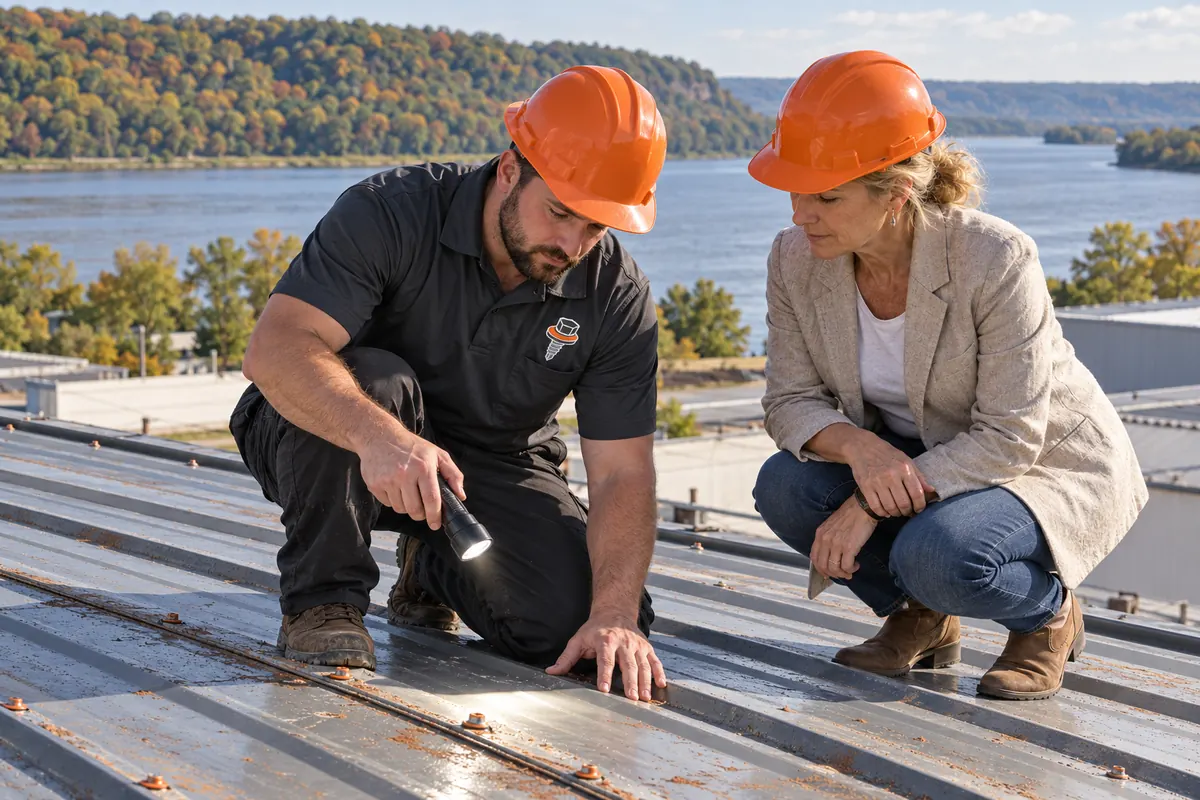
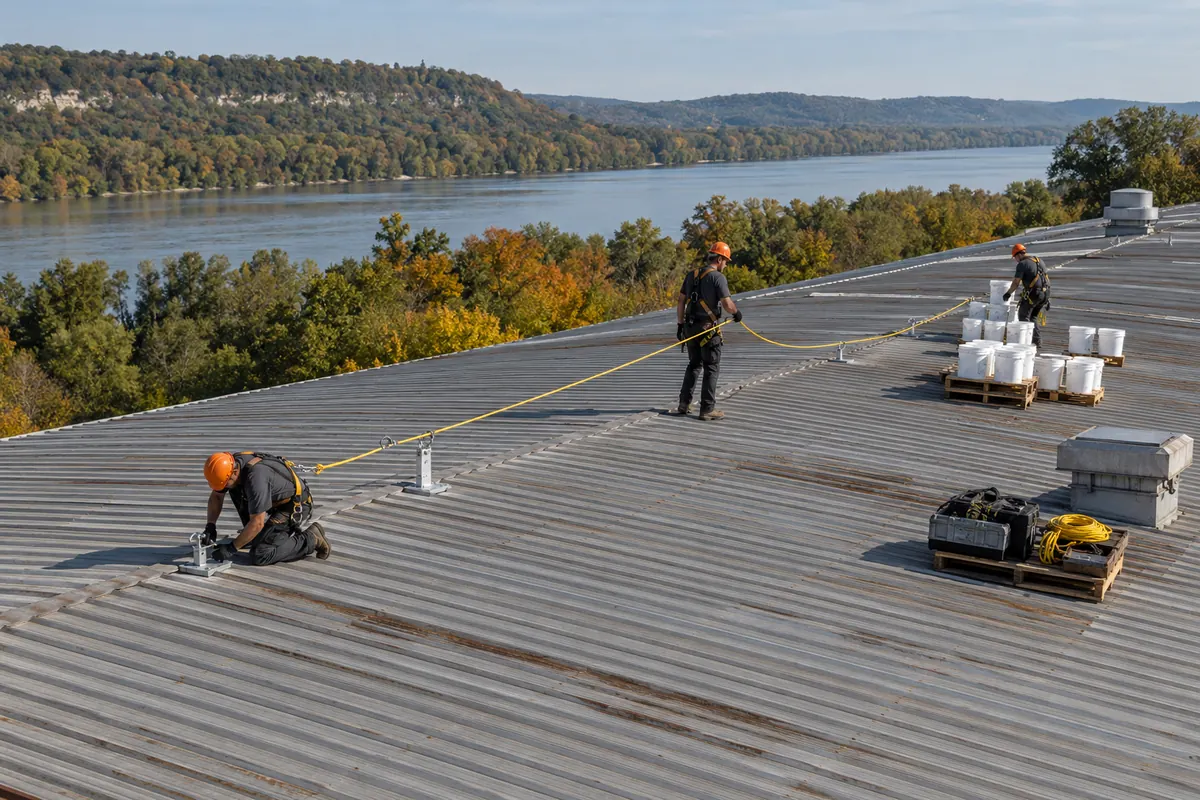
We check panels, laps, and gutters, find every storm inlet near the eaves, and note where each downspout empties.
The town's Commercial Building Permit Application and Class 1 checklist are prepared with the roof sketch, and inlet covers and downspout bags are set.
Panels are pressure washed, red rust is abraded and primed, and the roof dries before any sealant goes on.
Screws are sealed, laps get fabric, and base and top coats go on to the product thickness.
We coat metal roofs in Clarksville and five towns other than Sellersburg. For a building farther out, call us or send us a message.
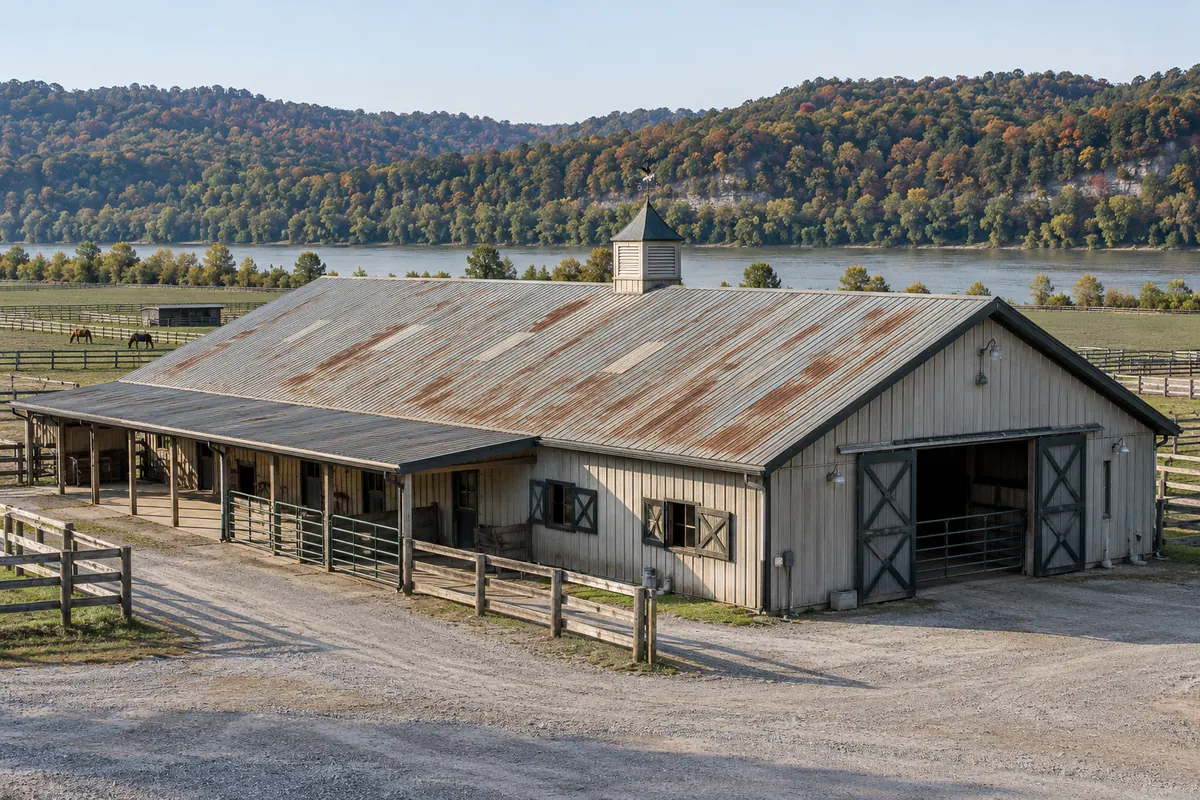
Historic-district color approvals and riverfront drip-edge rust.
Rooftop units moved during coating, with their own permits.
Hilltop wind, wallowed screw holes, and calm-air spray days.
Large River Ridge roofs coated in phases around truck courts.
Older downtown buildings with old paint and internal gutters.
Start with the town's Commercial Building Permit Application and its Commercial Class 1 submittal checklist, both linked from the Building, Construction Permitting and Code Enforcement page. Applications can go through the town's online portal.
Gather the panel type and gauge if known, roof area, coating and primer data sheets, and a sketch showing ridge caps, gutters, skylight panels, and rooftop units.
Wash water and rust-treatment runoff stay out of storm inlets. The town works with the Clark County Soil and Water Conservation District on stormwater outreach and construction erosion control inspections.
We cover or filter nearby inlets, bag downspouts near drains, stage the rig on pavement, and ask the town office whether erosion control steps apply.
Water and a cleaner the coating maker approves, plus whatever comes off the roof: chalk, dirt, and rust flakes.
Oily areas around exhaust fans get a degreaser and an extra rinse, since leftover oil blocks adhesion.
Until it is dry to the touch at the laps and seams, which takes longer on cool or humid days. Water trapped in laps causes blisters under the coating.
We check laps by hand before sealant or primer goes on.
Yes. Sellersburg is a town in Clark County with its own building office, so permits inside town limits come from the town.
The Class 1 checklist helps sort out which plans and product data a roof job needs.
Most buildings stay open. Washing happens on top of the roof, and runoff is the main thing that touches the ground, so docks and walkways under the eaves get coned off during the rinse.
We wash in sections so one side of the building stays clear for deliveries, and each section dries before detail work starts on it.
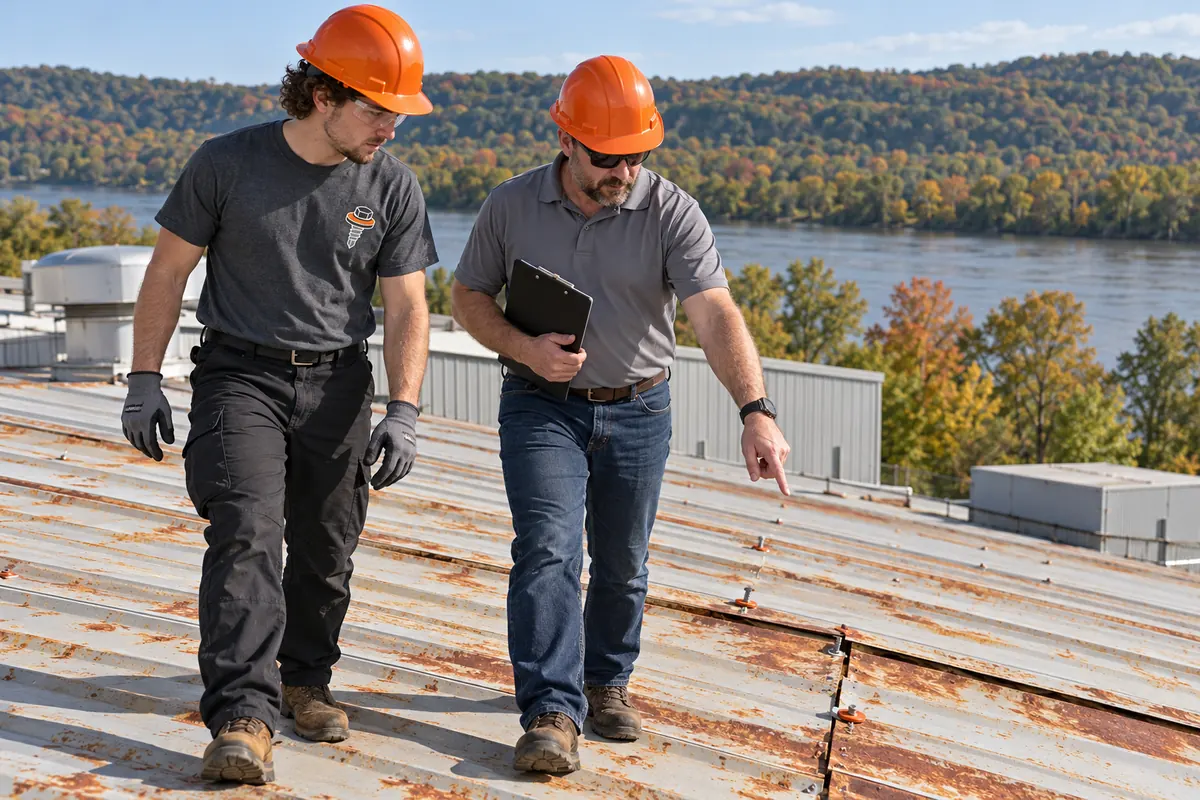
Send the roof size for a ballpark range, or call us and tell us where the downspouts drain.
Leave a name and number and we will call you back about your metal roof.