Added Insulation
What Wears Out
Bare metal panels pass summer heat and winter cold straight into the building.
What The Coating Does
Closed-cell foam, which a DOE guide puts near R-6 per inch, adds insulation on top of the panels.

Our spray foam roofing work in Clarksville puts closed-cell foam over commercial metal and flat roofs, then a coating on top. Foam adds insulation and fills the ribs.
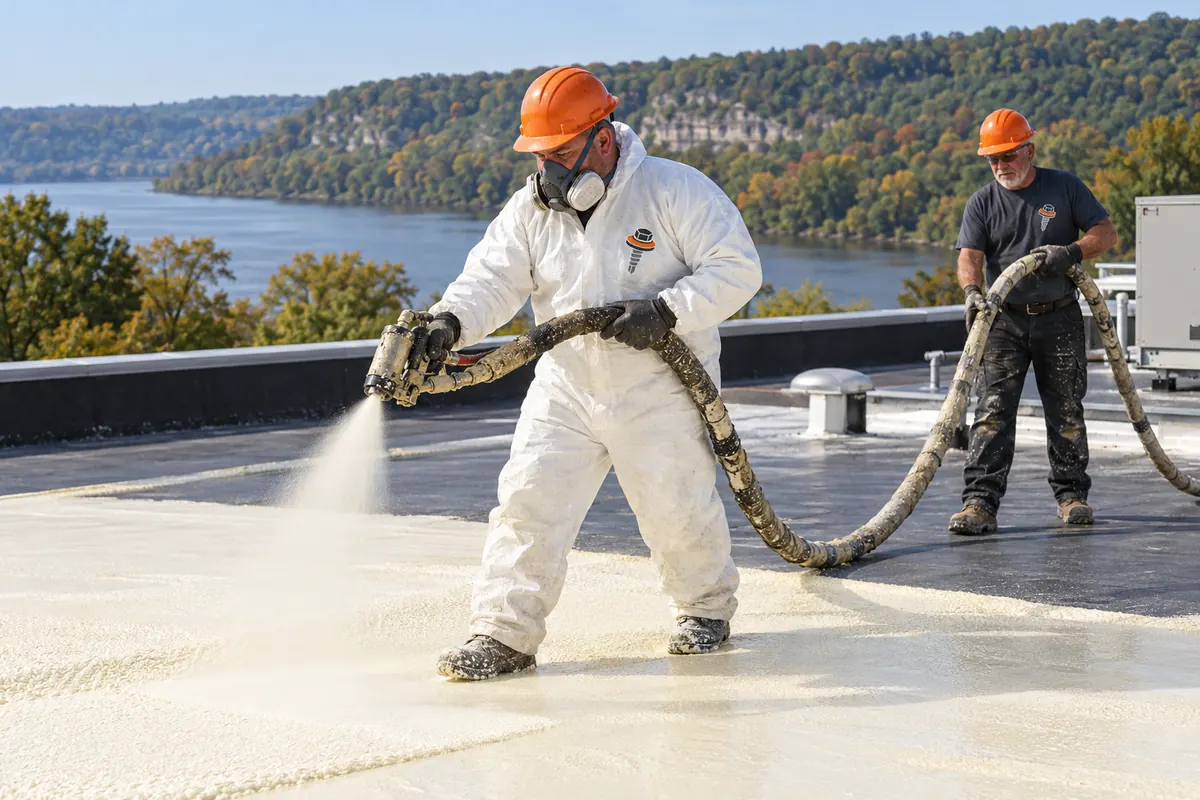
Foam fits buildings that need more insulation or fight condensation. Where leaks and rust are the only problems, a coating alone costs less.
Foam covers the ribs and laps for good, so anything under it gets fixed first. The plan shows the six spots we settle.
Adding foam raises the roof by inches. Ridge caps and vents get checked so the finished surface still sheds water at the peak.
Dry, clean panels are the only base foam grips well. We wash, dry, and check for oil around exhaust fans.
Lifted laps and backed-out screws get fastened down so the foam grips a stable base.
Skylight curbs can end up buried. Curbs get raised or panels replaced before spraying.
Edge trim and gutters move outward and upward as the foam builds. Both are extended or reset before any spraying.
Rooftop units and their fresh-air intakes are shut down or covered so overspray and fumes stay out of the building.
Foam always gets a coating on top, because sunlight breaks down bare foam. These are the setups we use over metal.
| Option | Best For | Topcoat | Plan For |
|---|---|---|---|
| Foam over metal panels | Uninsulated shops and warehouses | Silicone or acrylic | Raised edge trim and gutters |
| Foam to fill ribs flat | Corrugated roofs leaking at many laps | Silicone where water lingers | Extra thickness in the ribs |
| Tapered foam for slope | Flat sections that hold water | Silicone | Crickets toward drains and gutters |
| Foam recoat | Older foam with a chalky topcoat over firm, dry foam | Matching topcoat | Patching dings and bird pecks |
Foam adds benefits a thin coating lacks. Each one depends on dry panels and a full topcoat.
Bare metal panels pass summer heat and winter cold straight into the building.
Closed-cell foam, which a DOE guide puts near R-6 per inch, adds insulation on top of the panels.
Warm, moist air inside meets cold steel and drips on stock on clear winter mornings.
Foam on top keeps the panels closer to indoor temperature, which cuts the cold surface under them.
Hundreds of laps and thousands of screws each stay a possible leak under a thin coating.
Foam covers the ribs, laps, and screw heads in one continuous layer.
Adding insulation under a metal roof usually means removing panels.
Foam goes on top of the panels you have, so the roof stays closed and the building stays in use.
Call and describe the pattern. Wide, scattered drips on clear, cold mornings usually mean condensation, which foam on top of the panels addresses.
(812) 297-3434Foam work is mostly preparation and weather watching. The spraying itself moves fast once the roof is ready.
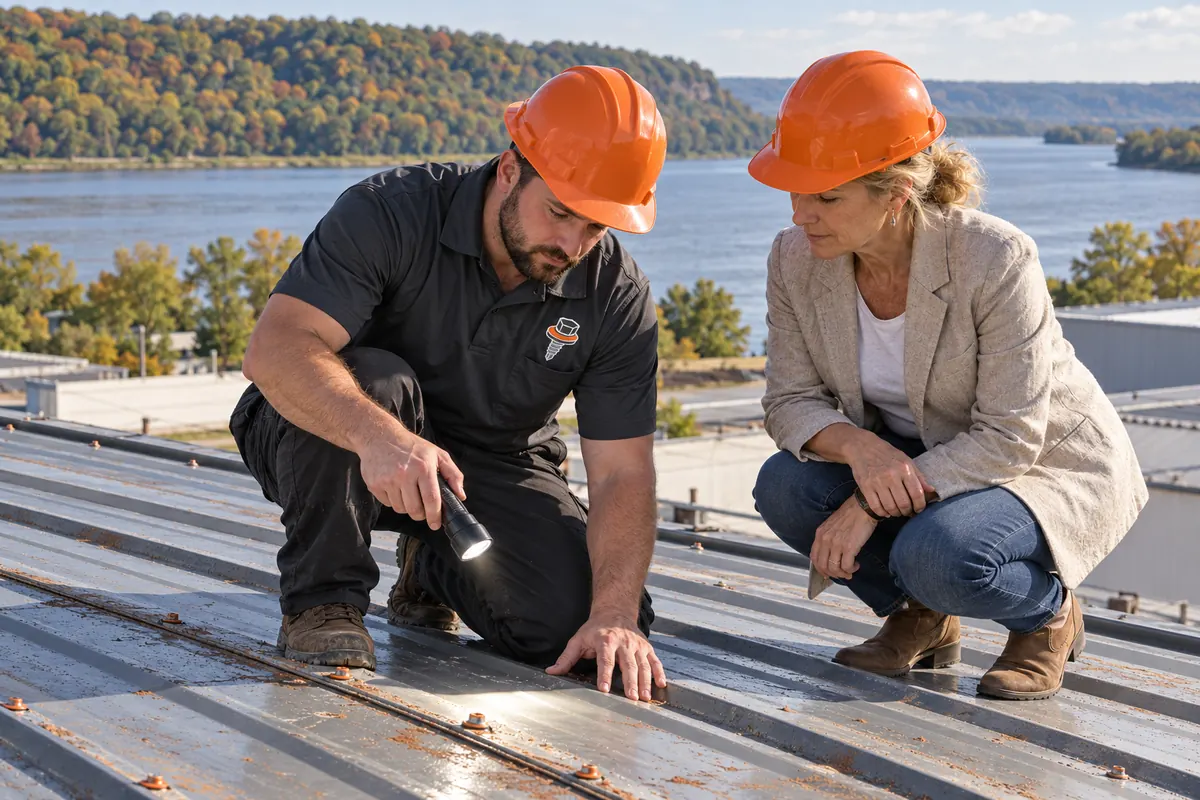
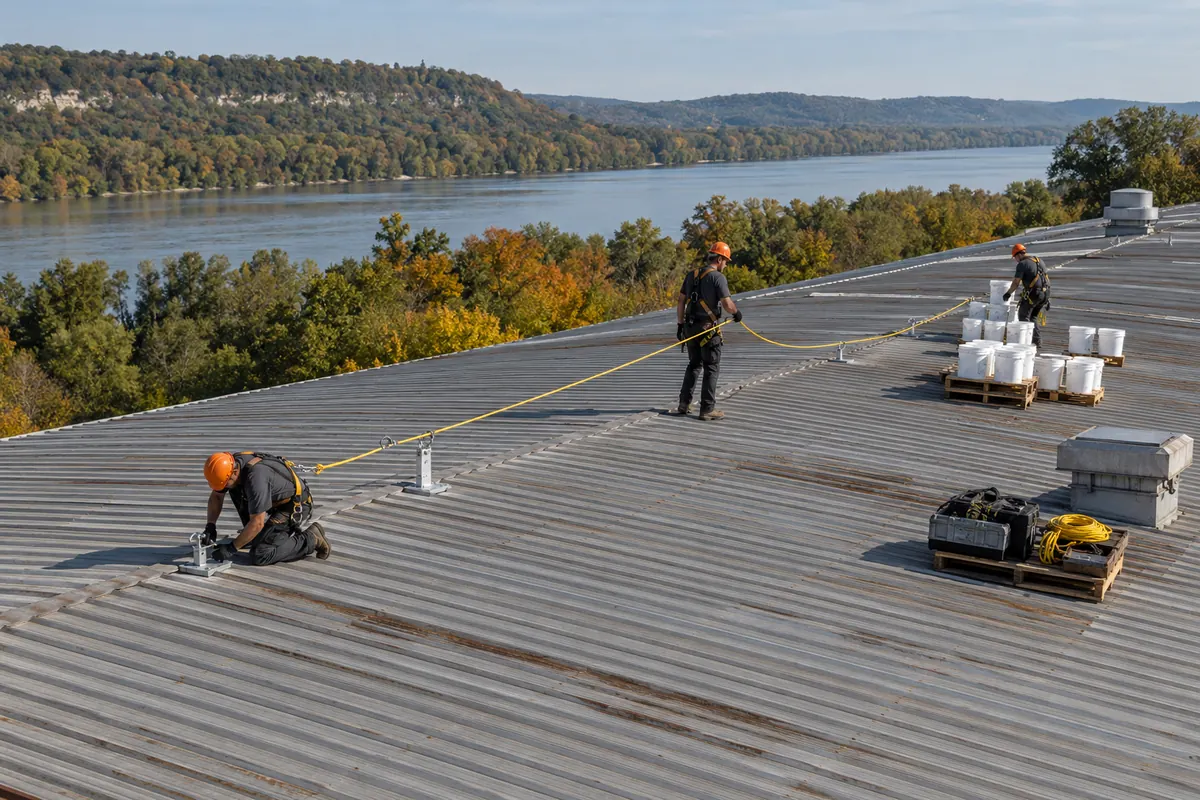
We check the deck and insulation for moisture, measure edge heights, and list every vent, curb, and intake the foam will reach.
Gutters and edge trim are extended, curbs raised, air intakes shut down, and vehicles near the eaves moved or covered.
Panels are washed and dried, then foam is sprayed in passes to the planned thickness, filling the ribs and building slope where needed.
Silicone or acrylic goes over the foam the same week to block sunlight, and the thickness of both layers is checked.
Some roofs need only a coating. These systems cover roofs whose problems stop at leaks and rust.
Leaks at screws and laps on an insulated building call for metal coating prep and a field coat, with no foam.
Metal roof coatingFlat sections that pond can take silicone directly when slope and insulation are already fine.
Silicone roof coatingSteep panels that drain fast get a white acrylic, which also cuts panel heat on summer afternoons.
Acrylic roof coatingIt depends on the problem. Foam adds insulation, can build slope, and keeps panels closer to indoor temperature, while a coating alone seals and protects the existing panels with no added R-value.
Foam also raises the roof edge by inches, so gutters, rake trim, and eave details get planned before any spraying.
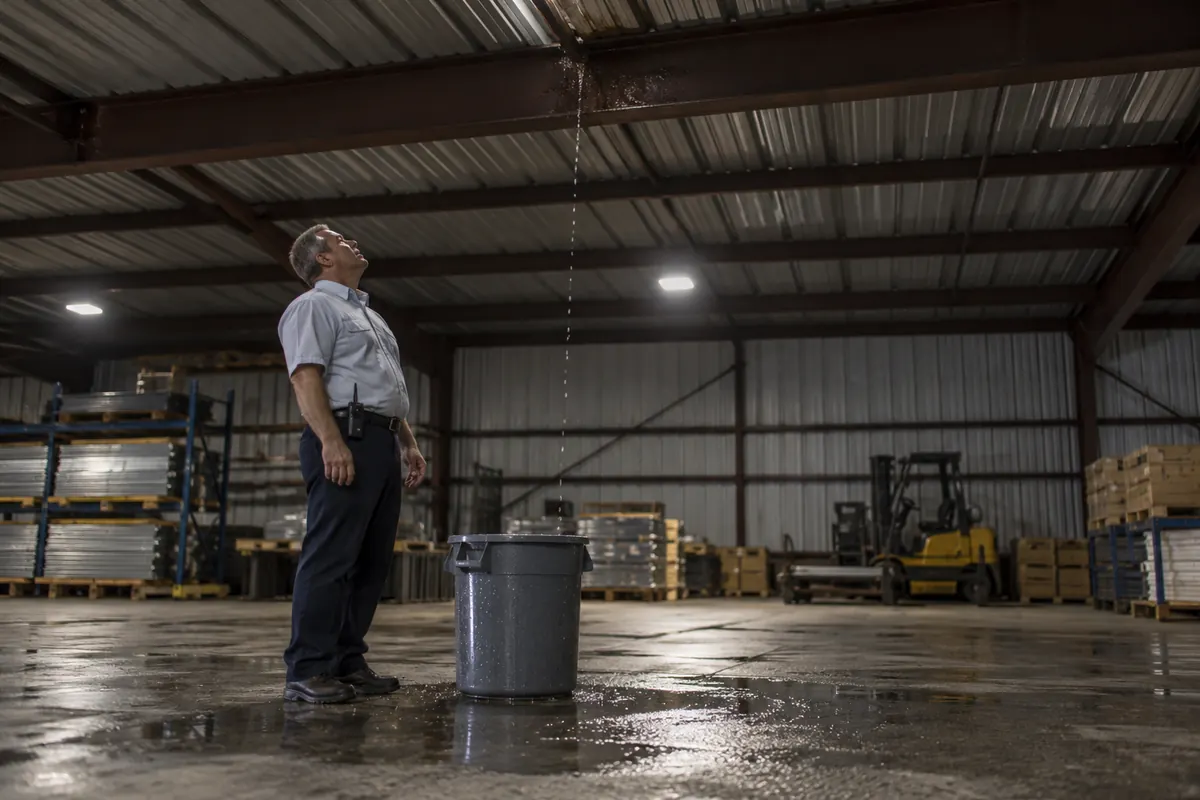
Drips on clear, cold mornings with no rain usually come from condensation: warm, moist air inside meets cold steel and turns to water. A wide drip pattern with no single leak line is another clue.
A surface coating does little for that. Foam on top, interior insulation with a vapor retarder, or better ventilation address the cause.
Thickness follows the insulation you want and the slope you need. Closed-cell foam runs near R-6 per inch in a DOE guide, so each added inch adds R-value.
Over ribbed panels, the foam runs thicker in the valleys so the top comes out flat.
Spraying waits for calm air, and cars, trucks, and equipment near the eaves are moved or covered. Air intakes on rooftop units are shut down while foam goes on.
On breezy days the crew switches to edge prep and topcoating by roller, which throw no overspray.
Walk it after big storms and once a year. Dings, bird pecks, and worn topcoat get cleaned and patched so sunlight never reaches bare foam.
Every several years the topcoat is washed and recoated with the matching product.
Send the roof size for a ballpark range, or call us about insulation, condensation, and edge heights.
Leave a name and number and we will call you back about your metal roof.