Tighter Edges
What Wears Out
Loose trim and caps rattle in every gust, opening a little more each storm.
What The Coating Does
Refastened edges under a sealed coating stay closed to wind-driven rain.

We do metal roof coating in Floyds Knobs on shops, farm buildings, and commercial sites up on the knobs, where wind works on screws, laps, and trim.
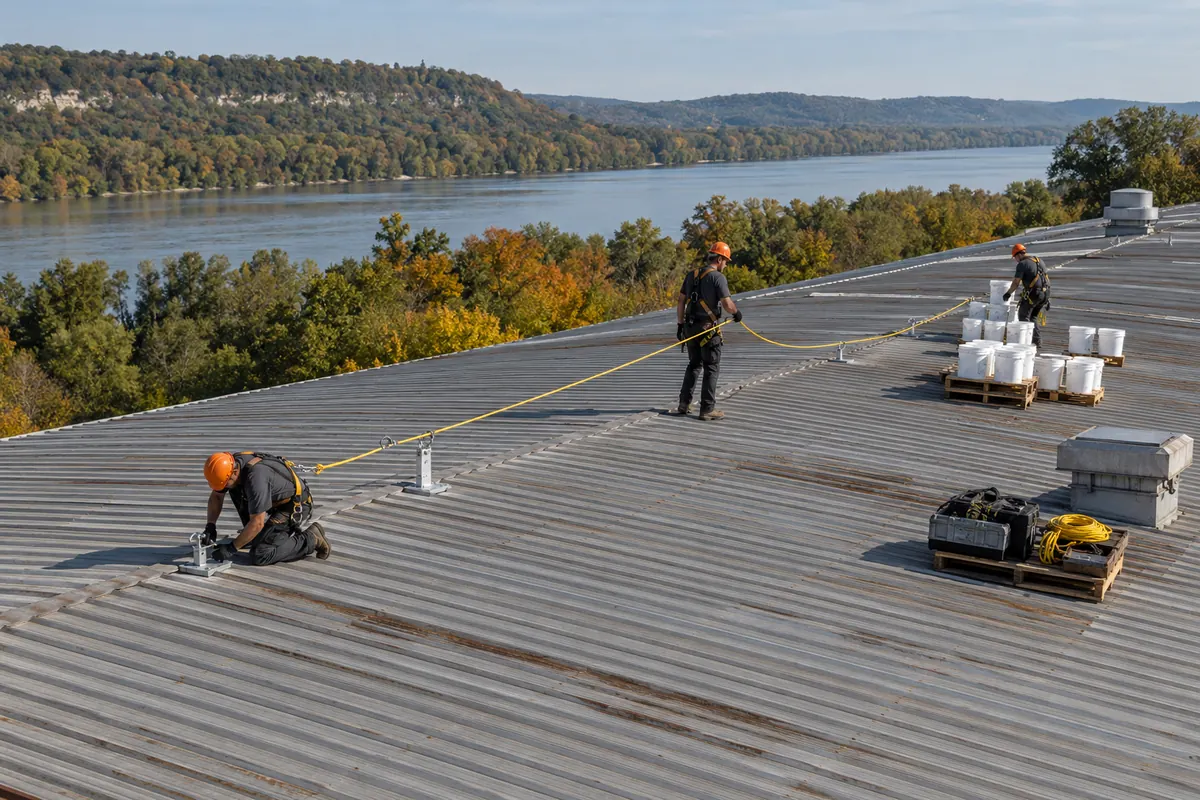
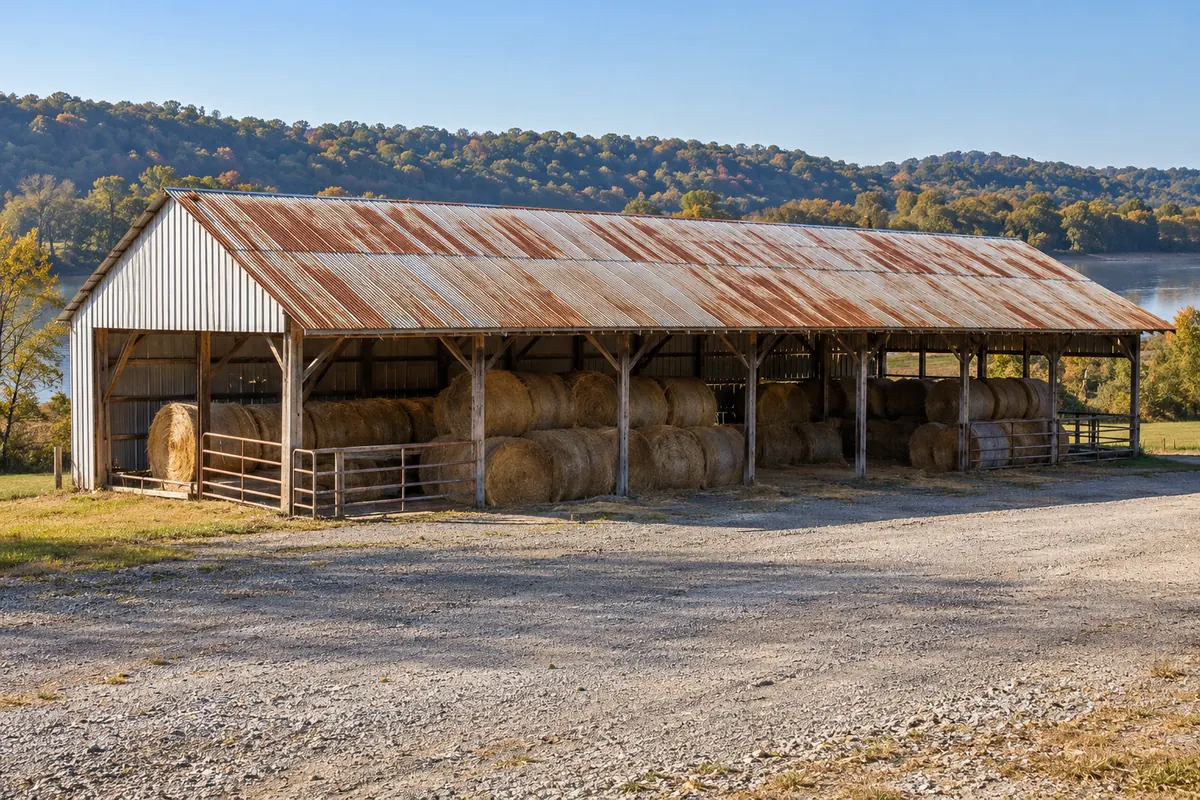
Buildings on the higher ground of the knobs sit more exposed than sheltered sites in the river valley. Wind flexes panels at loose screws, which wallows out the holes over time.
So the fastener work grows on these jobs, and spray days need calm air, since wind carries overspray across open lots. Rolling replaces spraying on breezy days.
Wind loads the edges and the loose screws first. These six spots get the extra fastening.
Caps and gable trim take direct gusts. Missing screws are replaced and closures reset so the cap stays tight.
Panels flexing in wind turn round holes into slots. Oversized screws bite fresh metal and seal the wider hole.
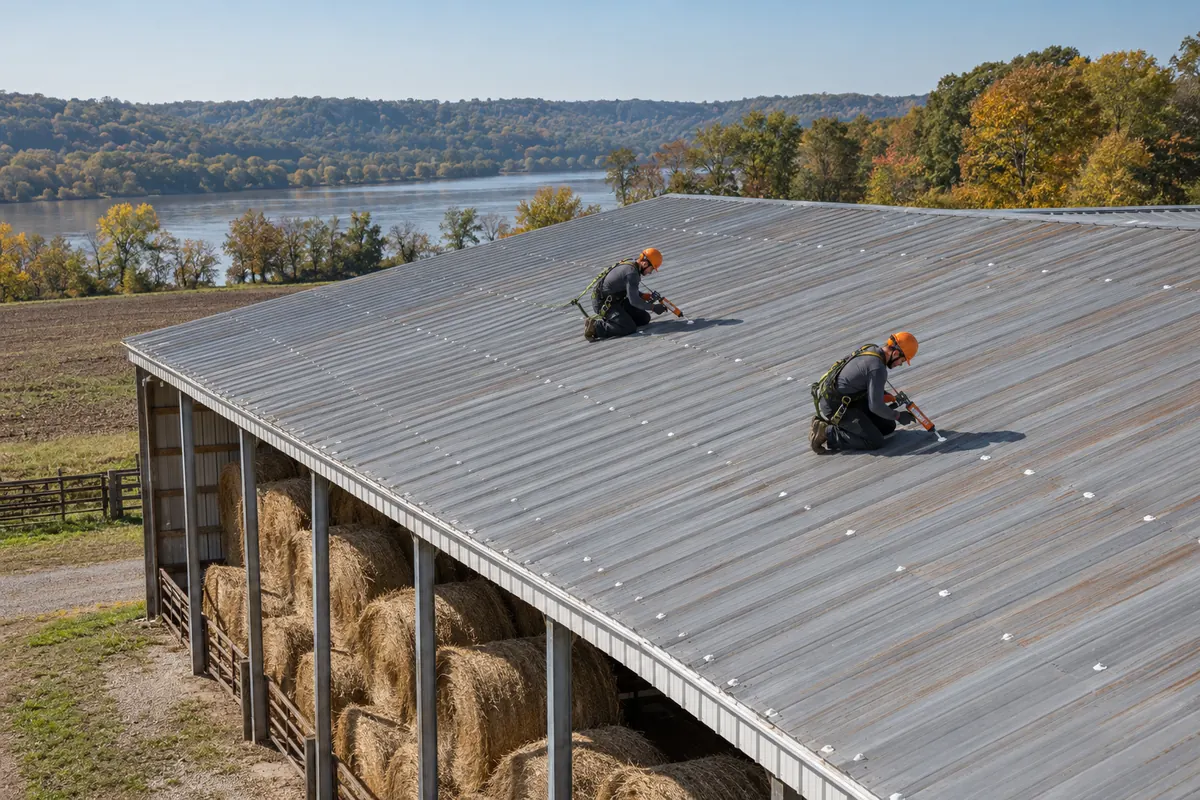
Gaps open where side laps have pulled apart. Stitch screws pull them back together before fabric goes on.
Fiberglass panels flex more than steel and crack at their screws in high wind. Cracked ones are replaced.
Lifted eave trim lets wind under the panel ends. Trim is refastened and the edge sealed.
Vents, turbines, and small units on farm and shop roofs catch wind and loosen their curbs. Each one is checked and resealed.
These benefits hold on windy sites when the fastening work comes first.
Loose trim and caps rattle in every gust, opening a little more each storm.
Refastened edges under a sealed coating stay closed to wind-driven rain.
Elongated holes let screws back out and water follow them in.
Oversized screws with sealed heads hold the panel and close the hole.
Side laps spread as panels flex, and rain blows sideways through the gap.
Stitch screws and fabric keep laps closed under the coating.
Farm buildings and shops on rural parcels often have firm steel under worn paint.
Coating extends the life of those panels instead of replacing the whole roof.
Rural and hilltop buildings in Floyds Knobs usually fit one of these three systems.
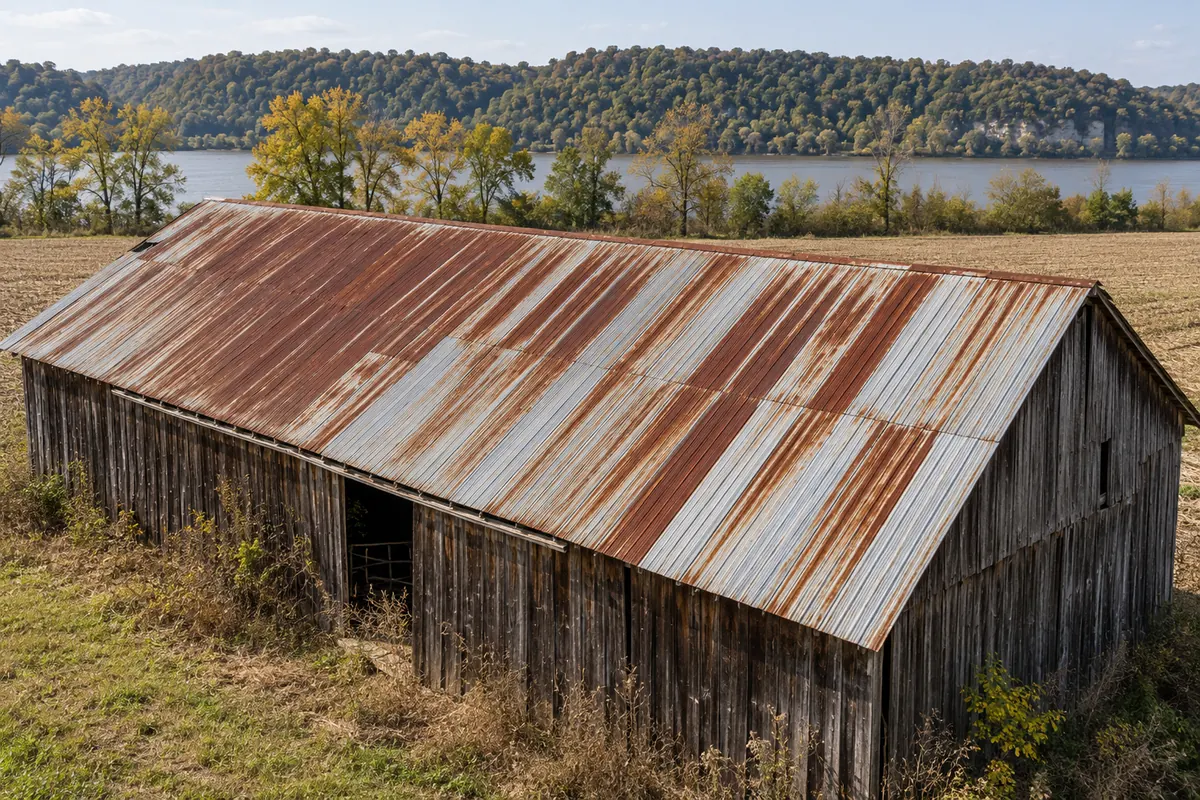
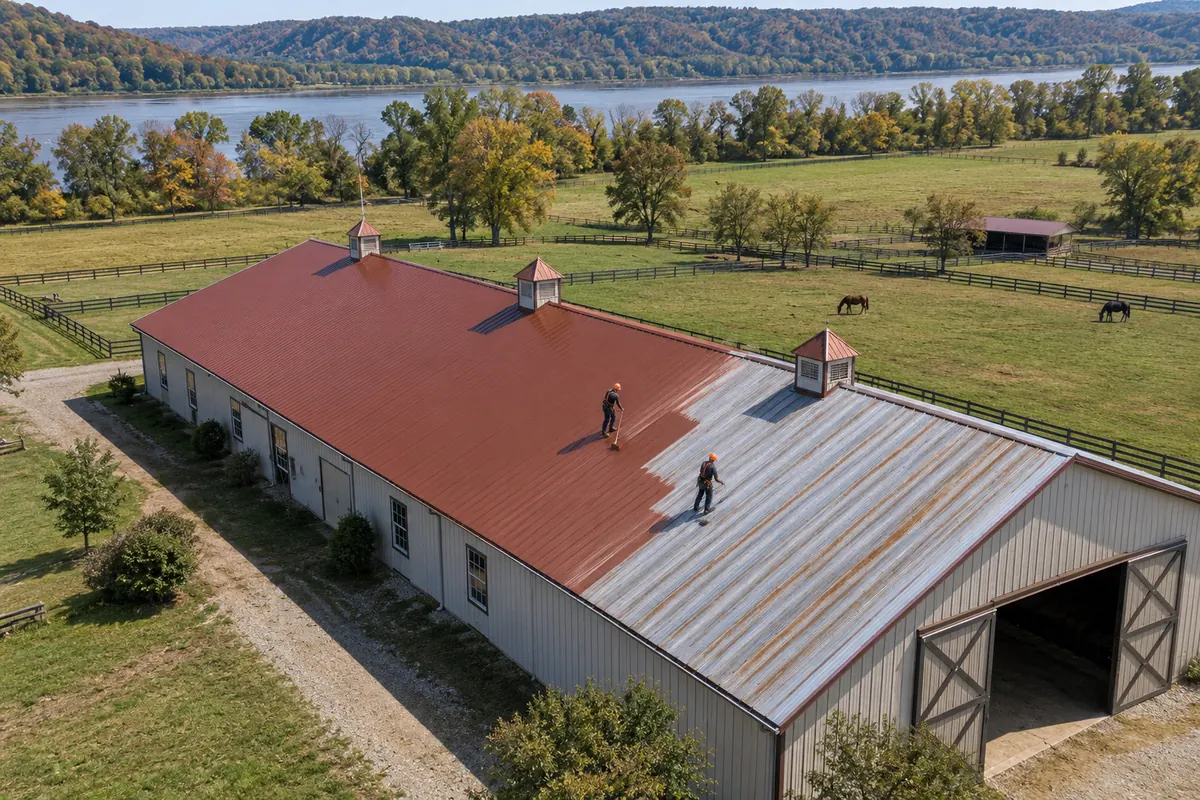
Weathered barn and shop roofs with rust at the washers get fastener work, rust treatment, and a field coat.
Metal coating for barns and shops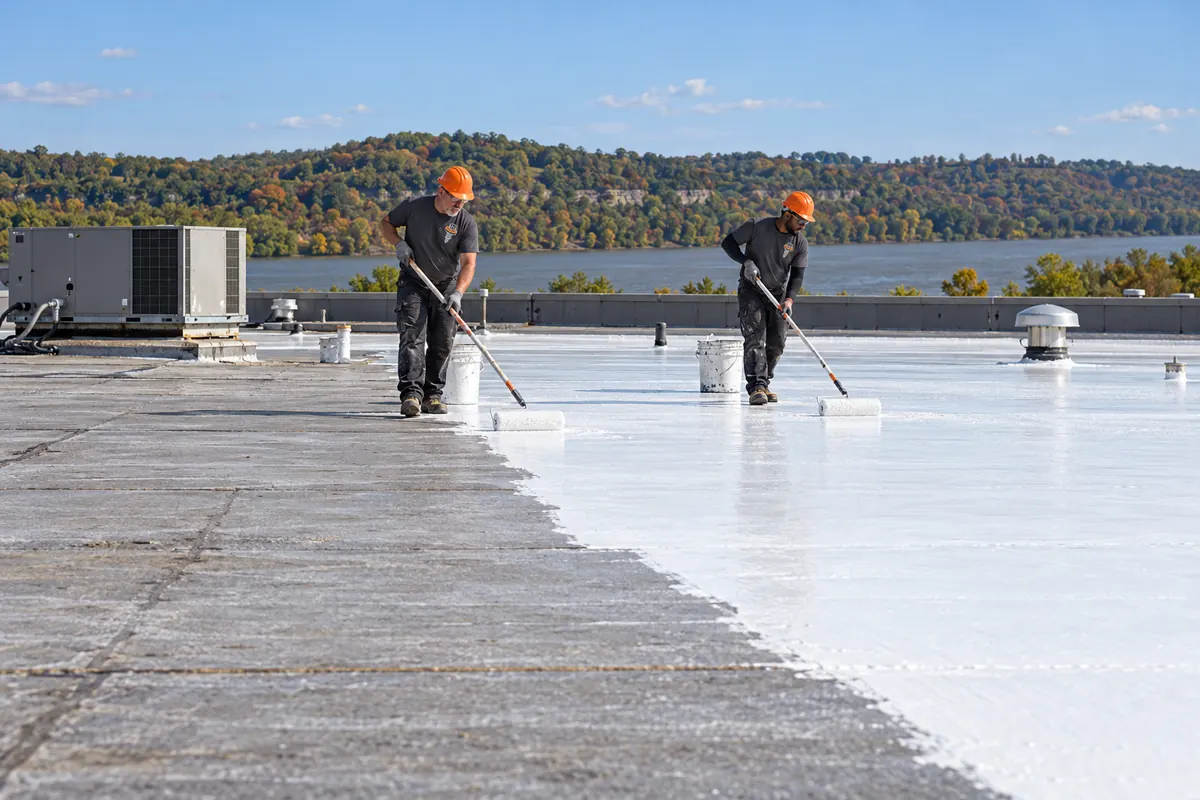
Rolled acrylic suits breezy sites, since rolling throws no overspray across open lots and vehicles.
Rolled acrylic coating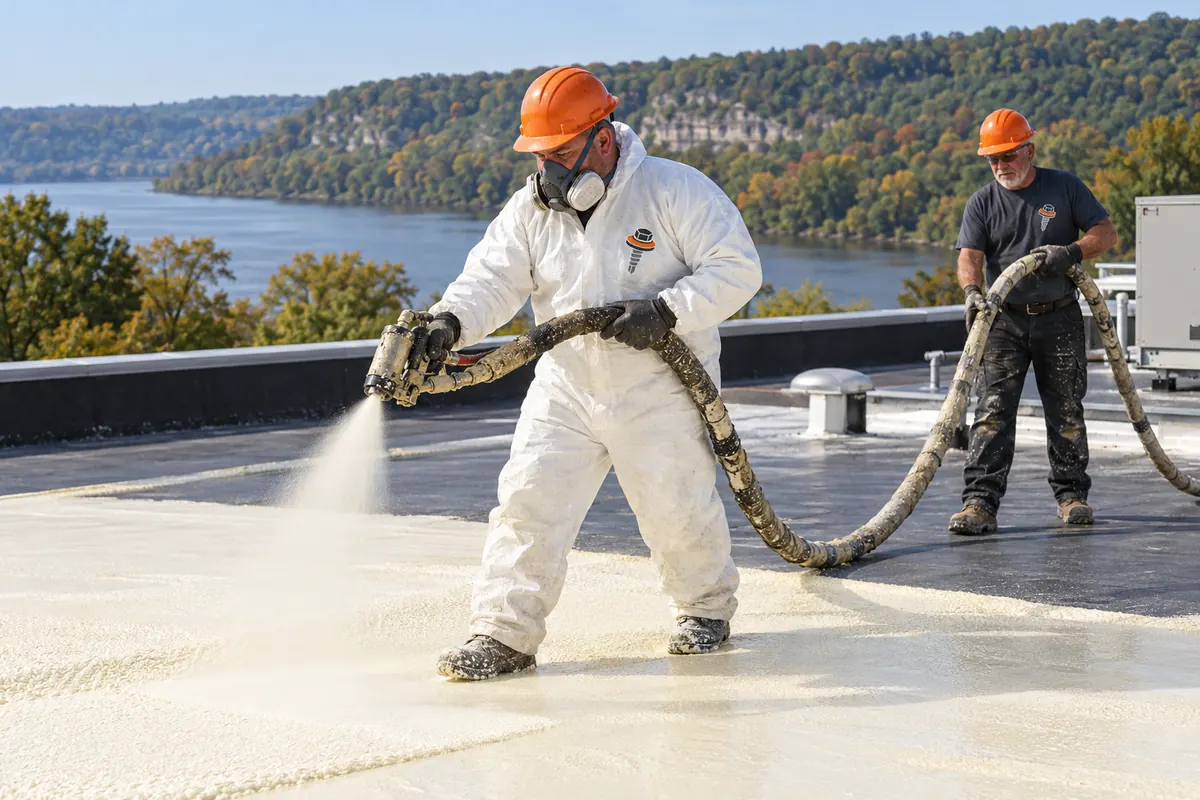
Uninsulated shops on the hill lose heat fast, and foam adds insulation and buries the laps on calm days.
Spray foam for shopsCall after a storm if you see bent trim or lifted panel edges from the ground. Those get fastened down before any coating goes on.
(812) 297-3434Fastening takes longer on exposed roofs, and the coating schedule follows the wind forecast.
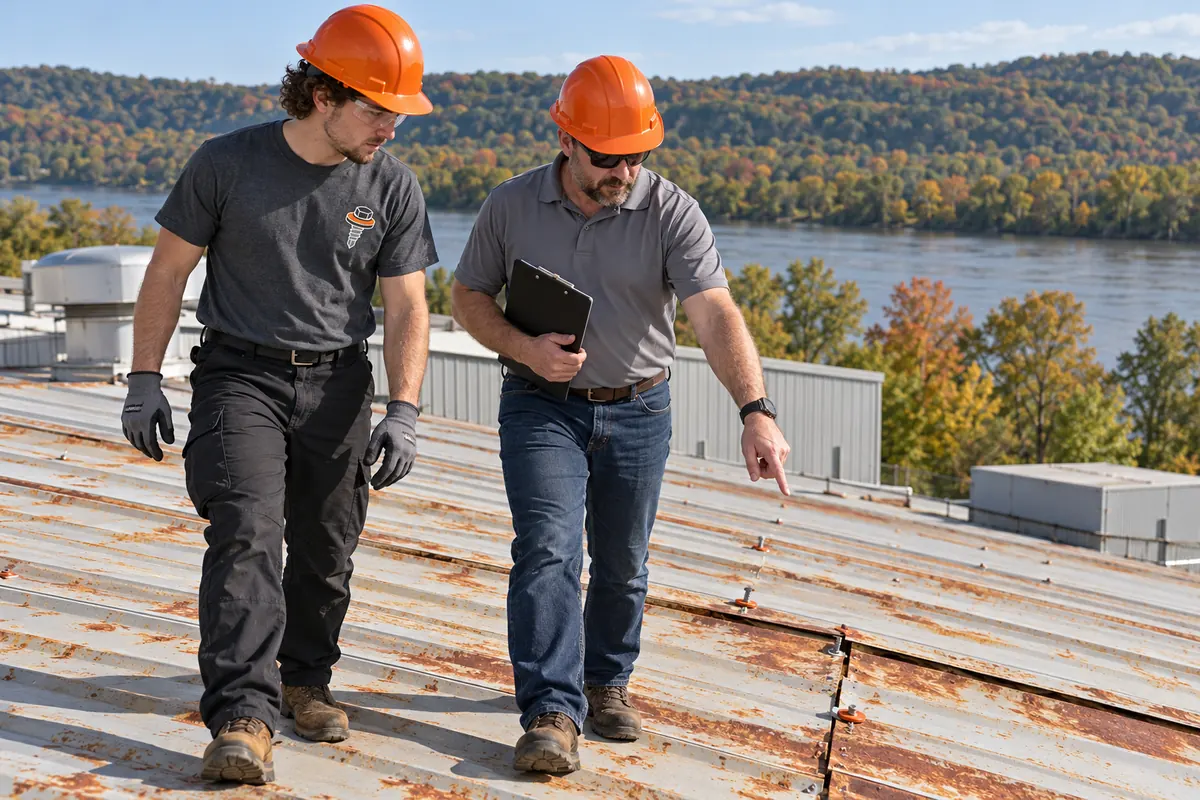
We walk the perimeter first, then the panels, marking elongated holes, spread side laps, lifted trim, and loose ridge caps.
Trim and caps are refastened, oversized screws go in wherever holes have wallowed out, and stitch screws close the side laps.
The roof is washed and dried, rust is primed, and laps and ridge caps get fabric set in base coat.
Spraying waits for calm air, and breezy days switch to rolling. Thickness is checked before the crew leaves the hill.
Six towns and Clarksville make up our metal roof coating area; here are the five besides Floyds Knobs. Somewhere else? Call us or send us a message.
Historic-district color approvals and riverfront drip-edge rust.
Rooftop units moved during coating, with their own permits.
Wash water and rust slurry kept out of storm inlets.
Large River Ridge roofs coated in phases around truck courts.
Older downtown buildings with old paint and internal gutters.
Floyd County Building and Development Services, since Floyds Knobs has no town government of its own. The county handles commercial projects and suggests booking an appointment for permit questions.
Bring the parcel number, roof size, panel type, and photos of the ridge cap, eaves, and skylight panels. Ask how the county treats a farm building compared with a commercial shop.
Buildings on the higher ground sit more exposed, and wind flexes panels at loose screws until the holes wallow out. Exposed roofs get oversized screws, stitch screws at spread side laps, and tight rake and eave trim.
Spray days need calm air, and rolling replaces spraying when it is breezy. After big storms, check ridge caps and gable trim from the ground.
Usually. Many commercial and farm buildings around Floyds Knobs sit on open lots, which leaves room for a lift and staging.
Soft ground after rain is the main limit on the roof schedule, so lift days follow dry weather too.
Yes, when the panels are firm. Barns, hay sheds, and equipment buildings with light rust and worn paint are common candidates.
Open-sided sheds catch wind from below, so their trim and purlin screws get extra attention.
Walk the perimeter and look for bent trim, panel edges standing up, and missing ridge cap screws. Photograph damage with dates before any work.
Loose edges get fastened first, and coating comes after the roof is tight again.
Coating waits for warm, dry weather, so winter on the higher ground is for inspections and fastener work. Snow sliding off steep panels can bend gutters and trim at the eave.
Bent trim and gutters found in spring get fixed before the coating season starts, so the edges are tight when the coats go on.
Send the roof size for a ballpark range, or call us about wind damage, loose trim, and lift access.
Leave a name and number and we will call you back about your metal roof.