Dry Walls Below The Roof
What Wears Out
Water slipping behind counterflashing stains plaster and loosens mortar inside.
What The Coating Does
Repointed joints and resealed head walls keep the coated roof tied to the masonry.

We do metal roof coating in Corydon on older downtown buildings and Harrison County shops, taking care with old paint layers, masonry transitions, and internal gutters.
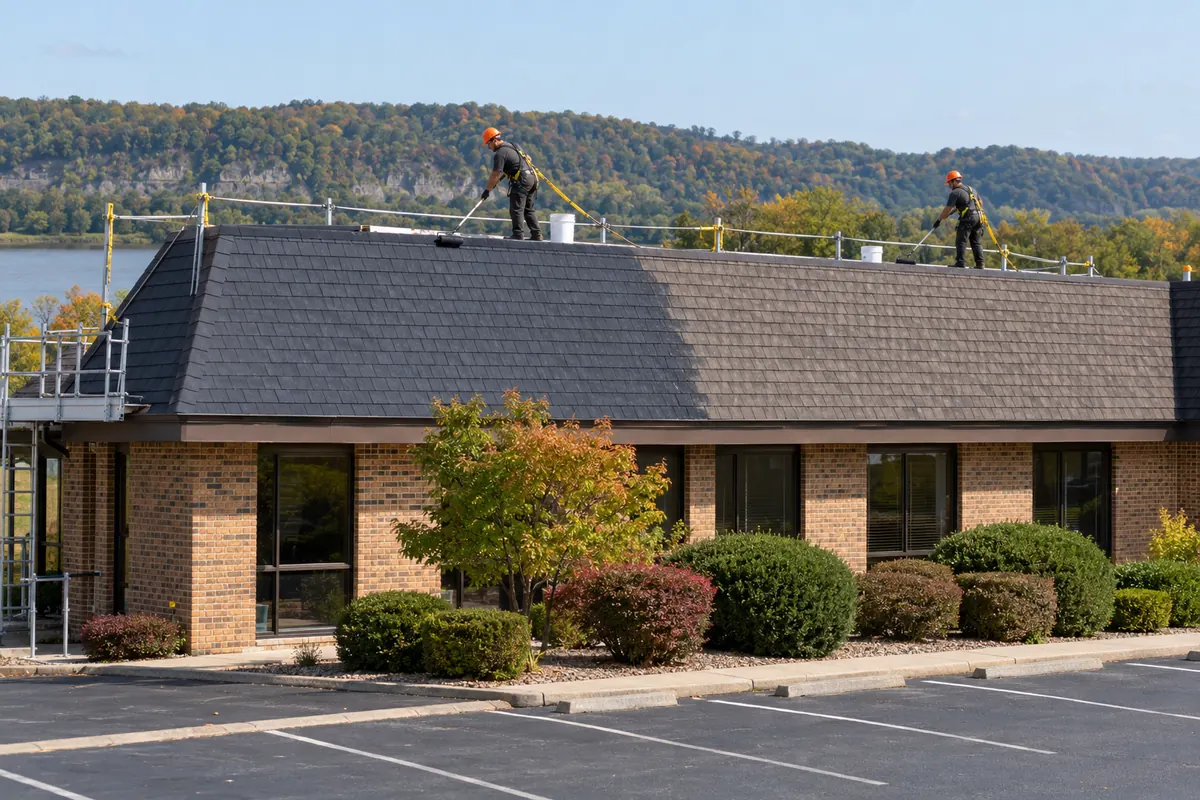
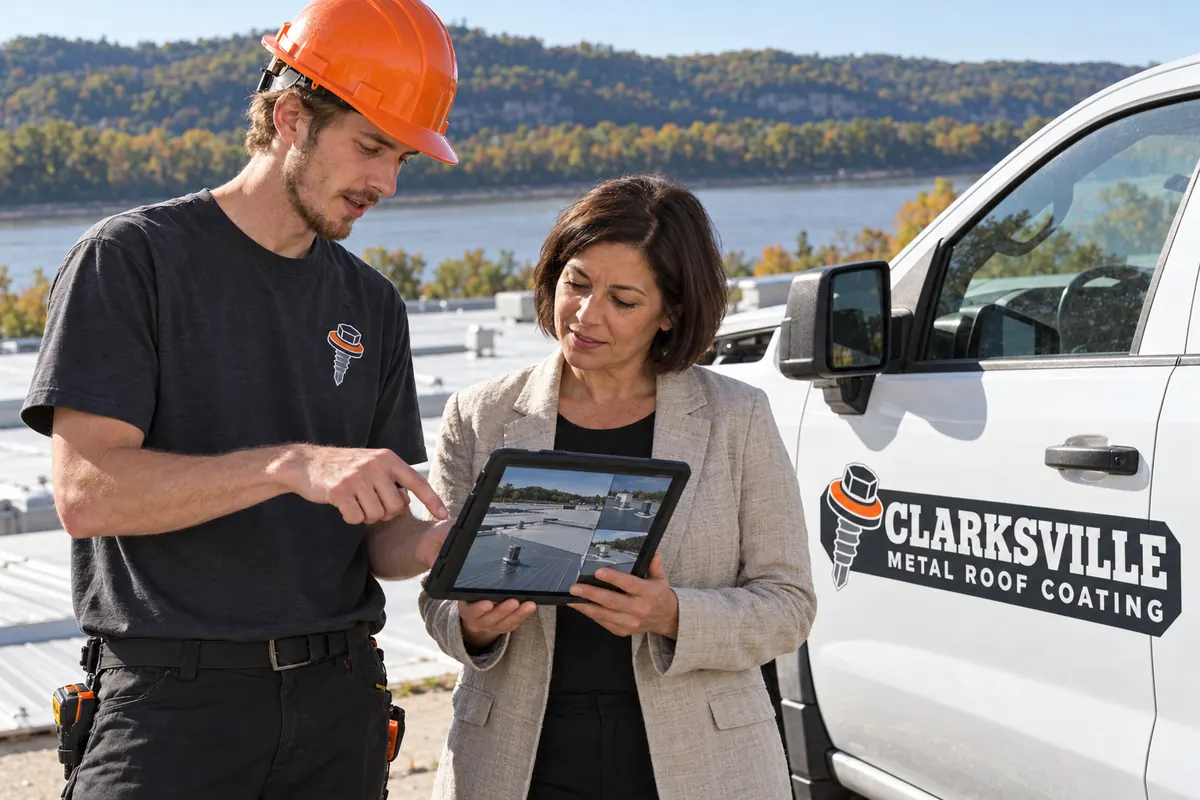
Corydon was Indiana's first state capital in 1816, and its downtown keeps many older masonry buildings. Where one of them has a visible standing seam roof, the coating color changes how it reads from the street.
Older roofs also carry older finishes. Paint layers are checked before any sanding or blasting, since older finishes need special handling.
Older buildings put more of the work at the edges and joints. The plan shows the six spots we check.
Seams on older standing seam roofs open at the ridge and panel ends. Each is checked and resealed before color goes on.
Several coats of old paint sit on many older panels. We test them before any sanding or blasting.
Where panels butt into brick, sealant at the head wall dries out and lets water behind the counterflashing.
Old flues and vents carry layers of patching. Loose mastic comes off and new flashing goes on.
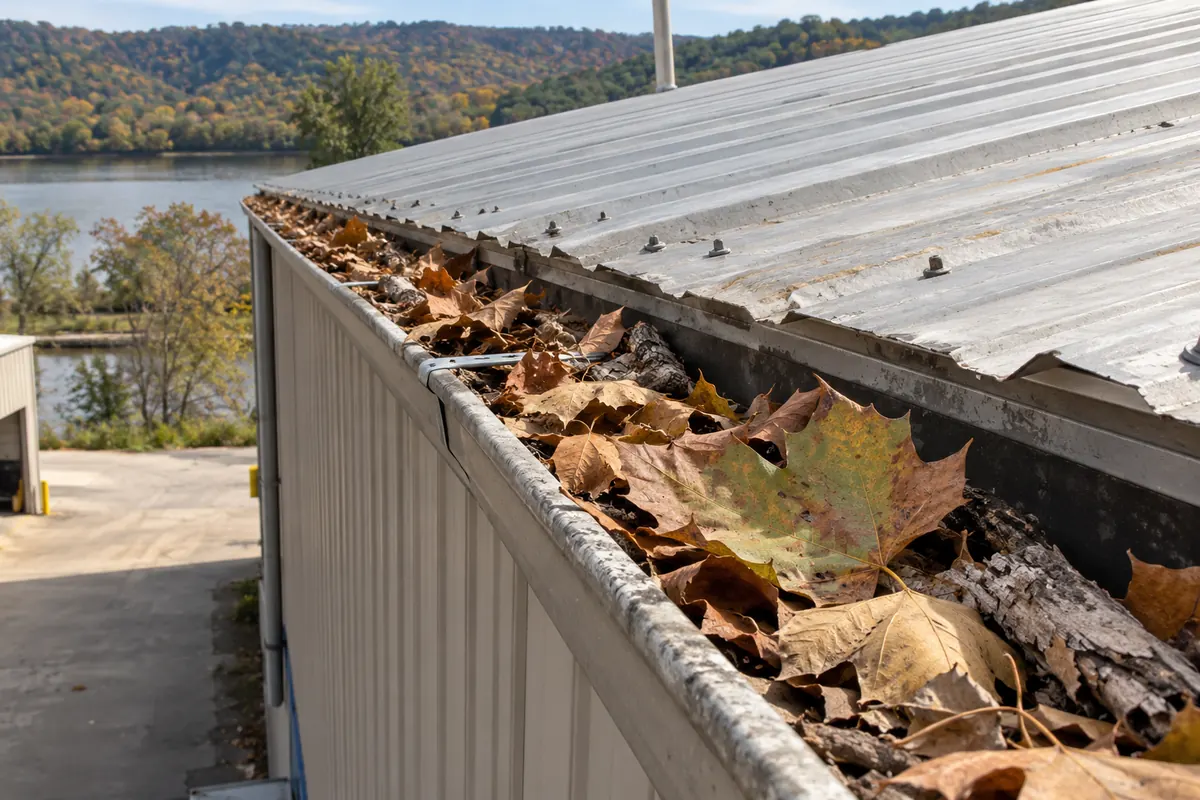
Built-in gutters hide behind the roof edge and overflow into the wall when clogged. They are cleared and lined or coated.
Cracked or clogged cast-iron downspouts back water into the gutter. Each is cleared so the gutter drains before the roof is coated.
On an older building, the benefits come from fixing the joints and keeping the look.
Water slipping behind counterflashing stains plaster and loosens mortar inside.
Repointed joints and resealed head walls keep the coated roof tied to the masonry.
Clogged internal gutters overflow into walls during heavy rain.
Cleared and coated gutters carry water to working leaders.
Faded or patched paint makes a historic roofline look tired.
A top coat close to the original color refreshes the roof without changing the building's character.
Replacing an older standing seam roof can mean matching a profile that is hard to find today.
Coating keeps the existing panels and profile in place.
Older downtown roofs and Harrison County shops in Corydon usually call for one of these systems.
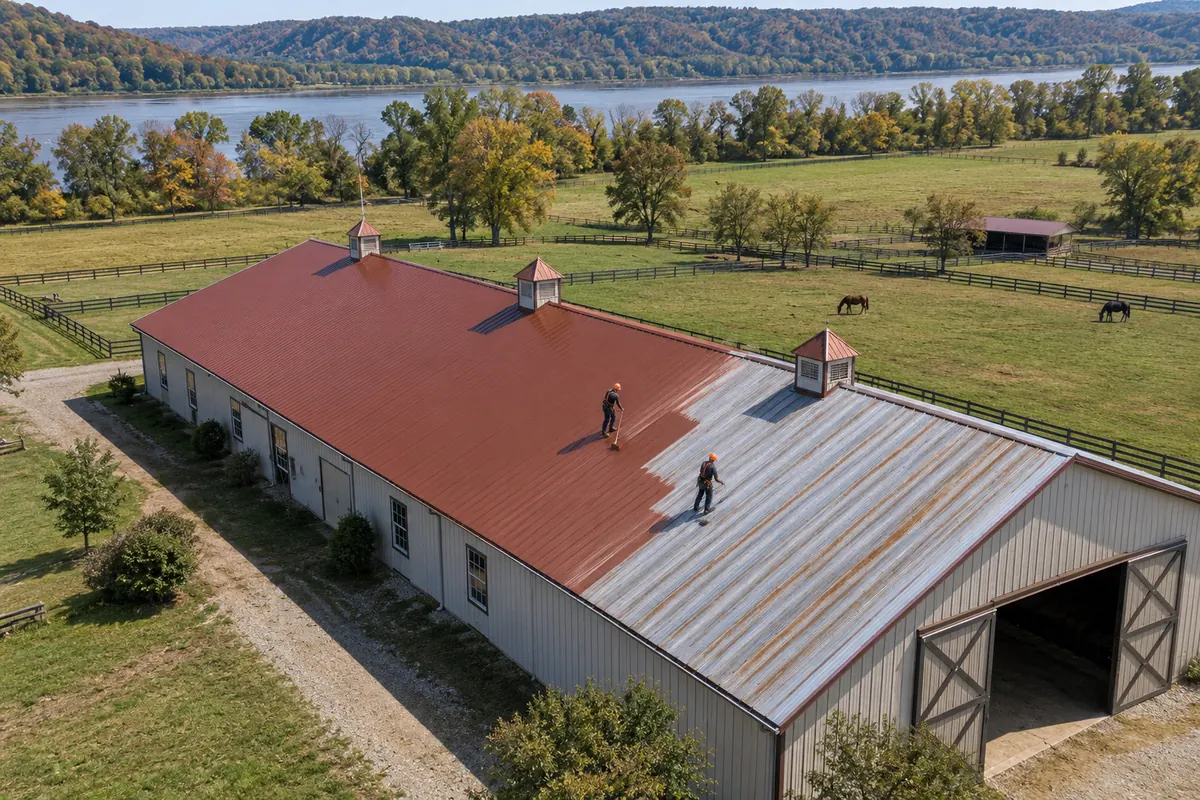
Standing seam and exposed-fastener roofs get seam, screw, and rust work, then a top coat in the chosen color.
Metal coating for older roofs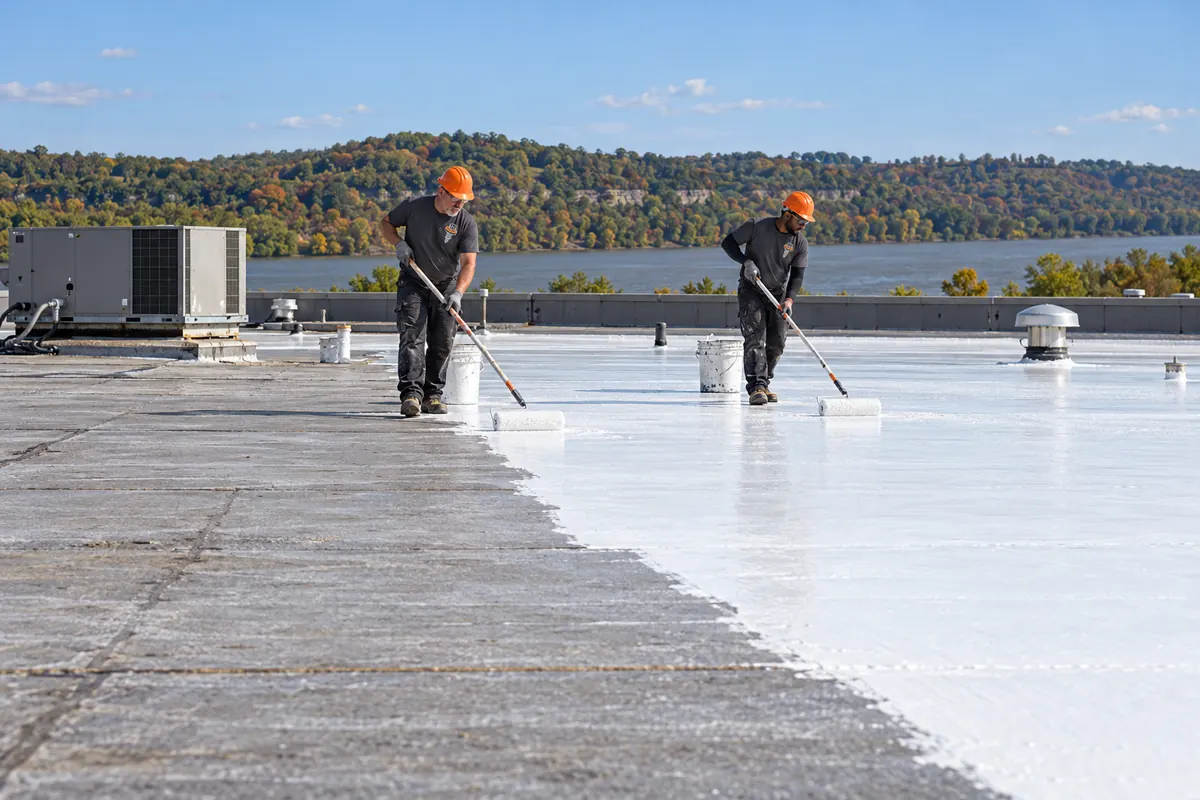
Tintable acrylic suits sloped visible roofs where color matters and water drains fast.
Tinted acrylic coating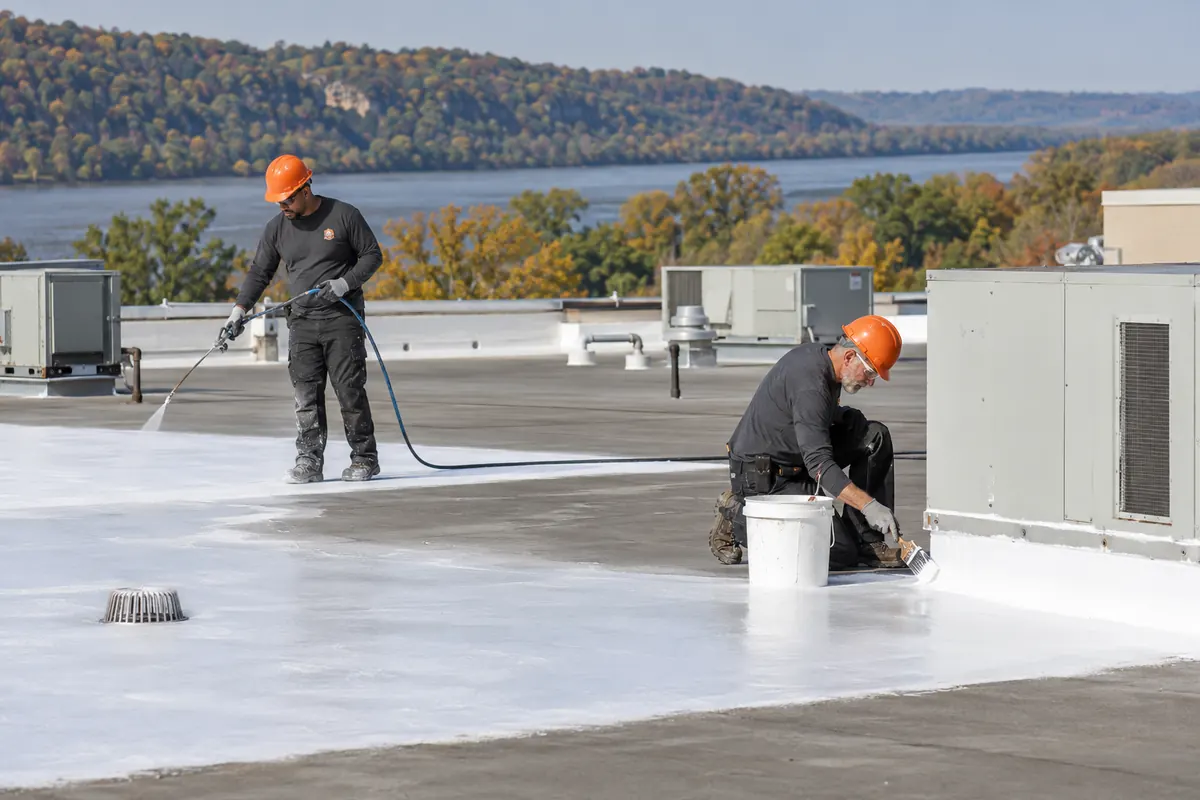
Low roofs behind parapets and internal gutter liners where water lingers take silicone.
Silicone behind parapetsCall and tell us where the stain appears. Stains near the top of a wall often trace back to counterflashing or an internal gutter.
(812) 297-3434On older buildings, the edges and gutters take as much time as the open roof.
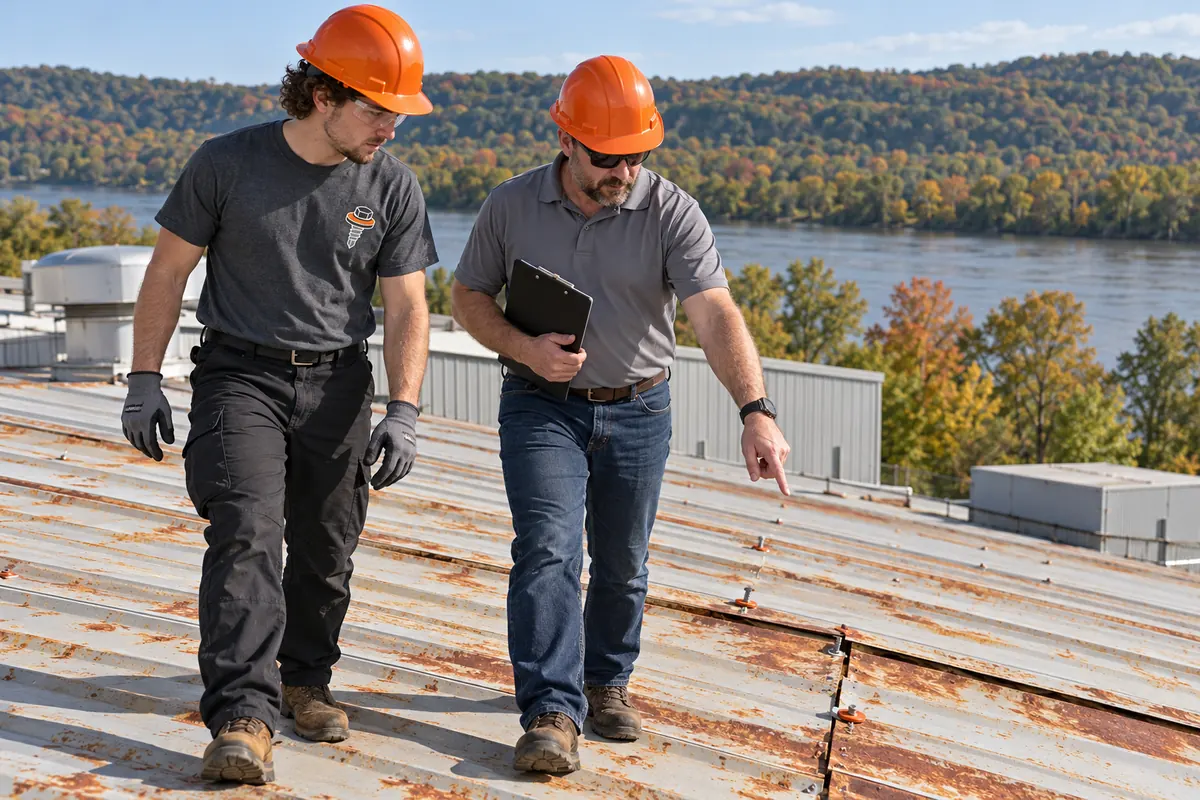
We check paint layers, seams, head walls, counterflashing, internal gutters, and every leader, and photograph the roof from the street.
Loose mortar is repointed where counterflashing tucks in, internal gutters are cleared, and cracked leaders are opened or replaced.
Old paint is handled with care, rust is treated, and seams and panel ends get fabric in base coat.
Base and top coats go on in a color close to the original, with thickness checked across the roof.
Five other towns and Clarksville share our metal roof coating area with Corydon. Elsewhere? Call us or send us a message.
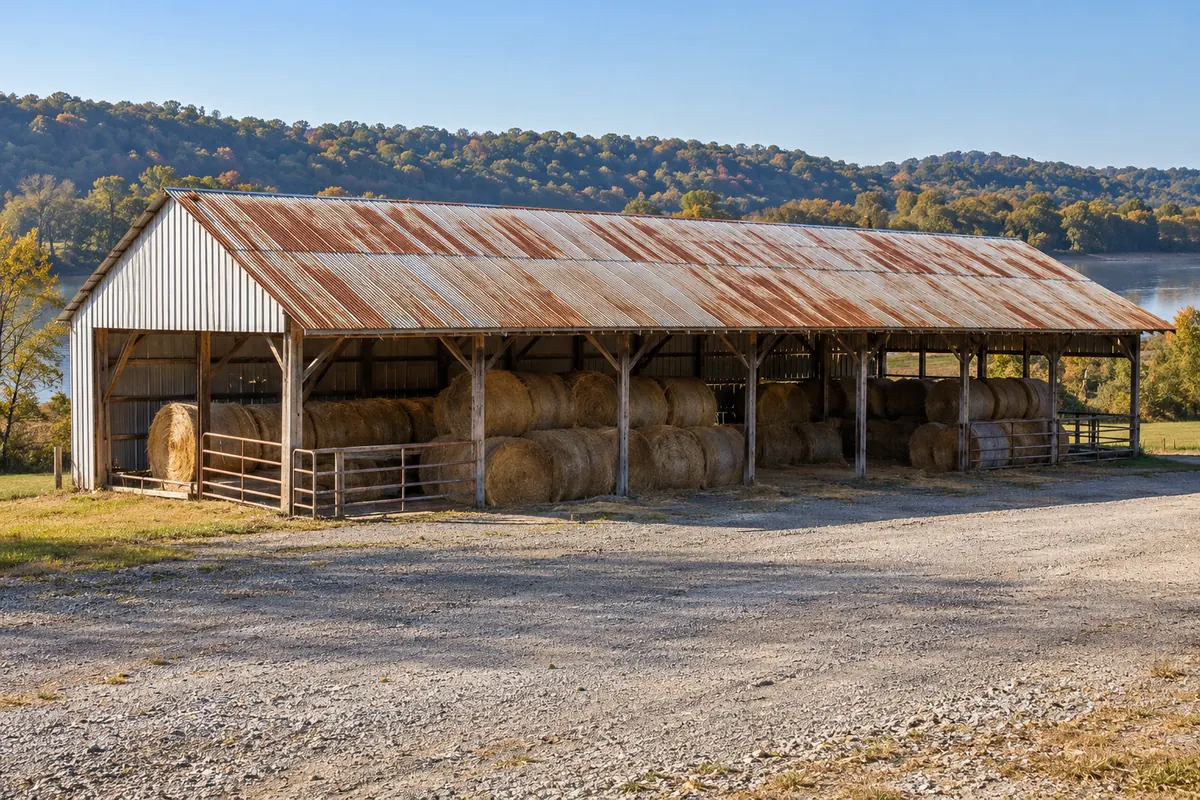
Historic-district color approvals and riverfront drip-edge rust.
Rooftop units moved during coating, with their own permits.
Wash water and rust slurry kept out of storm inlets.
Hilltop wind, wallowed screw holes, and calm-air spray days.
Large River Ridge roofs coated in phases around truck courts.
The Harrison County Plan Commission, through the county planner's office in Corydon, takes building permit applications and assigns inspectors by area. Corydon is a town, so owners inside town limits confirm with the town and county which office covers their parcel.
Bring the parcel number, roof area, panel type, and photos of gutters, ridge caps, and rooftop units.
Plan around appearance and masonry. Pick a top coat color close to the original finish if the roof is visible, and repoint loose mortar where counterflashing tucks into brick.
Check old paint layers before sanding or blasting, since older finishes need special handling, and clear internal gutters and cast-iron leaders.
Harrison REMC serves many rural Harrison County buildings. The electric bill shows which provider serves yours.
Utility programs differ by provider, so ask yours before the roof job whether a reflective coating counts toward anything.
Yes, when the metal lining is firm. Clogs, rust holes, and failed seams get repaired first.
Built-in gutters overflow into the wall when blocked, so clearing the leaders comes before any coating.
On a visible standing seam roof, it can. Coating lines offer tinted colors, and we compare chips against the existing finish.
Flat roofs hidden behind parapets usually take white for its reflectance.
Older finishes need special handling, so paint layers on the roof are tested before any sanding, scraping, or blasting. The result decides how prep is done and how debris is collected.
Where testing calls for it, prep switches to methods that keep paint dust contained, and firm old finish is left in place under primer.
Lifts need room, so on narrow downtown lots we look at alley access, sidewalk use, and roof hatches during the inspection. Materials go up in smaller loads when space is short.
Sidewalk or street use can need town approval, so we ask before the schedule is set.
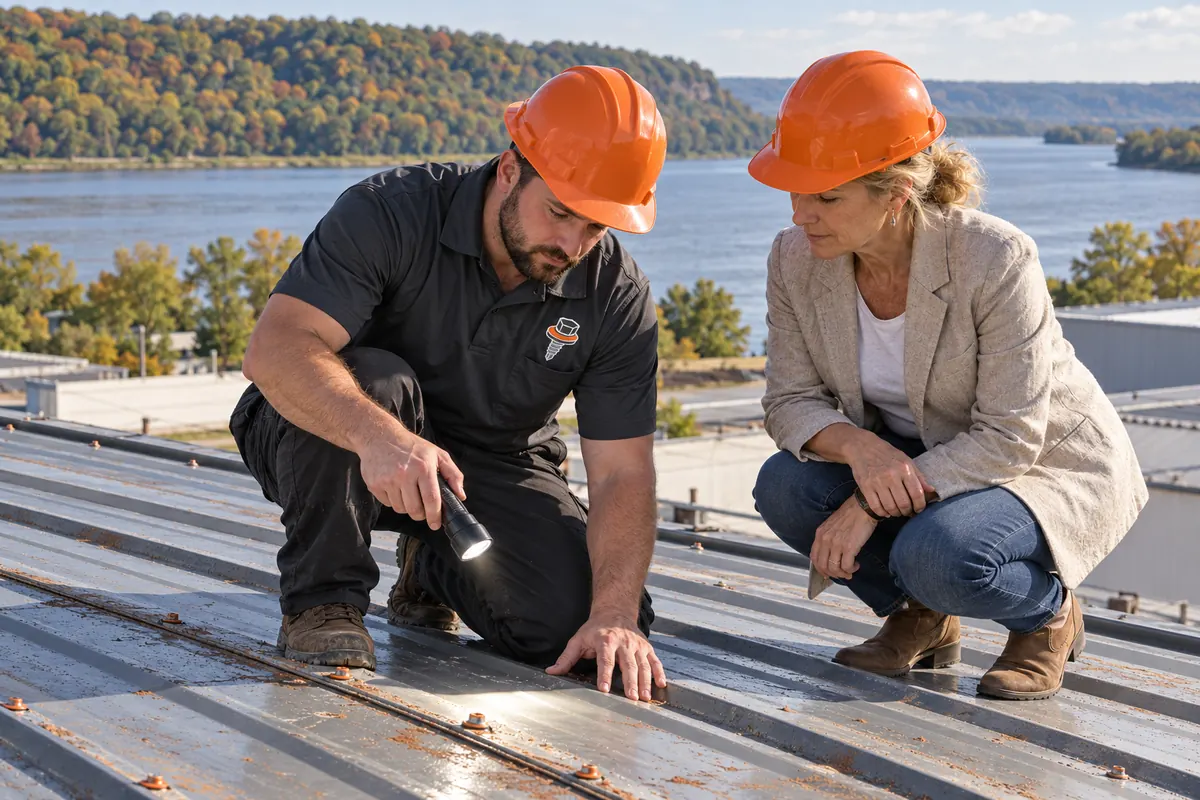
Send the roof size for a ballpark range, or call us about color, masonry, and internal gutters.
Leave a name and number and we will call you back about your metal roof.